Leland+ for Venture Capital







Popular on Leland+

How to Stand Out in VC Recruiting
Venture capital recruiting is relationship-driven, competitive, and often opaque—and standing out requires far more than a strong resume. In this session, you’ll learn how VC firms actually evaluate candidates, what signals investing potential, and how to differentiate yourself through sourcing, market insight, and clear thinking. We’ll cover networking strategies, outreach, interview preparation, and how to demonstrate judgment and curiosity even without prior investing experience.



Sample Resume VC Investment Analyst
This is a sample resume template to help break into VC from a foreign/non-traditional background.
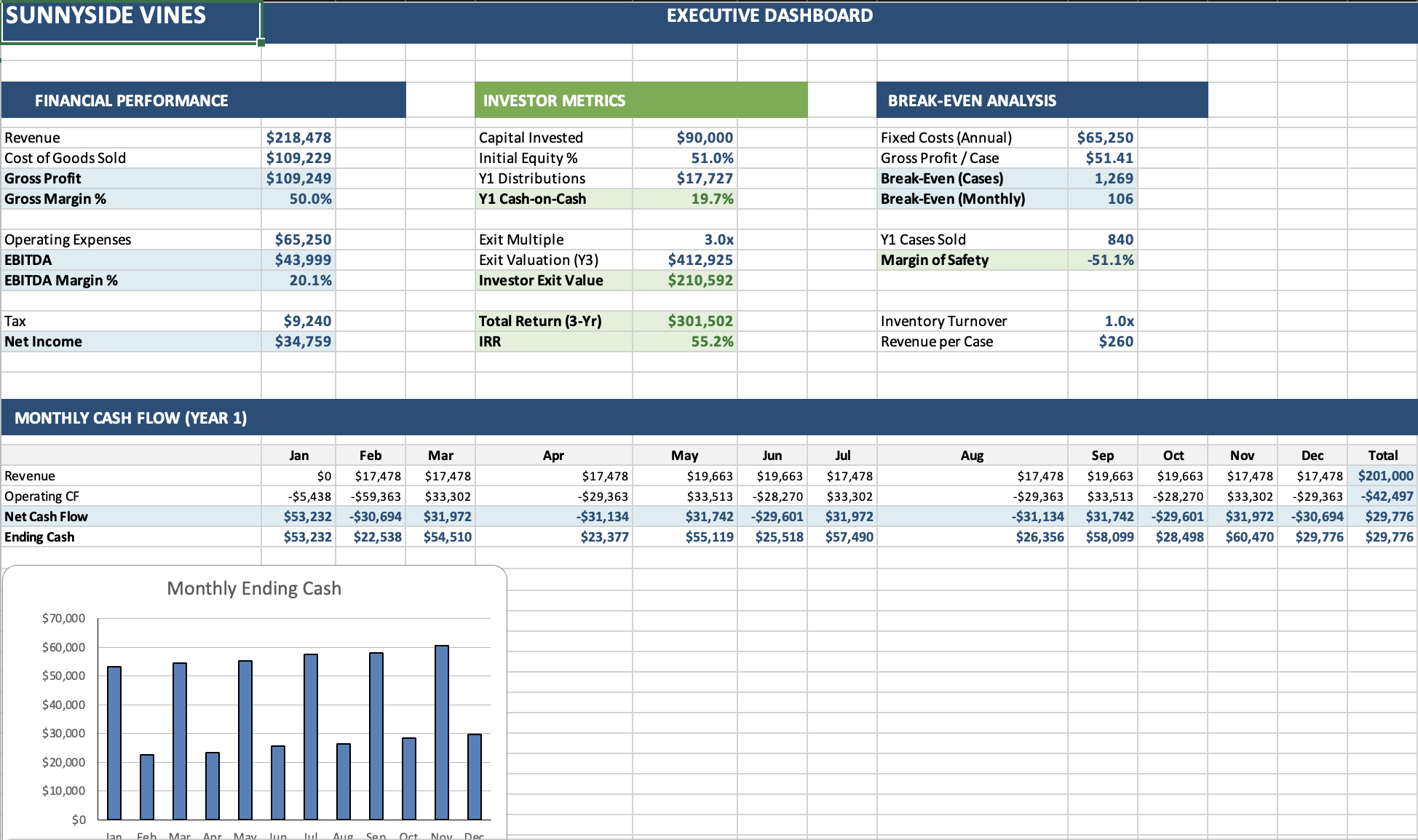
Wine Import Venture Feasibility Model (Excel)
Excel-based feasibility and financial model for planning a wine import venture. Enter SKU-level pricing, landed costs, shipment size, channel mix.

Breaking Into VC Without the “Right” Background: What Works, What Doesn’t, What No One Tells You
Breaking into venture capital without an elite pedigree isn’t about luck, it’s about strategy. In this tactical session you’ll learn how VC firms actually evaluate candidates, beyond resumes and brand names, and how to manufacture the signals that matter. We’ll break down: What top firms optimize for (judgment, access, velocity, communication, signal) Why proof-of-work beats credentials, and how to build it How to choose a wedge so people know what you stand for A repeatable networking system that creates opportunity (not “coffee chats”) The hidden rules of VC interviews and internal decision-making A practical 30-day roadmap to become someone who’s already doing the job This isn’t generic career advice. It’s a playbook to build credibility, create leverage, and position yourself as a serious investor, even without the “right” background.

Venture Capital 101: Players, Funds, and the Deal Process
Venture capital can feel opaque without a clear map of how firms operate and how deals actually get done. This session breaks down the VC ecosystem, who the key players are, how funds are structured, and what the end-to-end deal process looks like, from sourcing and diligence to investment decisions and portfolio support. You’ll leave with a practical understanding of how venture capital works and how to navigate conversations, recruiting, or founder interactions with greater confidence.

Breaking into VC from a non-traditional background
There’s no single path into venture capital—and you don’t need the “perfect” pedigree to break in. What you do need is strategy, positioning, and a clear understanding of how funds actually think about talent. In this session, we’ll unpack how to translate non-traditional experiences into investor-ready strengths, build credibility in startup ecosystems, and network in ways that lead to real opportunities. If you’re ready to turn an unconventional background into a competitive advantage, this is where your VC journey begins.

The Real Day-to-Day in Venture Capital—and How to Interview for It
Venture capital is often talked about in broad terms, but the actual day-to-day work and hiring expectations are less visible to candidates. This session is for those exploring VC who want a clearer understanding of what the role involves and how to position themselves for it. You’ll learn what investors actually do across sourcing, diligence, and portfolio support, how candidates are evaluated in interviews, and how to communicate your thinking in a way that reflects investor judgment.

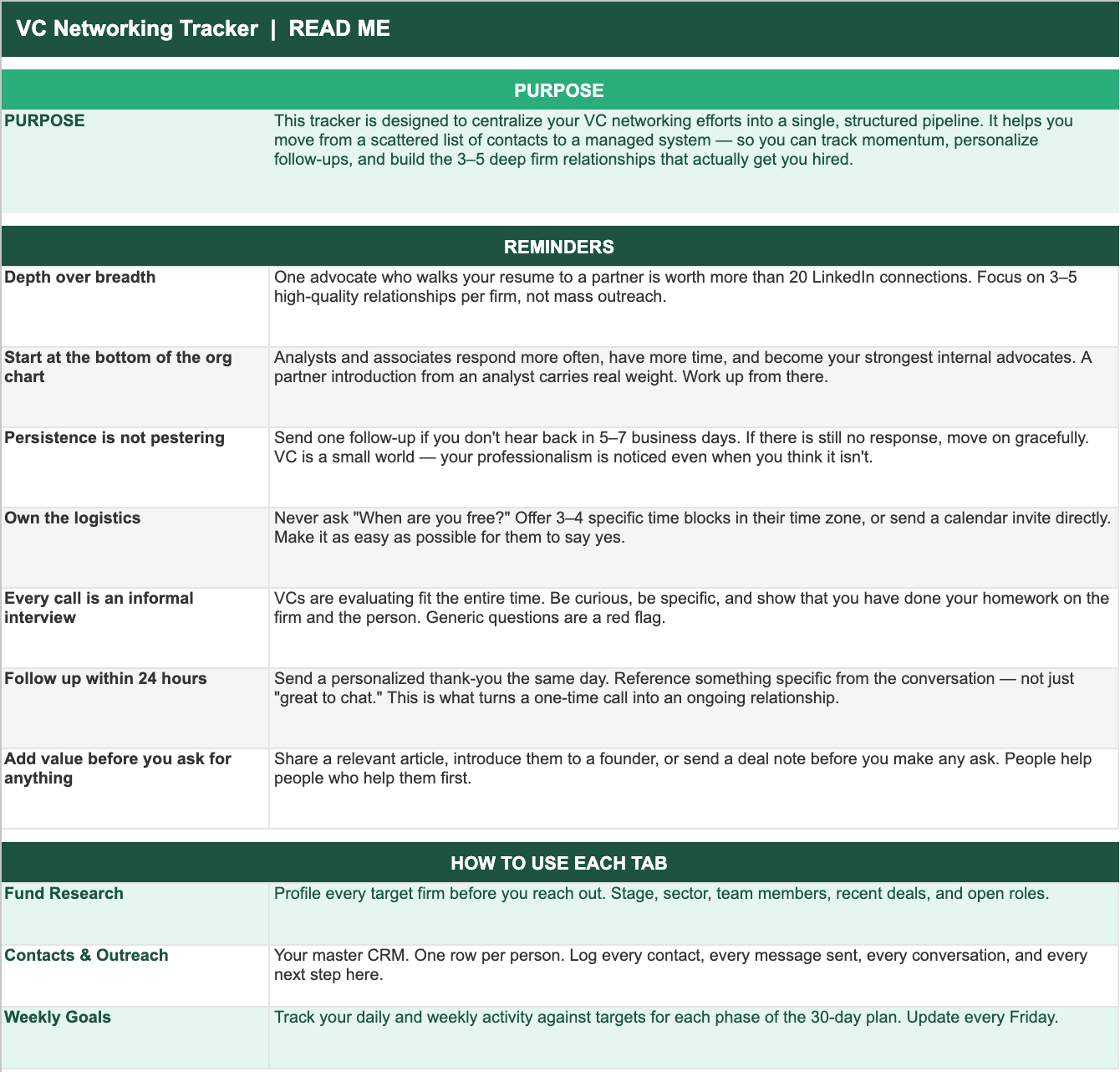
Target Fund Networking Tool
Spreadsheet template for researching funds, tracking contacts, and managing your outreach pipeline.
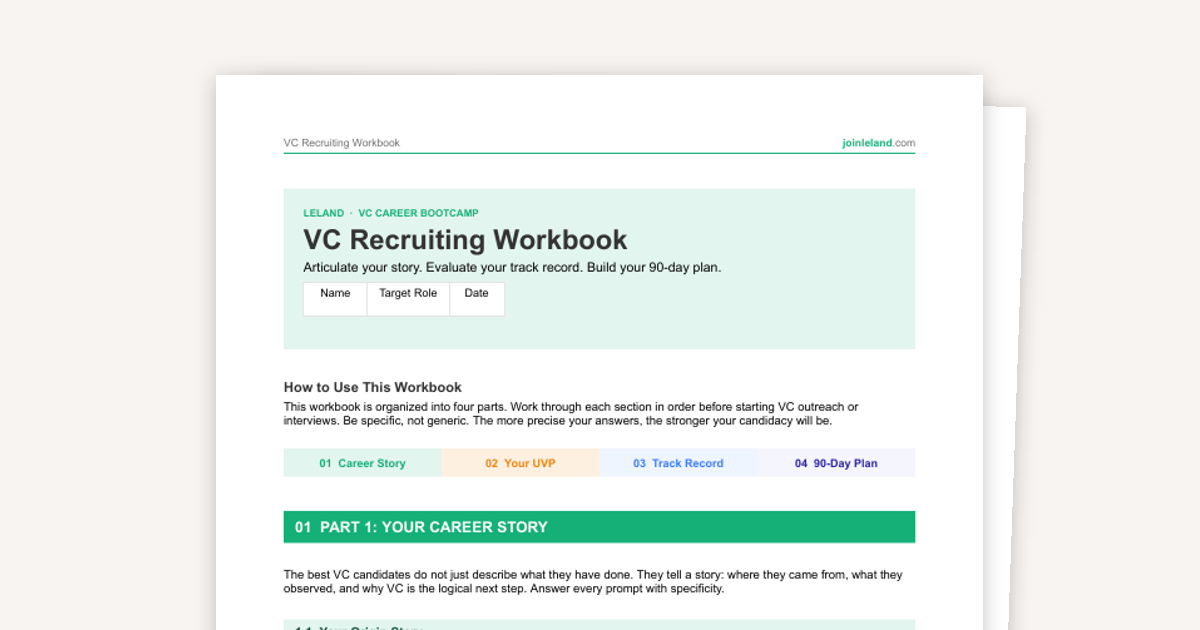
VC Recruiting Workbook
Template to articulate your unique value proposition and background story for VC recruiting; Evaluate your current track record and identify 3 goals to strengthen your candidacy over the next 90 days.
90-Day Action Plan Template for VC Recruiting
Create a comprehensive 90-day action plan for breaking into VC with your unique positioning.
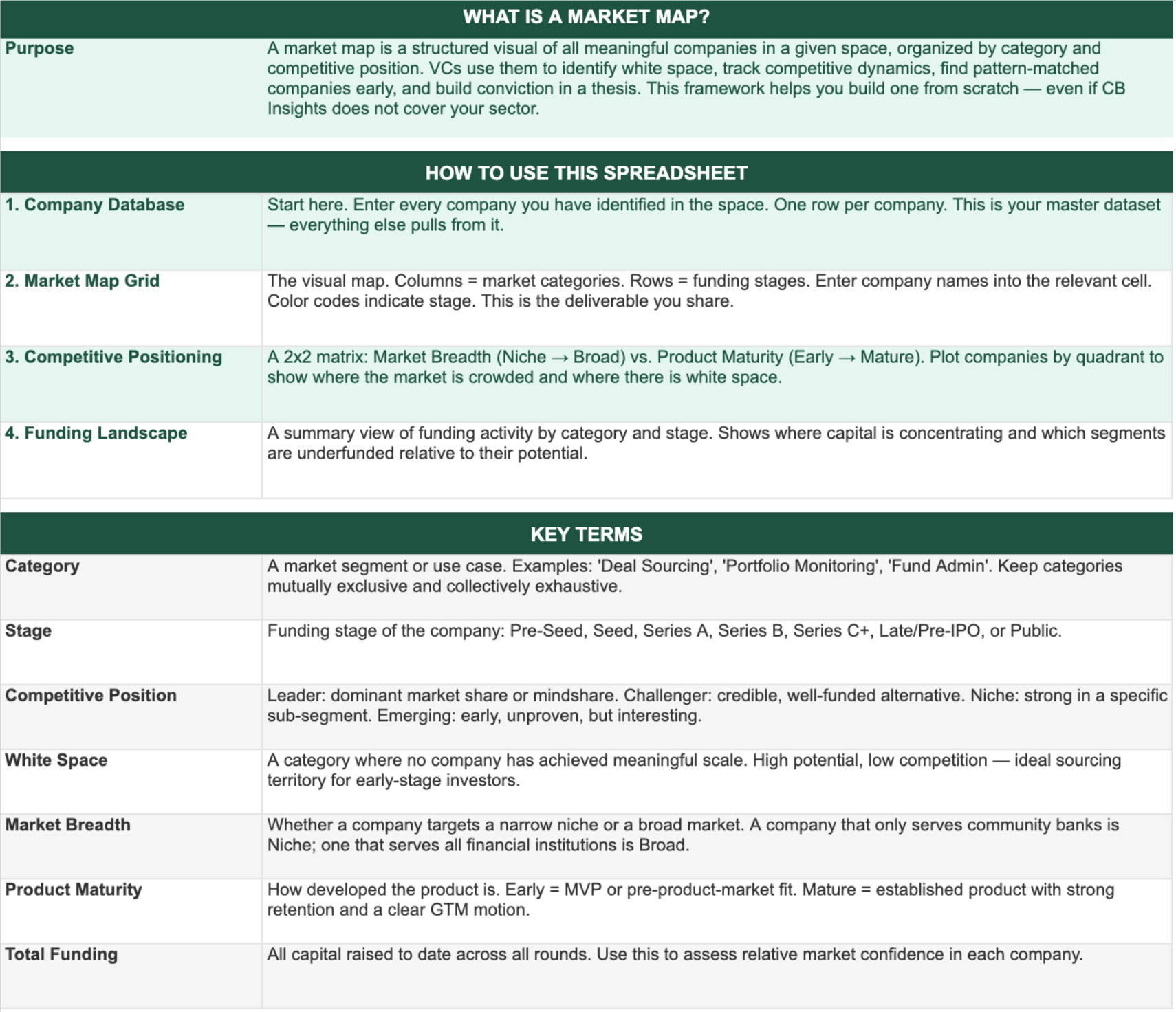
Market Map Template
Spreadsheet framework for creating professional market maps by category, stage, and competitive positioning.
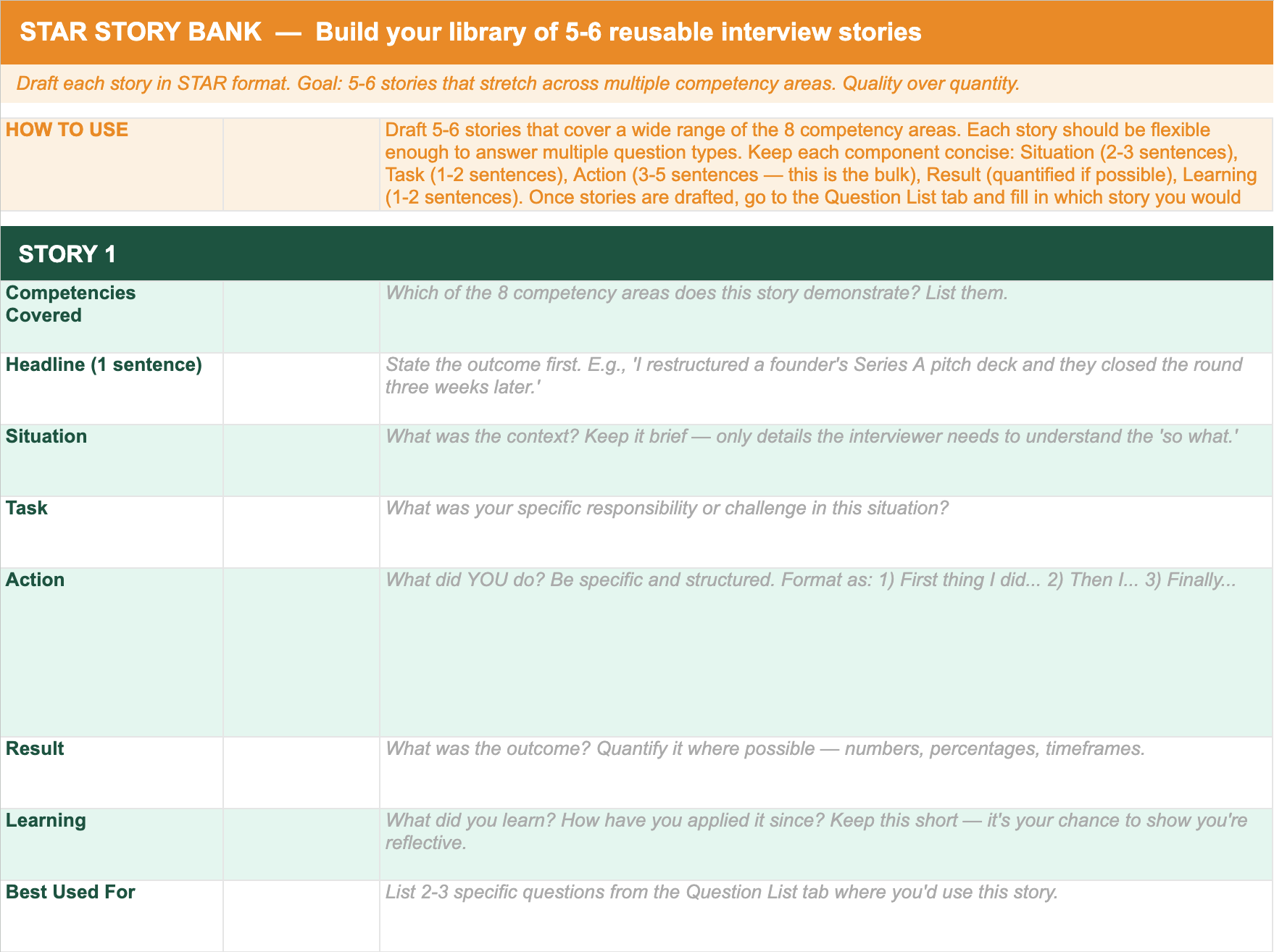
Behavioral Answer Tool
Framework tool for structuring answers to the most common VC behavioral questions using the STAR method.
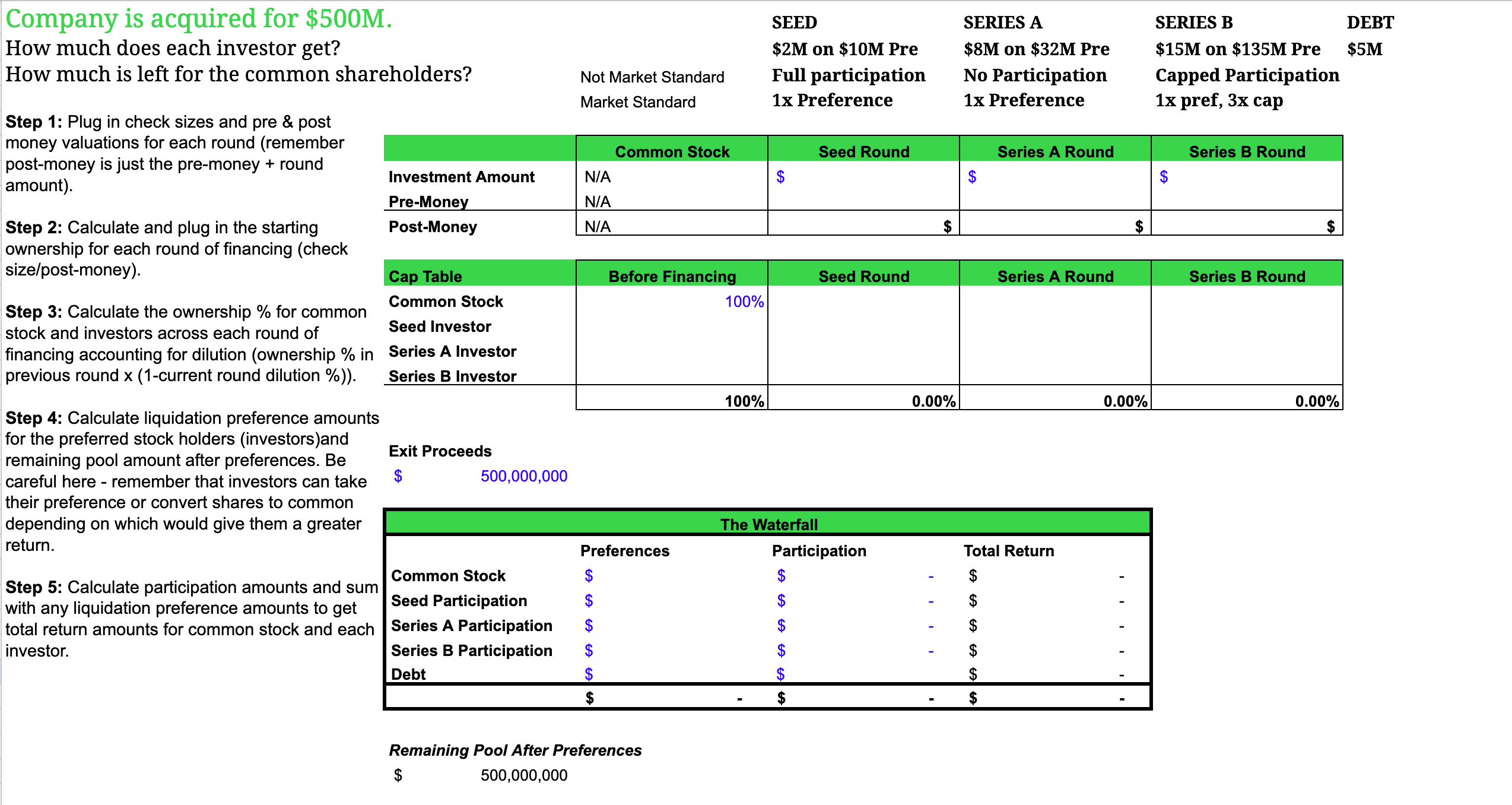
Cap Table & Waterfall Practice
Building and reading cap tables. Understanding dilution, option pools, liquidation preferences, participation preferences, and how terms affect founder and investor economics.
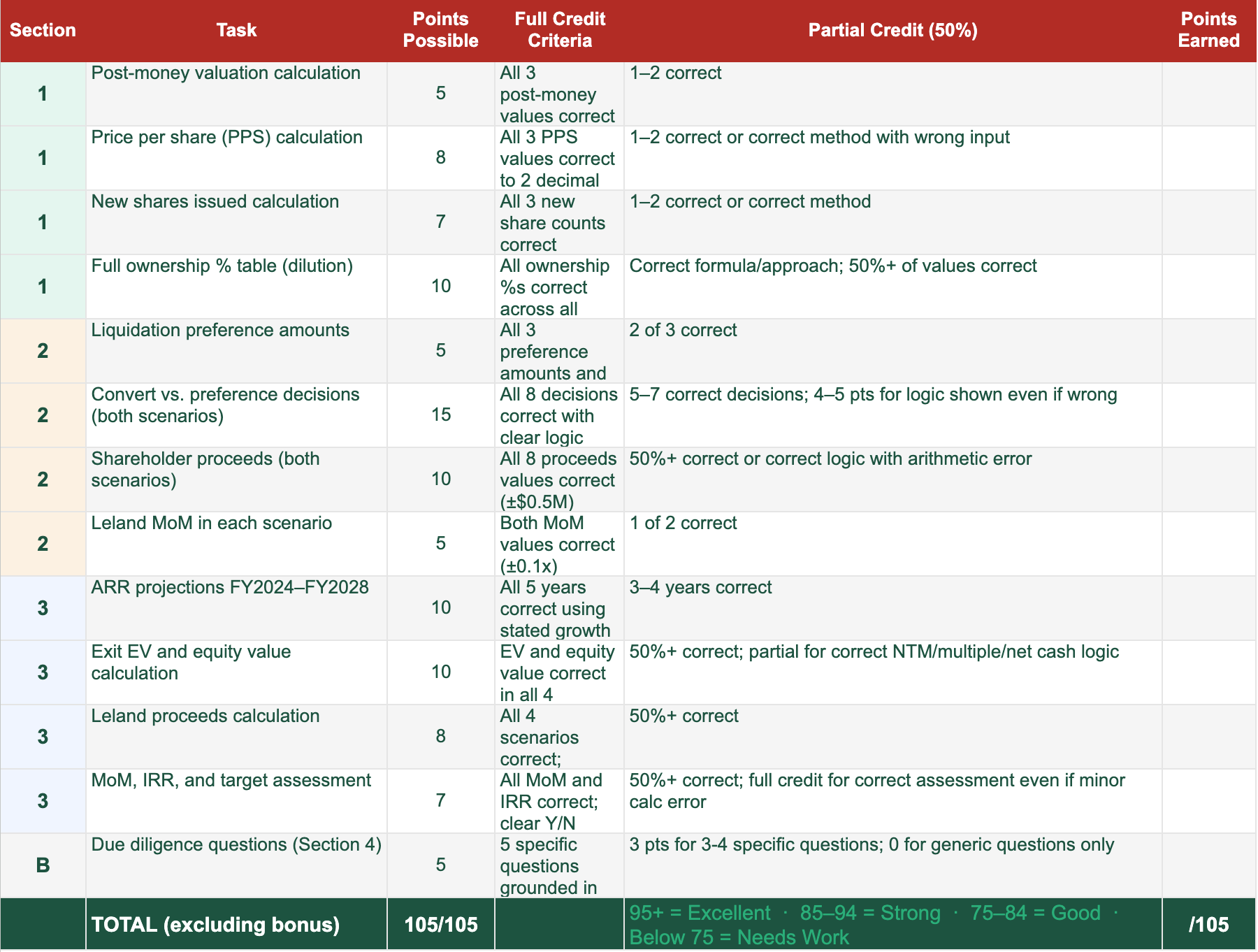
VC Modeling Test ANSWER
Don't download this file until you have completed your timed practice assessment.
Frequently Asked Questions About Resume Writing
Many people have asked me a set of questions frequently. These questions will answer some of your questions quickly!

Example IB/PE Resume — Evercore IB
See an example resume that's been used for a variety of finance roles. The resume background highlights finance degree at UT Austin and work experience at Evercore and I Squared Capital.

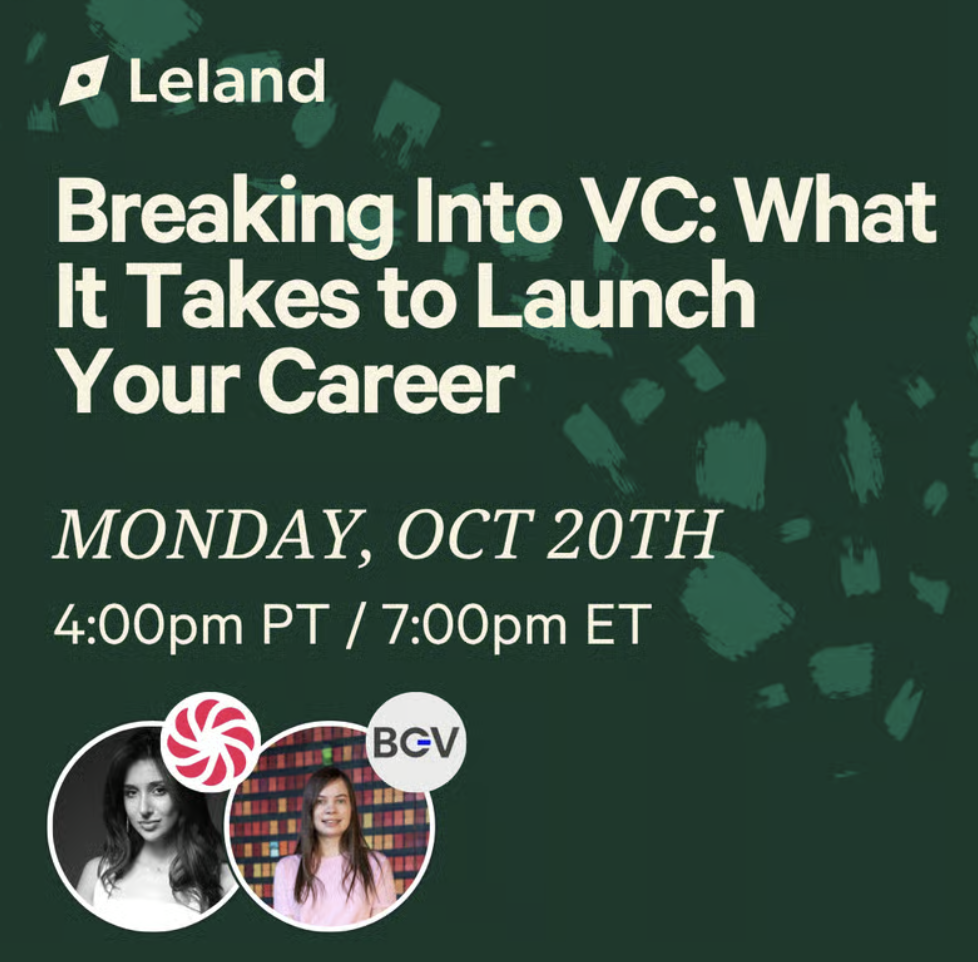
Breaking Into VC: What It Takes to Launch Your Career
In this panel, Suzie M. and Katya E. will share what it really takes to land a role in one of the most competitive fields in business. You’ll learn how candidates stand out in the recruiting process, what firms look for beyond the resume, and the skills that set future investors apart. From sourcing and evaluating deals to building networks and demonstrating investment judgment, the discussion will cover the core qualities that matter most. Whether you’re coming from banking, consulting, tech, or just starting your career exploration, this session will give you actionable insights into how to position yourself for success in VC.


Trends in VC Hiring: What Firms are Looking For
Breaking into venture capital is notoriously challenging—often less about chasing the biggest brand names and more about finding the right fit. In this session, expert coach Natalie L. unpack the latest trends in VC recruiting and share what firms actually value when evaluating candidates. You’ll learn how the hiring landscape is evolving, what skills and experiences stand out today, and how candidates from non-traditional backgrounds can successfully position themselves for roles in venture. We’ll also discuss practical strategies for networking, building credibility, and navigating a process that’s often informal and relationship-driven. Whether you’re actively recruiting or just exploring a career in VC, this session will give you insider insights and actionable advice to sharpen your approach and increase your chances of breaking in.

How to Crush Your HireVue
This resource reviews common HireVue interview questions and outlines effective approaches for answering them. It focuses on structuring responses, managing timing, and communicating clearly in a recorded interview format.

Start Where You Are: Investing in the Arts as a Pathway to Venture Capital
You don’t need a fund, a finance background, or a Silicon Valley network to start investing—you just need vision and the courage to begin. In this inspirational session, Tiana Tukes (she/her) shares her journey of investing in creativity and culture as a foundation for a career in venture capital. Beginning with her first investment in photographer Tyler Mitchell in 2018, Tiana explores how supporting artists teaches powerful lessons about risk, storytelling, and conviction—the same instincts that drive great venture investors. Joined by potential special guest De’Havia Stewart, an investor at Serena Williams’ venture firm and Broadway investor (Othello, Alicia Keys’ Hell’s Kitchen), the conversation will highlight the many ways to participate in investing—whether that’s in people, art, or startups. Attendees will leave inspired to see that venture capital isn’t a closed world—it’s a creative one. And every investment, no matter how small, can be the start of your journey.