Leland+ for Master’s Programs




Popular on Leland+
Free

Top-Ranked Free Master's in … France and Switzerland
Think Sorbonne University, Université Paris-Saclay, École Polytechnique Fédérale de Lausanne, and ETH Zurich. These top-ranked French and Swiss institutions represent just the tip of what these prestigious education systems offer: world-class master's degrees with tuition from €250 to €1,500 annually, far below North American alternatives. Behind these prestigious names are remarkable opportunities to pursue advanced degrees delivering exceptional return on investment while building careers in two of Europe's most dynamic economies. France and Switzerland host dozens of top-ranked institutions offering hundreds of English-taught master's programs spanning all major disciplines. France and Switzerland provide up to 24 months post-study work permit for job searching, with clear paths to permanent residence for skilled graduates. What if this high-quality, budget-friendly pathway to career success in Europe's innovation capitals is exactly your calling?
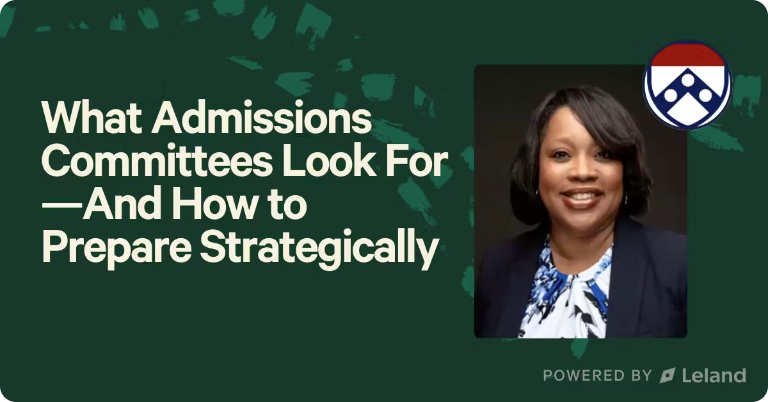
What Admissions Committees Look For—And How to Prepare Strategically
Admissions decisions rarely come down to just grades or test scores. Committees are evaluating patterns—how your experiences, goals, and character come together to signal future impact. In What Admissions Committees Look For, you’ll learn how strong applicants position themselves across the entire application. Melissa works 1:1 with candidates navigating competitive admissions and will share the same frameworks used in coaching sessions to evaluate and strengthen an application. Who This Is For - Applicants preparing for competitive graduate or professional programs - Candidates planning to apply in the next 1–2 cycles - Students unsure how to position their experiences strategically - Re-applicants looking to strengthen their overall profile What You’ll Walk Away With - The key signals admissions committees look for across applications - How evaluators connect your academics, experience, and goals - The patterns I see across successful candidates - The common positioning mistakes I fix in 1:1 sessions - How to build a stronger application strategy months before applying

Free
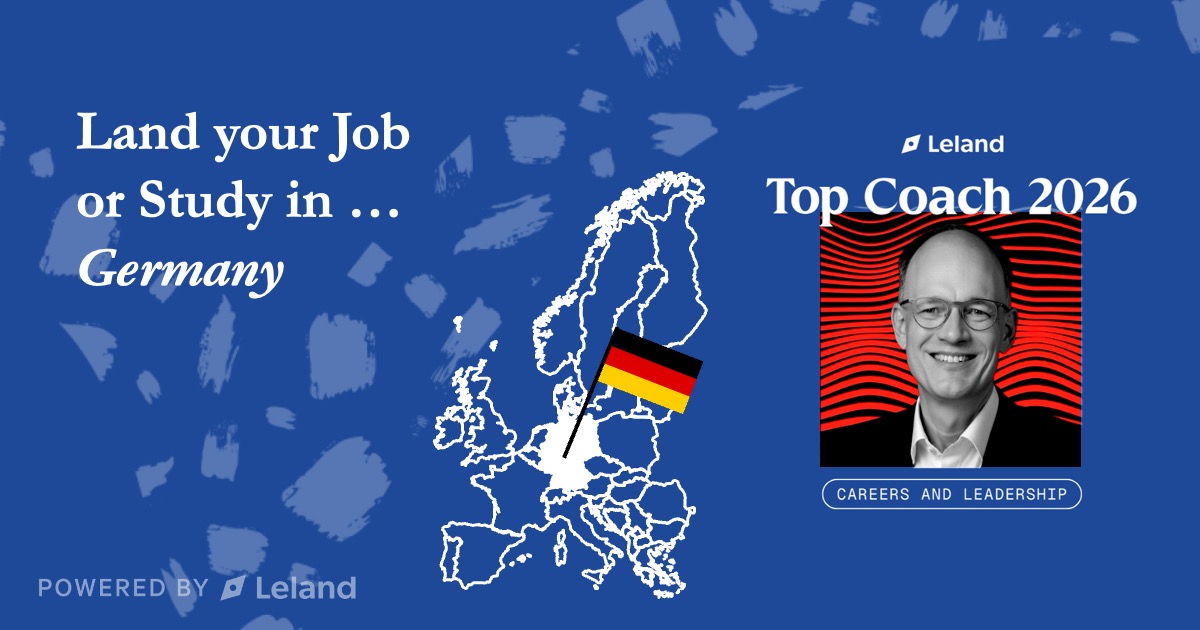
Land your Job or Study in ... Germany
Germany is not just beer, efficiency, and engineering heritage. It is one of the most accessible countries in the world right now for ambitious non-EU graduates and young professionals who want to build something serious. Over 600,000 skilled positions go unfilled every year. The government rewrote its immigration law in 2023 specifically to bring international talent in. Public universities charge close to nothing. Tech companies, global pharma, and the entire renewable energy sector are actively hiring people with your profile. This session cuts through the noise. We cover the study path and the direct job path, side by side: visa options, living costs, language reality, workplace culture, and what a competitive application actually looks like. Two real cases show how people with no German, applying from abroad, made it work. Germany rewards preparation and specificity. This Thursday, we provide both. New episodes in this series cover a different European country every Thursday.

How to Stand Out in the Schwarzman Scholars Application
After this session, you will know how to position your leadership narrative for the Schwarzman Scholars rubric, structure your essays to reflect the program's focus on global impact and cross-cultural collaboration, and avoid the framing mistakes that consistently weaken otherwise strong applications. These are patterns that surface repeatedly when reviewing what separates admitted candidates from those who fall short.


Your Ticket to STEM Graduate School Admission
Short guide to STEM graduate programs, required application documents, and essay advice
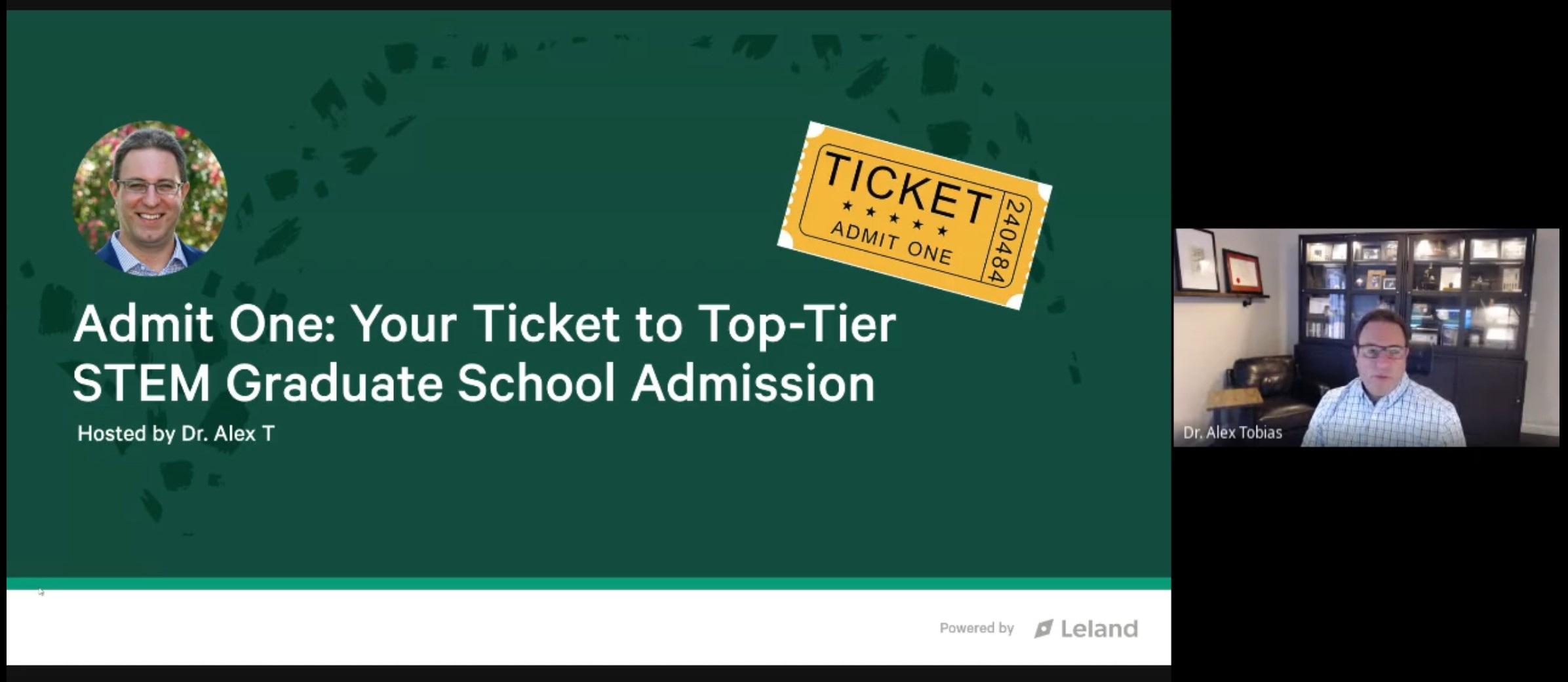
Your Guide to STEM Graduate School Admissions
Recording of a Leland webinar I presented on 02 Jan 2026 demystifying STEM graduate school admissions types and deliverables
Master's Program Decision Guide
Congratulations on your offer of admission! Use this guide to evaluate your options and make an informed decision.

Quantitative Finance Career Guide
A starter guide for careers, skills, and companies related to quantitative finance.

Craft Your Narrative, Tell Your Story: Winning Personal Statement Strategies
A strong personal statement isn’t about listing achievements, it’s about telling a clear, intentional story that helps readers understand who you are, what drives you, and where you’re headed. In this session, you’ll learn how to identify the throughline in your experiences, structure your narrative for impact, and avoid common pitfalls that dilute otherwise strong applications. Whether you’re starting from scratch or refining a draft, you’ll leave with practical strategies to craft a personal statement that feels authentic, focused, and memorable.


How to Ace Master’s Interviews
Master’s interviews are your chance to bring your application to life and show why you’re a strong fit for the program. In this session, you’ll learn what interviewers are really evaluating, how to answer common questions with clarity and confidence, and how to communicate your academic goals, experiences, and motivation effectively. We’ll cover proven preparation strategies, common pitfalls to avoid, and tips for standing out across different types of master’s programs. You’ll leave with a clear framework and actionable guidance to approach your interviews prepared, polished, and confident.


Build Your Master’s Application Narrative
Many strong applicants struggle to clearly explain why their experiences, goals, and chosen program fit together into a compelling master’s application. This session is designed for candidates preparing graduate school applications who want to turn scattered achievements into a focused, persuasive narrative. You’ll learn how to connect your academic background to future goals, identify the experiences that matter most to admissions committees, and structure essays that present a clear story about who you are and where you’re headed.
Free
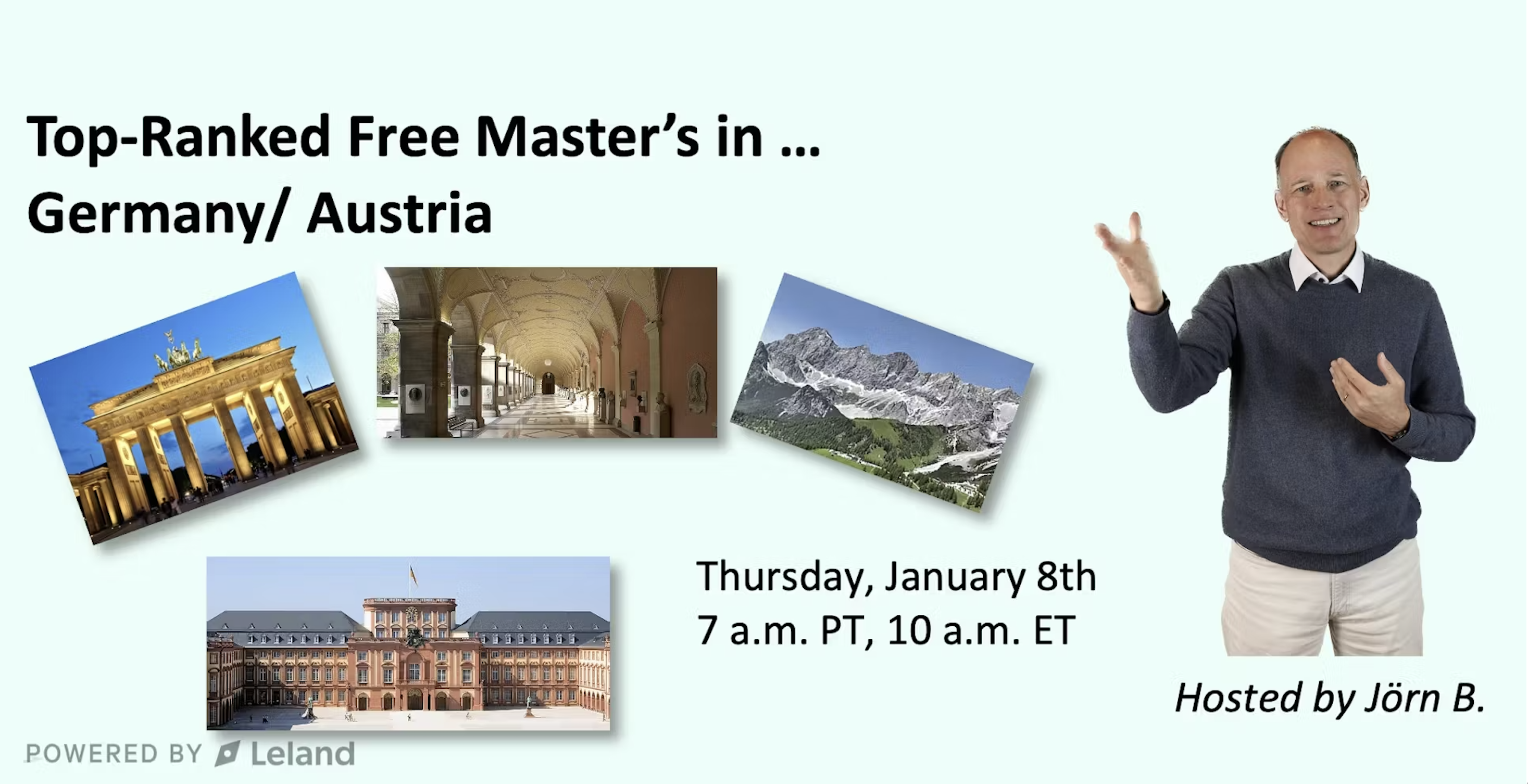
Top-Ranked Free Master’s in … Germany and Austria
Think Technical University of Munich, Ludwig Maximilian University, University of Vienna, and TU Wien. These top-ranked German and Austrian institutions represent just the tip of what Central Europe's economic powerhouses offer: world-class master's degrees with zero to €12,000 annual tuition, far below North American alternatives. Behind these prestigious names are remarkable opportunities to pursue advanced degrees delivering exceptional return on investment while building careers in Europe's strongest economies. Germany and Austria host hundreds of top-ranked institutions offering over 1,500 English-taught master's programs spanning all major disciplines. Germany provides an 18-month post-study work permit, while Austria offers 12 months for job searching, with straightforward paths to permanent residence for skilled graduates. What if this high-quality, budget-friendly pathway to Central European career success is exactly your calling?

A Roadmap to Graduate School Applications
Applying to graduate school is a multi-step journey, and success depends on having a clear plan from start to finish. This session walks through the full application roadmap, from early preparation and program selection to essays, recommendations, interviews, and final decisions. You’ll learn how to prioritize each stage, avoid common pitfalls, and stay organized throughout the process so you can submit strong, confident applications.
Free
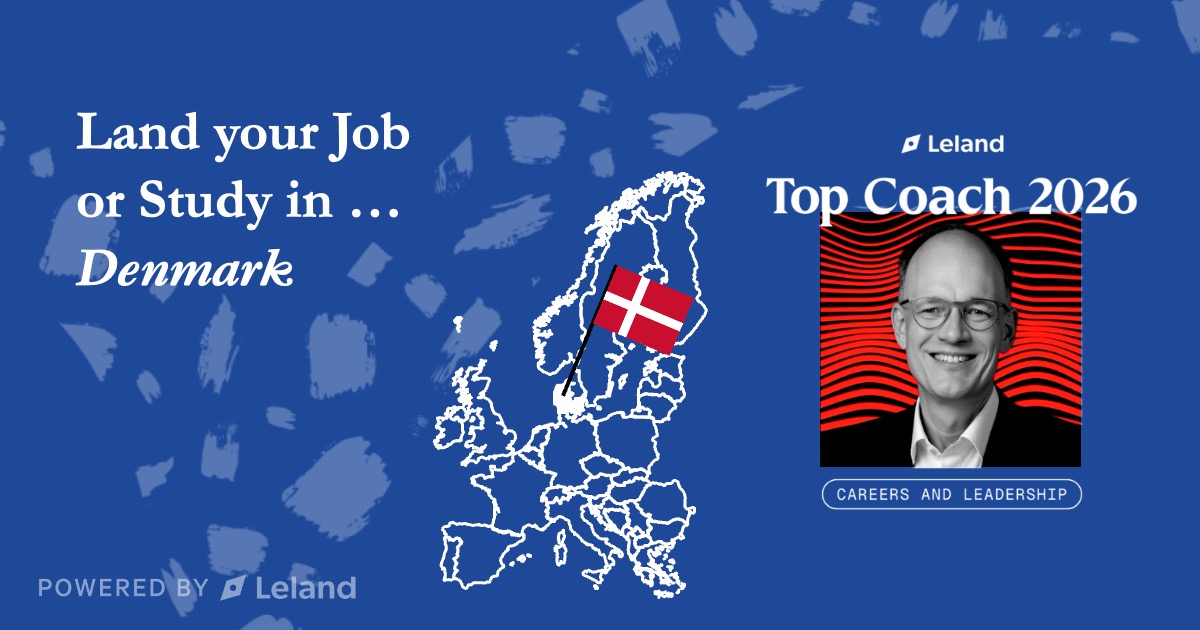
Land Your Job or Study in ... Denmark
Denmark does not make much noise. It does not need to. Novo Nordisk alone accounts for roughly 4% of the entire Danish GDP. Vestas leads the world in wind energy. Danfoss sets the standard in industrial automation. These are not household names to most non-EU professionals, and that is precisely the point: the competition for roles here is lower than the quality of the companies would suggest. The labour market is tight and the skills shortage is real, which works in your favour. English is the default language in most professional environments. The workforce is genuinely multicultural, and Danish workplace culture is notably flat: titles matter less than contribution. This session covers both paths in: studying at world-class institutions like Copenhagen Business School and the Technical University of Denmark, and entering the job market directly. We go through visa options, the Danish approach to work-life integration, living costs, and what international candidates consistently get wrong in their applications. Two real cases show what a successful move to Denmark actually looks like. Denmark is smaller than its neighbours and more selective. This Thursday, we show you exactly how to qualify. New episodes in this series cover a different European country every Thursday.
![The Key to Mastering Combinations and Permutations on the GMAT [5/7/2026] (Recording)](https://customer-14xsjmjbqk93tdwp.cloudflarestream.com/d1c82179afff422e8acb2ad03e98b92d/thumbnails/thumbnail.jpg)
The Key to Mastering Combinations and Permutations on the GMAT [5/7/2026] (Recording)
After this session, you will know exactly how to recognize when a GMAT problem calls for combinations versus permutations and how to set up the math without second-guessing yourself. We will cover the slot method for counting arrangements, how to handle restrictions like repeated elements or fixed positions, and the fastest way to simplify factorial expressions under timed conditions. Attending live means you can bring a specific problem type that keeps tripping you up and hear how to think through it in real time, not just watch a solved example. The coach works through these problems with GMAT students regularly and will share the reasoning patterns that consistently separate confident solvers from those who guess and move on.

Frequently Asked Questions About Resume Writing
Many people have asked me a set of questions frequently. These questions will answer some of your questions quickly!

Financial Services Data Scientist Resume
Breaking into financial services isn't easy, but when you put effort in like this candidate, you'll earn that job offer.
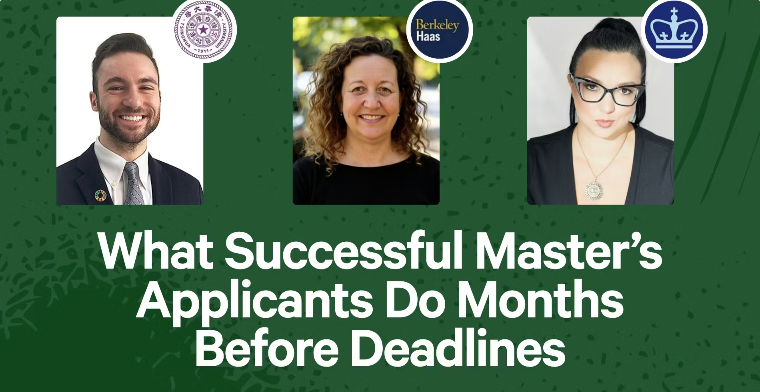
What Successful Master’s Applicants Do Months Before Deadlines
In this session, you will learn how to build a realistic application timeline that starts well before the fall rush, including when to reach out to recommenders, how to begin positioning your professional narrative, and what early research into programs actually looks like when done well. Most applicants underestimate how much groundwork shapes a strong application, and this session will show you exactly where that work starts.


![How to Solve GRE Math Questions in Half the Time [5/5/2026] (Recording)](https://customer-14xsjmjbqk93tdwp.cloudflarestream.com/9b5371c69c2dc34fbb3eadd420808bc9/thumbnails/thumbnail.jpg)
How to Solve GRE Math Questions in Half the Time [5/5/2026] (Recording)
In this session, you'll learn how to identify question types faster and apply targeted shortcuts that cut time without sacrificing accuracy. The focus will be on three high-frequency GRE math areas where most test-takers lose unnecessary time: quantitative comparison traps, data interpretation setups, and plugging-in strategies for algebra problems. Attending live means you can describe the specific question types giving you trouble and get a direct answer calibrated to where you are in your prep, not a general response. The coach works with GRE students regularly and will be sharing the patterns that consistently separate efficient scorers from those who run out of time.

Free

Land your Job or Study in ... Switzerland
Switzerland is not part of the EU. It does not have the largest job market in Europe. And it is, by most measures, one of the most expensive countries in the world to live in. None of that stops it from being one of the most attractive destinations on the continent for ambitious non-EU graduates and young professionals: it simply requires knowing what you are walking into. The country hosts the European or global headquarters of Nestlé, Novartis, Roche, ABB, UBS, Credit Suisse's successor operations, and dozens of precision engineering and medtech companies that most people outside Europe have never heard of. Salaries are the highest in Europe by a significant margin, which is the other side of the cost equation. ETH Zurich consistently ranks among the world's top ten universities. English is widely used in professional environments, particularly in Zurich and Geneva. This session covers the study path and the direct job path side by side: how the permit system works for non-EU nationals, what living in Zurich or Geneva actually costs, language realities across the four linguistic regions, and how to position yourself in a market that rewards precision, reliability, and depth over volume. Two real cases show how international candidates made it work. Switzerland is selective. It rewards those who come prepared. In this session, we lay out exactly what that means in practice. New episodes in this series cover a different European country every Thursday.