Leland+ Content Library
Select a category












































Popular on Leland+

MBA Essay Development Requirements
A structured framework for developing compelling MBA essays that align your stories to admissions criteria and post-MBA goals.

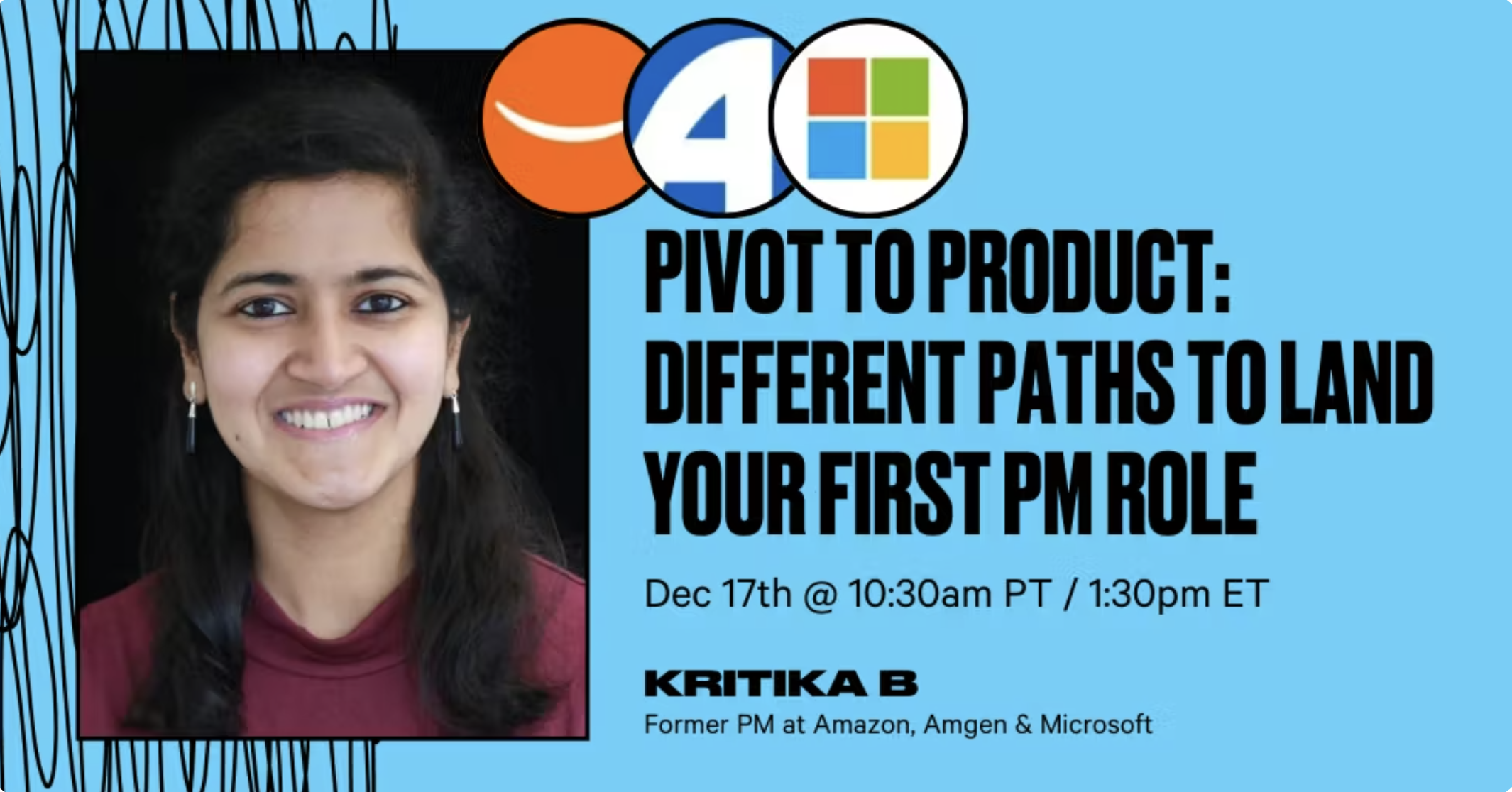
Pivot to Product: Different Paths to Land Your First PM Role
Breaking into product management doesn’t follow one predictable path—and understanding the variety of ways people get in can massively increase your chances of success. In this session, you’ll learn the most common entry points into product, how to leverage your current skills, and what companies actually look for when hiring first-time PMs. Your coach, Kritika, who has worked at Microsoft, Amgen, and Amazon, will share lessons learned from her own journey of pivoting into top PM roles. She’ll unpack the strategies that work (and the ones that don’t), the tradeoffs of different pathways, and how to position your experience based on your background—whether you're coming from engineering, design, operations, consulting, or something totally different. You’ll leave with a clearer map of potential routes into PM, tactical steps to strengthen your candidacy, and a smarter strategy for choosing roles, companies, and timing that align with your goals.
Paid Media Strategy Example Template
This is an example media strategy template--it would need to be fleshed out a lot more to add significant value, but this is a great way to start as it covers aspects such as competitive analysis, channels, testing, risk and contingency planning, etc.
TOEFL Writing Test Sample
This is an example of a TOEFL Integrated Writing answer. It shows you a good example of essay structure, length, and logic.


Your Path to MBB: How to Stand Out
Learn what it really takes to stand out in the highly competitive MBB recruiting process. In this session, top Leland consulting coaches break down the strategies that consistently help candidates land interviews and offers—from crafting a compelling story to excelling in networking, casing, and problem-solving assessments. You'll leave with a clear roadmap for positioning yourself as a top-tier candidate at McKinsey, Bain, and BCG.


AI Agents vs. Skills: How to Know What to Build
AI Agents and Skills handle tasks in fundamentally different ways. You don't want to create a custom agent when a simple skill will suffice, but a skill won't have the same scope an agent would. This guide outlines the differences between the two approaches and their use cases.
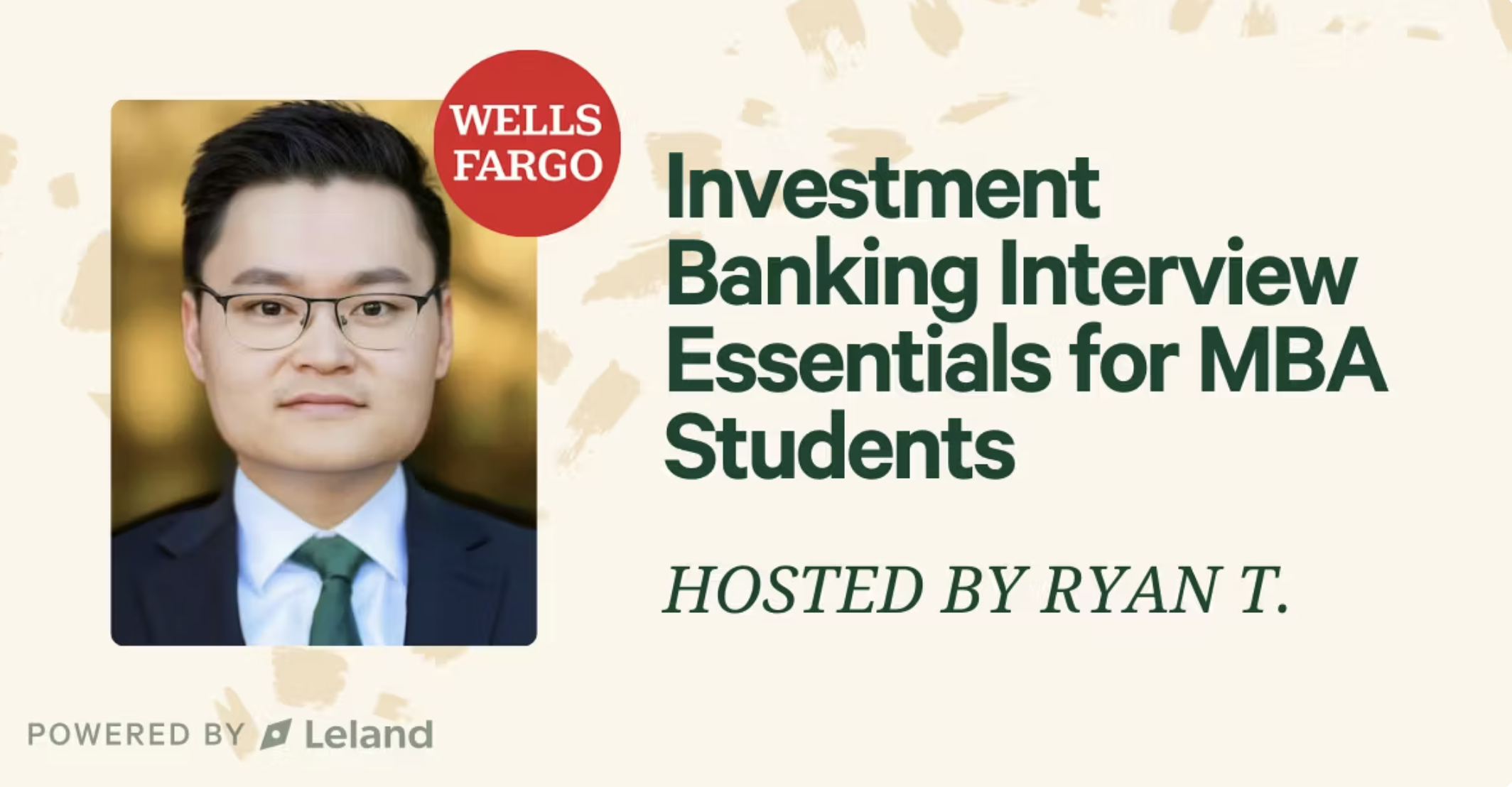
Investment Banking Interview Essentials for MBA Students
Preparing for Investment Banking Summer Associate interviews requires a level of polish, depth, and business maturity far beyond the analyst track—and this workshop is designed to get you there. We’ll cover how to tell a compelling, experience-driven story, articulate a convincing and credible “Why IB,” speak intelligently about current deals and market dynamics, and demonstrate a command of both technicals and the sector you’re targeting. You’ll also learn what banks expect specifically from Summer Associates: leadership, client readiness, process ownership, and the ability to think strategically at a higher altitude and a deeper level. If you're an MBA student aiming for IB recruiting, this session will help you stand out as a confident, capable associate-level candidate.

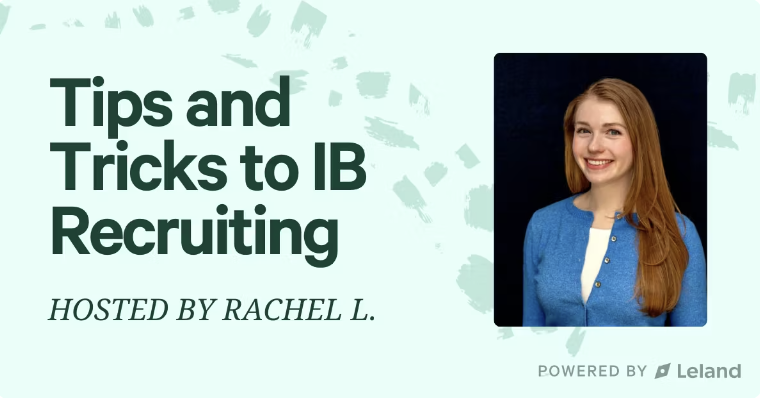
Tips and Tricks to IB Recruiting
Breaking into investment banking is highly competitive, and knowing how the process really works can give you a critical edge. In this session, you’ll learn proven strategies for navigating IB recruiting, from building a strong candidacy and networking effectively to preparing for interviews and avoiding common mistakes.

MBA Interview Prep Guidelines
A concise MBA interview prep guide focused on storytelling, school fit, and nailing the questions that drive admissions decisions.
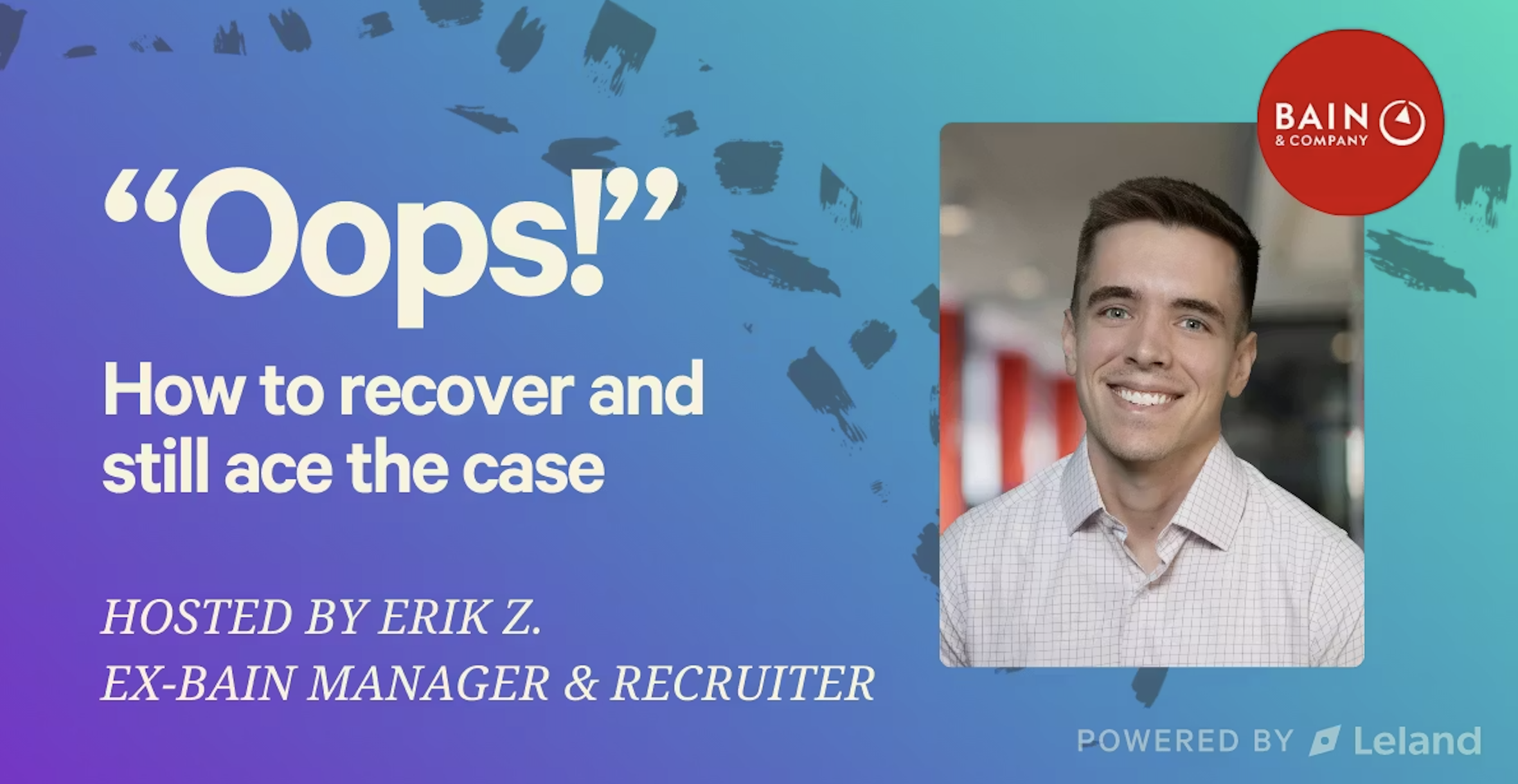
Oops!: How to recover and still ace the case
We've all been there - the case is going well, but you hit a wall or make a mistake, and suddenly things seem to be going downhill. Don’t panic - great candidates make mistakes all the time. What separates the pass from the fail is how smoothly you recover. In this webinar, we’ll break down exactly how to bounce back when things go sideways in a case. You’ll learn how to: - Recognize when you’ve veered off track (before the interviewer does) - Correct mistakes confidently without derailing the conversation - Manage nerves and avoid the “spiral” effect after a slip-up - Turn errors into moments that impress interviewers with poise and clarity - Use "zero defect" strategies to prevent common errors We’ll walk through real examples of common case pitfalls — and model what strong recoveries sound like. By the end, you’ll have a practical playbook for staying composed, regaining momentum, and delivering a strong finish even when the start wasn’t perfect. If you’ve ever thought “welp, I blew it,” this session is for you. Come learn how to turn your oops moments into offers.
Strategy Consultants’ Presentation Toolkit
Selling Complex Business Ideas with Better, More Powerful Charting
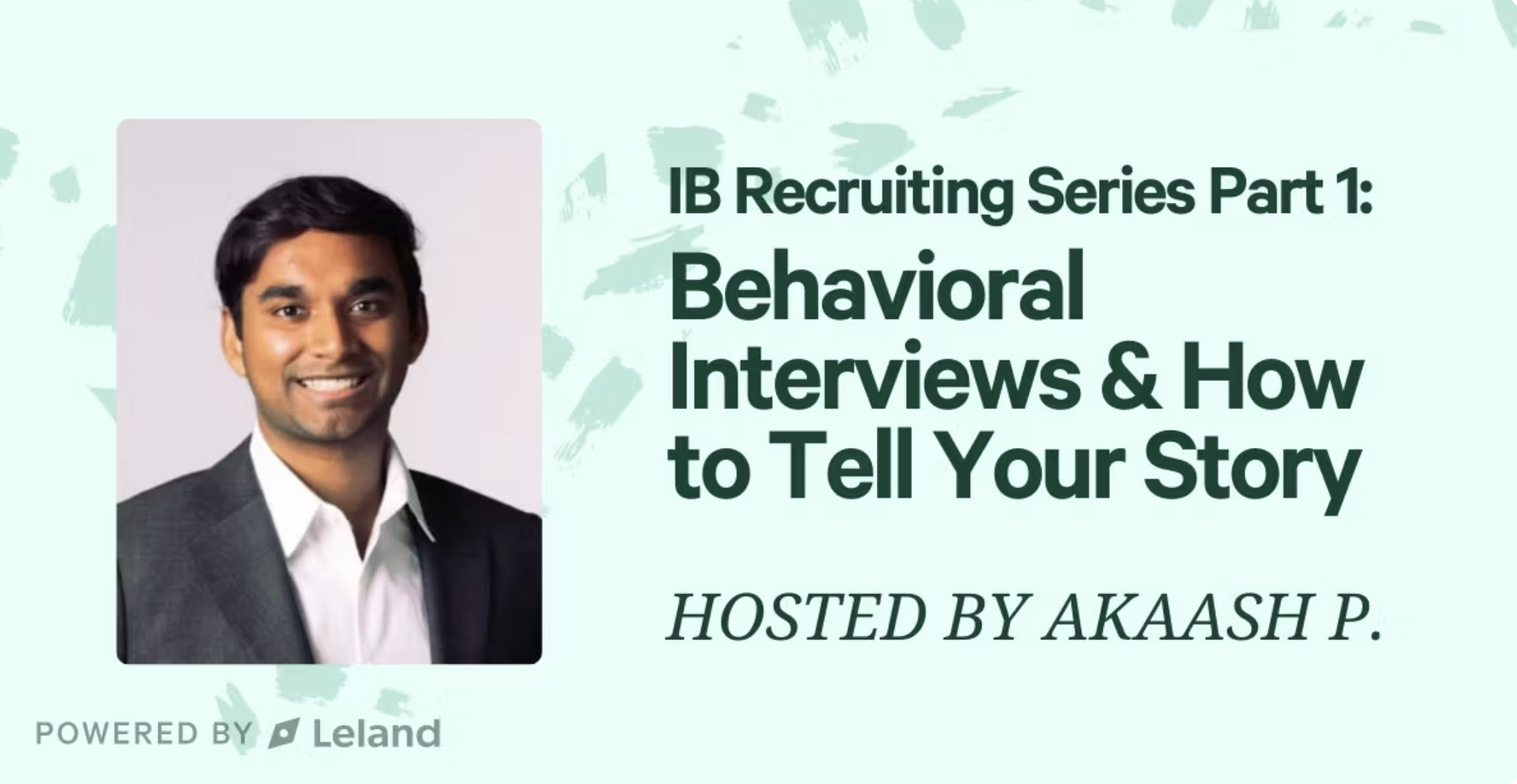
Behavioral Interviews & How to Tell Your Story
Landing an investment banking offer starts long before the technical questions—your behavioral responses and personal story often determine whether you even move forward. In this session, you’ll learn how to craft a compelling narrative that highlights your motivations, showcases your strengths, and aligns with what banks actually look for in candidates. We’ll break down common behavioral questions, effective frameworks, and the biggest pitfalls that sink interviews, plus how to tailor your story whether you’re coming from finance, consulting, engineering, or a non-traditional background. You’ll leave with clear strategies, practice prompts, and a structured approach you can use to walk into interviews with confidence and tell a story that sticks.

Stanford Undergraduate Interview Questions
Comprehensive set of interviewer questions the school requires interviewers to ask.

Inside MBA Admissions Decisions: Roundtable Discussion with M7 Admissions Officers
MBA admissions at top programs are highly selective, and small strategic decisions can make a big difference in how your application is evaluated. In this exclusive roundtable, you’ll get an inside look at how admissions decisions are actually made at M7 business schools—and what separates successful candidates from the rest. This session is designed to help you better understand how your profile is read, discussed, and ultimately decided on behind closed doors. The discussion will feature former admissions officers from multiple M7 programs who have collectively reviewed thousands of MBA applications. Drawing on their firsthand experience, they’ll share how admissions committees evaluate academics, work experience, leadership, and personal narratives, as well as common mistakes applicants make and how to avoid them. You’ll also gain insight into how schools compare candidates, handle borderline cases, and think about fit across different rounds. Whether you’re just starting to explore an MBA or preparing to apply in an upcoming cycle, this roundtable will give you rare clarity and a sharper strategic lens for approaching the process.


Deconstructing Logical Reasoning: Understanding Parts of an Argument
This presentation builds on a previous session in which I discussed the language used on the LSAT to describe logical reasoning questions and the different types of logical reasoning questions. In this session, we will discuss how to break down a logical reasoning passage (or stimulus) to identify the different parts of an argument. This foundational skill helps with every type of logical reasoning question and carries over to reading comprehension as well.
The Resilient Job Seeker
Keeping yourself sane and well during a stressful job search and transition
CV Guide for Graduate School Admissions
How do graduate admissions committees view CVs? What's most important to include? What type of format should I use? Your answers are in this guide!

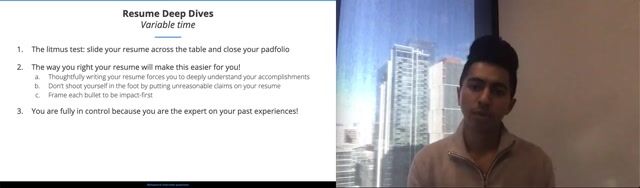
Sample Answer to a Resume Deep Dive Question
This is an example of a resume deep dive in a consulting interview.
Six Pillars MBA Application Strategy Template
A structured worksheet for mapping your experiences to the Six Pillars MBA programs use to evaluate candidates.
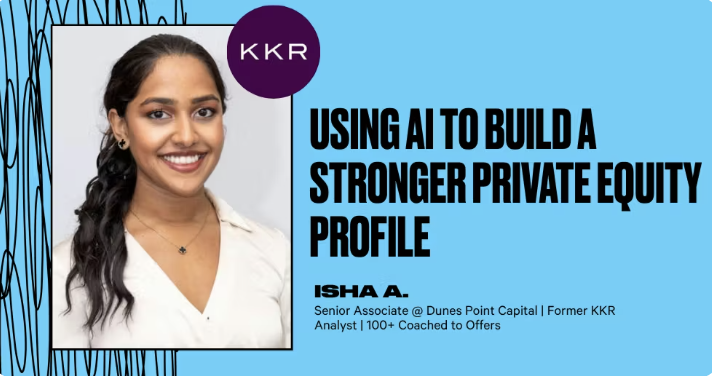
Using AI to Build a Stronger Private Equity Profile
AI can be a powerful tool for building a stronger private equity profile, but most candidates aren’t sure how to use it in a way that actually adds signal. This session is for aspiring PE candidates who want to leverage AI to sharpen their experience, materials, and overall positioning. You’ll learn how to use AI to refine your resume and deal narratives, deepen your investment thinking, and build differentiated projects that demonstrate real investor judgment.