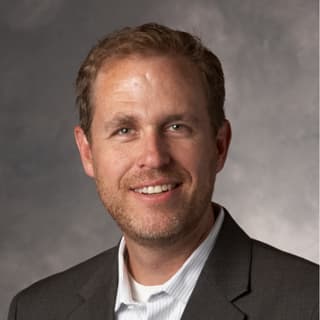
Mike Hochleutner
Leading Teams in the Era of AI: Crucial people skills for the coming decade
108,075 min coached
2,611 followers

Top Expert

Admissions Committee at Stanford Graduate School of Business

Admissions Committee at Stanford University Graduate School of Business
Successful clients at




Available tomorrow
Starting at 3:00 PM UTC
Let's find a time to meet and discuss your goals. When we arrange an intro call, please share your resume or LinkedIn profile in advance, as well as a brief summary of your goals or MBA plans, (e.g. where you hope to apply, how far along you are, etc.). If you have any specific questions you want to make sure we cover, that is helpful to have in advance too, so I can be sure to address it. I look forward to speaking!
Questions? Start chatting with this coach before you get started.
Mike's Offerings
Custom hourly · $399/hr
Get help with AI Agents, AI Automation, and .
Mike also coaches for MBA, College, Master’s Programs, and Leadership Coaching. View all.
Free
![Leading Teams in the Era of AI: Crucial Skills for 2026 and Beyond [9/16/2026] (Recording)](https://customer-14xsjmjbqk93tdwp.cloudflarestream.com/b3814102d0521b9c3b767b82965eaf96/thumbnails/thumbnail.jpg)
Leading Teams in the Era of AI: Crucial Skills for 2026 and Beyond [9/16/2026] (Recording)
5 views
![Leading Teams in the Era of AI: Crucial Skills for 2026 and Beyond [7/21/2026] (Recording)](https://customer-14xsjmjbqk93tdwp.cloudflarestream.com/c6e5750b6d9d96ed5c64d0d20ef2f2fb/thumbnails/thumbnail.jpg)
Leading Teams in the Era of AI: Crucial Skills for 2026 and Beyond [7/21/2026] (Recording)
1 views
![Leading Teams in the Era of AI: Crucial Skills for 2026 and Beyond [8/19/2026] (Recording)](https://customer-14xsjmjbqk93tdwp.cloudflarestream.com/fdbc785f395869f64a124fa6faf7350c/thumbnails/thumbnail.jpg)
Leading Teams in the Era of AI: Crucial Skills for 2026 and Beyond [8/19/2026] (Recording)
14 views
Mike’s Build with AI Qualifications
Coaches professionally
Experience level: Director

AI Certified
Completed Level 2 of Leland’s AI Builder Program
Mike has helped clients get into these companies:
I spent more than two decades as a leadership educator--five years as Executive Director for the Center for Leadership Development and Research at Stanford's Graduate School of Business, as well as VP of Programs at American Leadership Forum. After helping launch the core leadership curriculum in the Stanford MBA Program and developing popular Exec Ed programs, I realized post-COVID that the leadership tools we were using felt stale. I began exploring the impact of technology (AI) on leadership and teams, and developed a course at Stanford called 'Leading Teams in the Era of AI.' That was the beginning of a quest to understand how AI is impacting teamwork, management, and culture in organizations, and to develop protocols that leaders can use to regain a sense of strategic control. Think change management for times when technological change keeps accelerating. While I've developed software with AI and built AI-enabled platforms (e.g. mbai.app), my focus here is centered on the human element of 'building with AI.' How can we best work with others when it's tempting to just delegate to 'agents'? And when these agents proliferate, how do we navigate the tradeoffs so our human colleagues don't lose their sense of agency? To the extent I focus on AI technology itself, it's primarily ways that LLMs can be tools for interpersonal and managerial effectiveness, rather than engines of technical innovation, productivity, or cost-savings. I focus on the impact AI is having on people management and leadership strategy. If this resonates for you, let's talk!
Mike can help with:
AI Agents
AI Automation
AI Ethics & Responsible AI
AI Fundamentals
AI Tools & Integration
Prompt Engineering
Mike also coaches for MBA, College, Master’s Programs, and Leadership Coaching. View all.
About Mike
Because I've been an educator (lecturer, coach, consultant, facilitator, program and admissions director) on the topic of leadership', I primarily think of myself as a student. I recognize great leadership takes many forms, and I believe leadership development starts with who you are, what you have to offer, and where you want to go, rather than an abstract idea of what a leader should look or sound like. As we said at the Stanford GSB, it begins not by asking, "what makes a great leader?," but by asking, "why would anybody follow me?" Keep this in mind when applying to school. Maybe there's an archetype of what the perfect applicant looks like, and there are obvious elements that strengthen any application, but the best schools want to recruit people of diverse backgrounds, talents, and perspectives. Rather than trying to fit a particular mold, show how much you would add to the overall mix--intellectually, socially, personally and professionally. In your application, you need to demonstrate why the faculty would value your unique input, why your classmates would learn from your unique experiences, and why the school would be uniquely proud to call you an alum. Having read many applications, I know that what most often stands out are the unexpected things, making an applicant memorable and authentic. Cookie cutter approaches rarely work. Half my career was spent at the Stanford GSB--first as an MBA student, later as Executive Director of the GSB's Center for Leadership Development and Research, and then Director of the Stanford MSx Program and Director of Admissions. I was brought in to the GSB to help oversee the launch of its MBA core leadership curriculum (Leadership Labs, Arbuckle Leadership Fellows, GSB Executive Challenge). Later, I helped revamp the Stanford MSx Program and oversaw admissions. Outside my academic and admissions work, I've had diverse roles: coached and facilitated leadership programs with community leaders and CEOs, worked as a strategy consultant, co-founded a microbrewery, served as a Peace Corps volunteer, been angel investor and advisor to startups. But while I've worn different hats, my approach to making an impact has generally been to help people with great potential to become better leaders. (...OK, maybe the microbrewery had different goals). My recent personal work is focused on the impact that AI is having on leaders, teams, and ...applicants. After writing a book, "Leading Teams in the Era of AI," I became fascinated with the learning and personal development processes that LLMs could support, and turned some of that learning on the admissions process. These experiments led to the launch of MBAI (mbai.app), a platform that uses agentic AI workflows to help MBA applicants develop richer narratives, focused goals, and stronger applications. Sign up and try out some of our tools for free.
Why do I coach?
As Admissions Director, I enjoyed 'selling' my program and school to prospective applicants. I knew that, for the right person, it could be a life changing experience, and I saw this affirmed in the success stories of our graduates. I always sought to be honest, as I also knew it was not the right option for everybody. To an extent, therefore, I was coaching applicants. But I was, first and foremost, representing the program, the GSB, and Stanford University. There were things that I couldn't say, or wouldn't say, at least not explicitly. There was only so much I could do for individual applicants, even if I saw great potential and wanted them to be successful. And let's face it, anpplicants often didn't feel comfortable disclosing something to me they thought might jeopardize their candidacy. Leaving Stanford, I knew I would miss these interactions, because the aspirational motivations that applicants displayed was energizing. Working as a coach, I get to come at it from a different perspective, working on behalf of a client without having to serve the interests of any program or school. I can still approach it with honesty, and won't sugarcoat problems I see, but I draw great satisfaction from helping someone achieve an aspirational goal that, I believe, can be truly life-changing. In addition, my broader experience working with MBA and MSx students at Stanford for many years informs my work. The GSB, just like every great business school, has its warts. Too often, people view 'getting in' to a top business school as the golden ticket to their dreams. But as soon as you are admitted, the bar of expectation begins to shift. When 'getting in' to school is the only goal, I have seen students lose sight of the longer-term ideals they articulate in their application and when they arrive. They take the popular classes and pursue the trendy career path, while downplaying the elements of their own unique backgrounds and experiences that can be their greatest assets to make a meaningful life. Naturally, everybody goes to school open to new possibilities and change, but it is important to make sure such changes are grounded in your values, rather than group think or social status. I coach, therefore, because I think I can provide value and perspective. I can help clients understand the admissions process--not only as a challenge to overcome, but as a crucial step in a journey to self-improvement, adventure, and leaving your mark on the world. Let's be clear, getting you into the school of your dreams is important, but it won't make the world a better place. What you can do with such an opportunity to leave a positive legacy is what motivates me.
Work Experience
Founder
MBAI
October 2023 - Present
MBAI (mbai.app) is your business school admissions intelligence platform. Developed by experienced admissions and leadership development specialists, we use personal insights into school evaluation methods, leverage the latest agentic AI tools, and provide a guided workflow to offer detailed analysis and insights to strengthen your MBA application.

Director of Stanford MSx Program & Director of Admissions
Stanford University Graduate School of Business
July 2012 - October 2023
Admissions Committee
Served as Director of the Stanford MSx Program (2012-2020) and Director of Admissions for the Stanford MSx Program (2012-2023). Oversaw marketing, recruiting and selection for the Stanford MSx Program (ie. Stanford Sloan Fellows), including joint MBA/MSx applicants. Introduced leadership development curriculum, taught leadership elective (Leading with Agility) to MBA and MSx students, served as academic advisor to students. Worked closely with MBA Admissions team on outreach, application, backend processes, evaluation timeline, and communication with applicants.
Executive Director, Center for Leadership Development and Research
Stanford University Graduate School of Business
April 2007 - July 2012
Served as Executive Director of the school's Center for Leadership Development and Research (CLDR). Oversaw the introduction of core MBA leadership curriculum (Leadership Labs, Arbuckle Leadership Fellows Program, GSB Executive Challenge), co-founded LOWkeynotes public speaking program, oversaw View From The Top CEO speaker series, managed the GSB's first in-house coaching team (e.g. senior facilitators for the 'Touchy Feely' class), launched and taught in Exec Ed courses on leadership.
VP of Programs
American Leadership Forum
April 2002 - April 2007
Managed civic leadership development initiatives for Silicon Valley CEOs and senior executives in business, government and the social sector.

Research Manager
Stanford-McKinsey GLOBE Initiative
July 2001 - May 2002
Worked with team of Stanford faculty and McKinsey senior partners to research leadership practices of large global enterprises that seek to maintain both global efficiency and local responsiveness.

Volunteer / Consultant
Peace Corps
June 1997 - August 1999
Prior to business school, I served as a US Peace Corps Volunteer in Slovakia. To this end, I can speak a bit to applicants with non-traditional work backgrounds from personal experience.
Education

Stanford Graduate School of Business
Master of Business Administration (MBA)
1999 - 2001
Admissions Committee Experience
University of California, Santa Cruz
BA, Economics and Politics
1989 - 1993
Go Banana Slugs!
88 Reviews
Overall Rating
5.0
Knowledge
5.0
Value
5.0
Responsiveness
5.0
Supportiveness
5.0
Mike has helped clients get into these schools:
Mike has helped clients get into these companies: