Leland+ for Master’s Programs






Popular on Leland+
![Admissions Insights Part 1: Should You Go to Grad School? [7/9/2026] (Recording)](https://customer-14xsjmjbqk93tdwp.cloudflarestream.com/83df898c684aecc70f0e9261160b880f/thumbnails/thumbnail.jpg)
Admissions Insights Part 1: Should You Go to Grad School? [7/9/2026] (Recording)
Are you contemplating whether grad school is the right path for you? Ask yourself these 5 questions first. This is Part 1 of my Admissions Insider Series, where I share my perspective as a former AdCom member of Carnegie Mellon University's MSCF program (the #3 financial engineering master's in the US). I'll share what I wish I knew about my own Master's program, as well as what I've learned from coaching 500+ applicants to graduate programs, including students admitted to Stanford, Yale, Duke, Columbia, UChicago, Cornell, and others. Spaces are limited, so be sure to RSVP and secure your spot today!

![Finding Your Authentic 'Why': Positioning for Top MBA & Master's Programmes [7/31/2026] (Recording)](https://customer-14xsjmjbqk93tdwp.cloudflarestream.com/1157f815d19d2668bf4d01df7f70ae68/thumbnails/thumbnail.jpg)
Finding Your Authentic 'Why': Positioning for Top MBA & Master's Programmes [7/31/2026] (Recording)
(the "why underneath the why"), targeting the ambitious-but-blocked candidates targetting European programmes.

![Nailing the CBS MBA Essays w/ New 2026 Tips! [7/8/2026] (Recording)](https://customer-14xsjmjbqk93tdwp.cloudflarestream.com/81dd2d843fb3c6cb44706836cf81b711/thumbnails/thumbnail.jpg)
Nailing the CBS MBA Essays w/ New 2026 Tips! [7/8/2026] (Recording)
Are you ready to tackle the Columbia Business School MBA essays with confidence? Join me, Melanie, for an exclusive session where we'll dive into the latest tips for the 2026 application cycle. With my background as an MBA Admissions Interviewer at CBS and an MBA alum from both Columbia Business School, I have the insights you need to craft compelling essays that stand out. In this session, we'll cover proven, actionable strategies specific to each of Columbia's essays. Whether you're applying for a traditional full-time MBA or a dual degree program, this event is designed to help you succeed. Spaces are limited, so be sure to RSVP and secure your spot. I look forward to helping you on your journey to CBS!

![Admissions Insights Part 4: Ex-AdCom AMA - Getting into Top MFE & STEM Master's [7/27/2026] (Recording)](https://customer-14xsjmjbqk93tdwp.cloudflarestream.com/1afb8a9f4624fd73a303611813e41693/thumbnails/thumbnail.jpg)
Admissions Insights Part 4: Ex-AdCom AMA - Getting into Top MFE & STEM Master's [7/27/2026] (Recording)
Are you quant enough to get into a top MFE program? This is the final part of my Admissions Insider Series, where I share my perspective as a former AdCom member of Carnegie Mellon University's MSCF program (the #3 financial engineering master's in the US). I'll also share what I've learned coaching clients who have gotten into quant finance & STEM programs at Stanford, Columbia, UChicago, Cornell, Duke, NYU, Yale, and other schools. Spaces are limited, so be sure to RSVP and secure your spot today!
Free

The Only Interview Question Bank You Need for Law School Interviews
This is a comprehensive guide to preparing for law school interviews that past successful applicants have used to ace the law school interview process
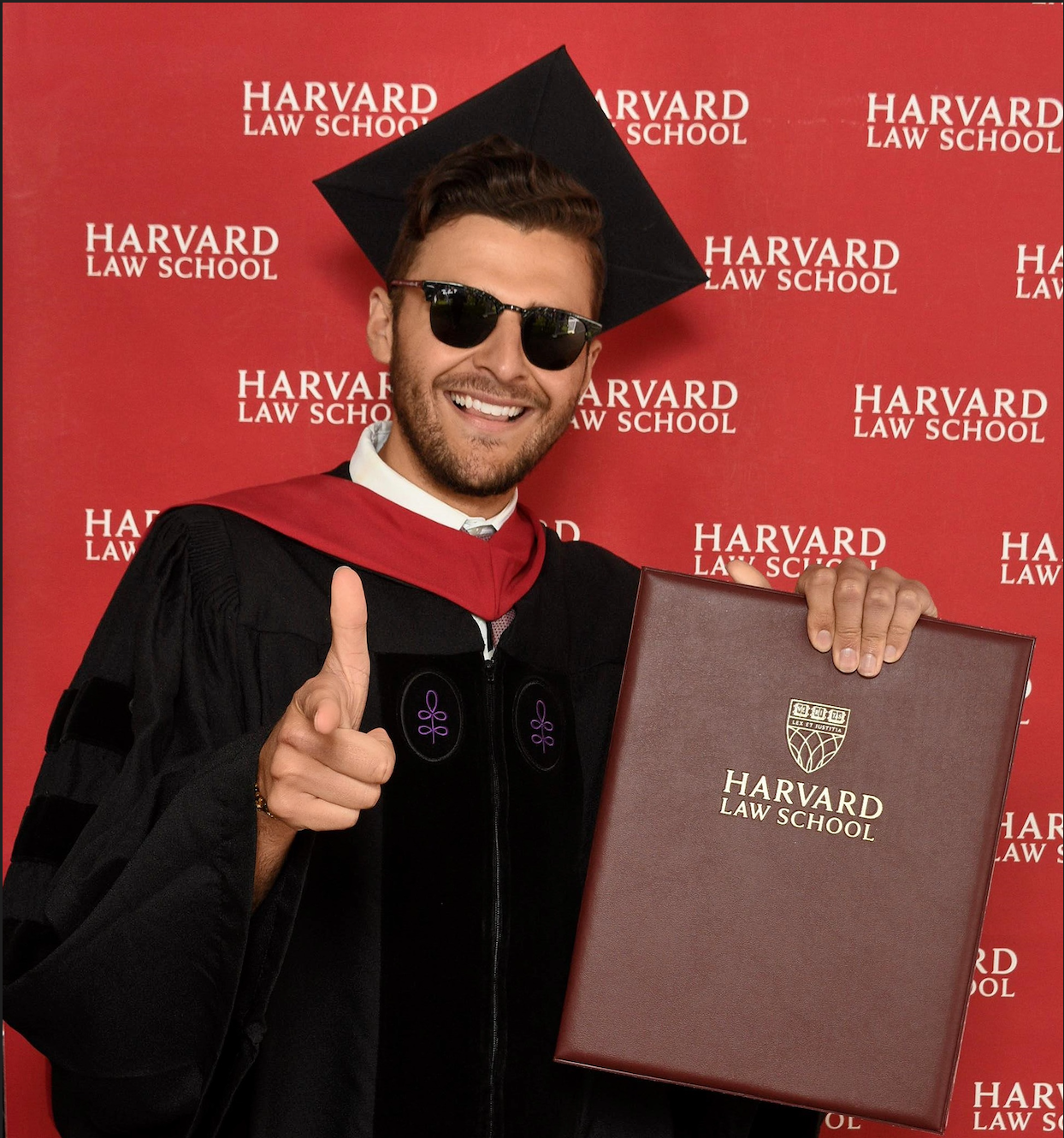
The Personal Statement That Got Me Into Every Top Law School!
This is the personal statement I submitted during my own application cycle, when I was admitted to every law school to which I applied, including Harvard, Columbia, Yale, U Penn, U Chicago, and more. It shows how the strongest essays find the magic in the mundane—using close observation and precise detail to turn an ordinary experience into a story only one unique applicant could tell. I share it as an example of how to write the rare personal statement that an admissions officer cannot shake.

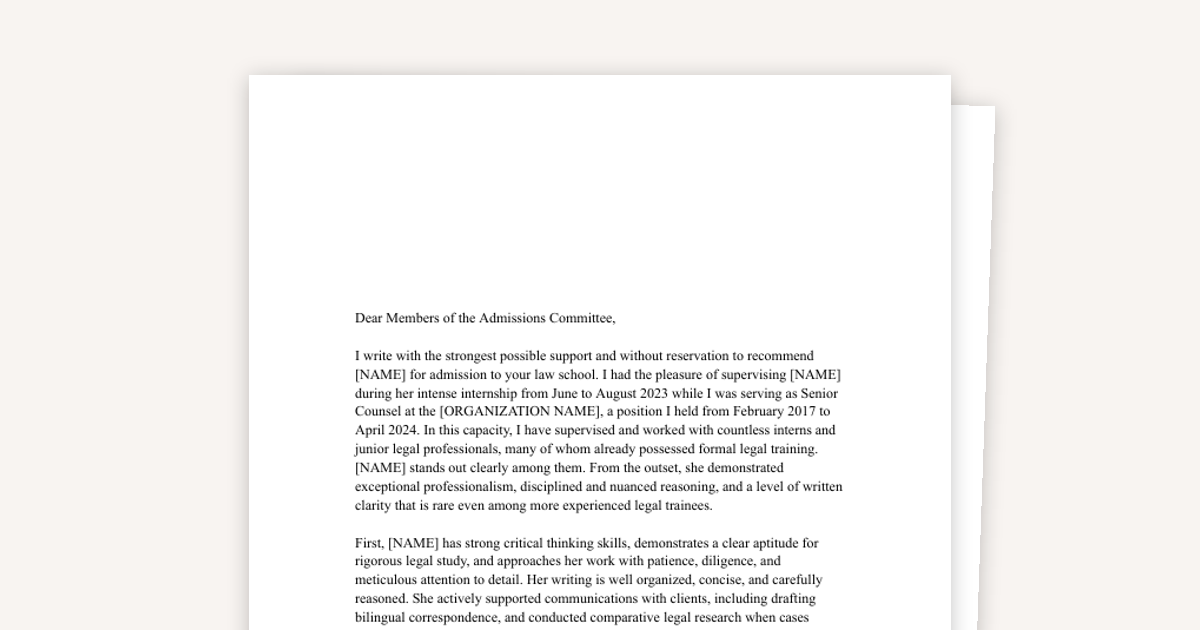
Law School Recommendation Sample
This is a real letter that one of my law school recommenders shared with me. I ultimately got into multiple T14 law schools with full merit-based scholarships.
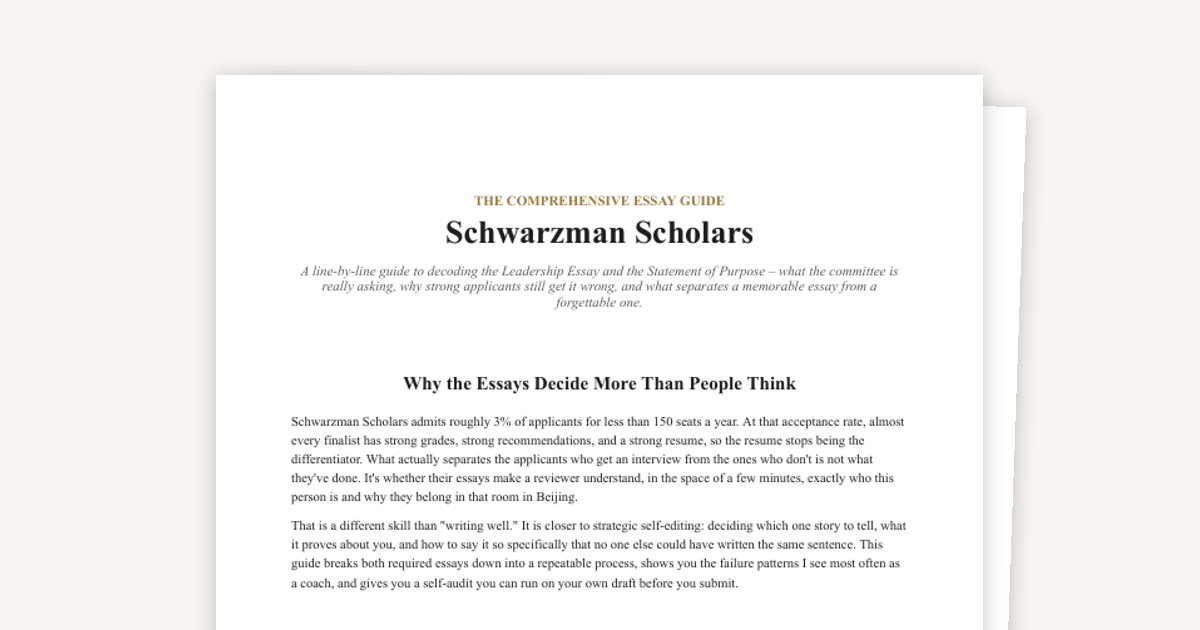
Ace Schwarzman Scholars essays: A comprehensive guide for 2027 intake
Schwarzman Scholars admits roughly 3% of applicants for less than 150 seats a year. At that acceptance rate, almost every finalist has strong grades, strong recommendations, and a strong resume, so the resume stops being the differentiator. What actually separates the applicants who get an interview from the ones who don't is not what they've done. It's whether their essays make a reviewer understand, in the space of a few minutes, exactly who this person is and why they belong in that room in Beijing. That is a different skill than "writing well." It is closer to strategic self-editing: deciding which one story to tell, what it proves about you, and how to say it so specifically that no one else could have written the same sentence. This guide breaks both required essays down into a repeatable process, shows you the failure patterns I see most often as a coach, and gives you a self-audit framework you can run on your own draft before you submit.

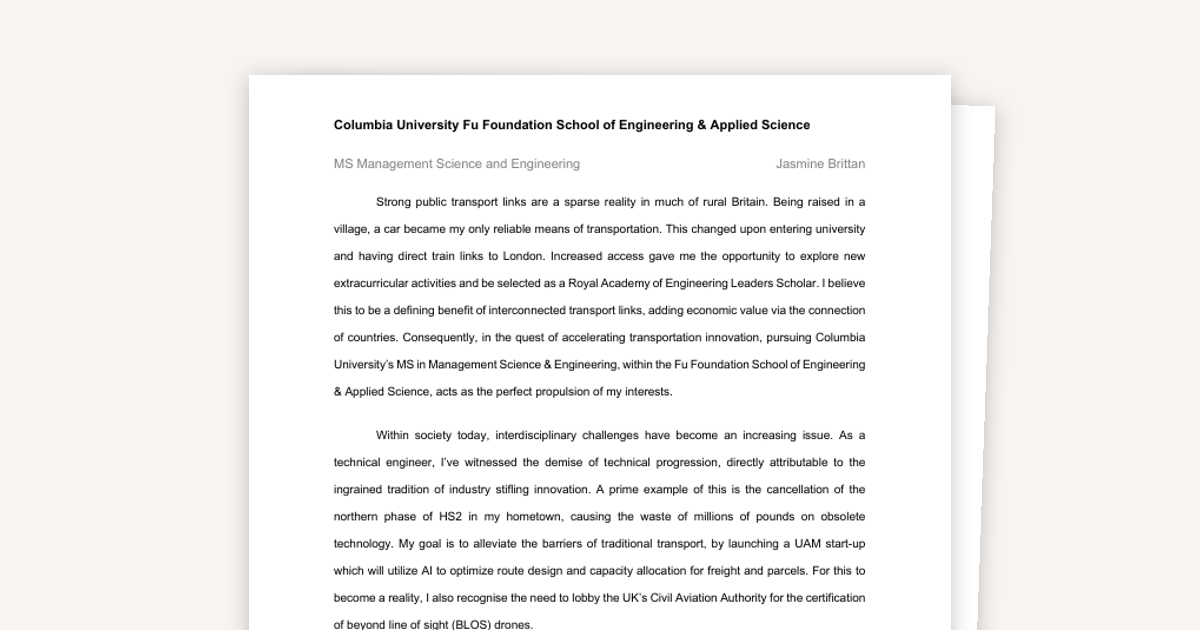
Columbia Uni M.S. Management Science & Engineering Accepted Essay
Complete essay of a student accepted to the program.

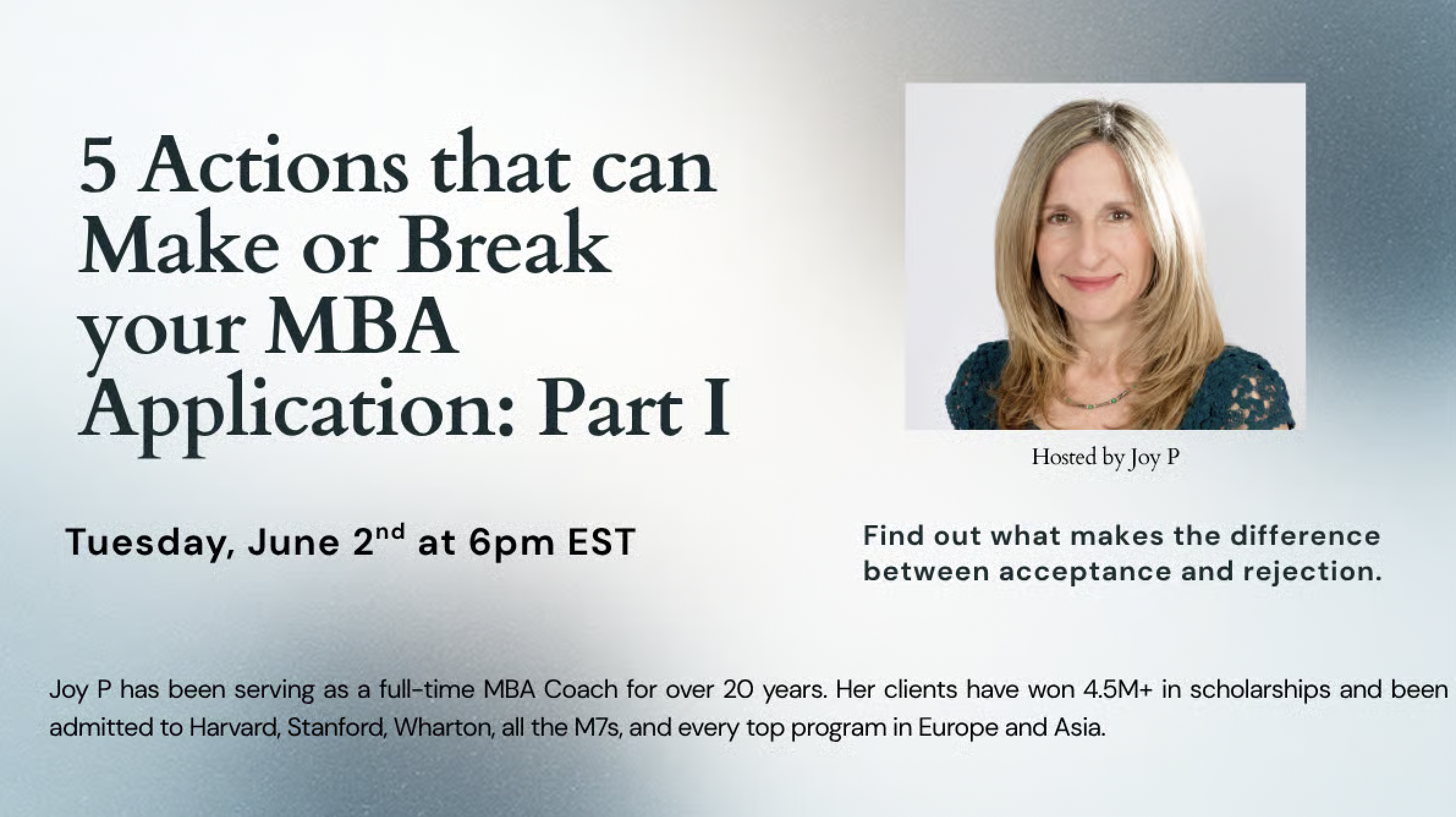
5 Actions that can Make or Break your MBA Application
It’s not enough to do all the right things - you also need to know what not to do! Join me in this webinar as we review the dos and don'ts and uncover small yet crucial details that can help you win admission to your dream school. This event is designed to make you better informed, so you can make the right decisions about your applications!
![GMAT Quant Short-Cuts Used by Top-Scorers [5/26/2026] (Recording)](https://customer-14xsjmjbqk93tdwp.cloudflarestream.com/824934fc5165ae86506881f01c503ae7/thumbnails/thumbnail.jpg)
GMAT Quant Short-Cuts Used by Top-Scorers [5/26/2026] (Recording)
In this session, you will learn how top GMAT scorers approach quantitative problems faster and more accurately by recognizing pattern types before choosing a method. The focus will be on number properties shortcuts that eliminate answer choices early, strategic back-solving for algebra-heavy problems, and how to identify when estimation beats exact calculation on data sufficiency questions. The coach works with GMAT candidates regularly and will be sharing the reasoning process they actually teach, the kind of situational thinking that is hard to absorb from a recording alone.

![Starting Your GMAT Journey: An Introduction to the GMAT Focus Edition [5/21/2026] (Recording)](https://customer-14xsjmjbqk93tdwp.cloudflarestream.com/2b156741c449312c1afd766a8fe01664/thumbnails/thumbnail.jpg)
Starting Your GMAT Journey: An Introduction to the GMAT Focus Edition [5/21/2026] (Recording)
Starting GMAT prep can feel confusing when you’re not sure what’s changed in the Focus Edition or how to begin effectively. This session is for anyone looking for a clear introduction to the GMAT Focus Edition and what it takes to succeed. You’ll learn how the exam is structured, what each section tests, and how to build a study plan that aligns with your strengths and target score. Join live to ask questions about your starting point and get guidance on how to approach your prep with confidence. The speaker is an expert GMAT coach who regularly helps candidates navigate the early stages of studying. They’ll share the patterns they see across successful test takers and the foundational strategies typically covered in 1:1 prep sessions.
![Starting Your GRE Journey: An Introduction to the GRE General Test [5/14/2026] (Recording)](https://customer-14xsjmjbqk93tdwp.cloudflarestream.com/cbe5a63a3bd823dc5bd2feb5a6263ec1/thumbnails/thumbnail.jpg)
Starting Your GRE Journey: An Introduction to the GRE General Test [5/14/2026] (Recording)
Starting your GRE prep can feel overwhelming when you’re not sure what the test actually involves or how to begin. This session is for anyone looking for a clear introduction to the GRE General Test and how to approach it effectively. You’ll learn how the exam is structured, what each section tests, and how to build a study plan that sets you up for steady improvement. Join live to ask questions about your starting point and get guidance on how to approach your prep with more confidence. The speaker is an experienced GRE coach who regularly helps students navigate the early stages of preparation. They’ll share the patterns they see across successful test takers and the foundational strategies typically covered in 1:1 prep sessions.
Free
Land your Job or Study in ... Switzerland
Switzerland is not part of the EU. It does not have the largest job market in Europe. And it is, by most measures, one of the most expensive countries in the world to live in. None of that stops it from being one of the most attractive destinations on the continent for ambitious non-EU graduates and young professionals: it simply requires knowing what you are walking into. The country hosts the European or global headquarters of Nestlé, Novartis, Roche, ABB, UBS, Credit Suisse's successor operations, and dozens of precision engineering and medtech companies that most people outside Europe have never heard of. Salaries are the highest in Europe by a significant margin, which is the other side of the cost equation. ETH Zurich consistently ranks among the world's top ten universities. English is widely used in professional environments, particularly in Zurich and Geneva. This session covers the study path and the direct job path side by side: how the permit system works for non-EU nationals, what living in Zurich or Geneva actually costs, language realities across the four linguistic regions, and how to position yourself in a market that rewards precision, reliability, and depth over volume. Two real cases show how international candidates made it work. Switzerland is selective. It rewards those who come prepared. In this session, we lay out exactly what that means in practice. New episodes in this series cover a different European country every Thursday.
![The Key to Mastering Combinations and Permutations on the GMAT [5/7/2026] (Recording)](https://customer-14xsjmjbqk93tdwp.cloudflarestream.com/d1c82179afff422e8acb2ad03e98b92d/thumbnails/thumbnail.jpg)
The Key to Mastering Combinations and Permutations on the GMAT [5/7/2026] (Recording)
After this session, you will know exactly how to recognize when a GMAT problem calls for combinations versus permutations and how to set up the math without second-guessing yourself. We will cover the slot method for counting arrangements, how to handle restrictions like repeated elements or fixed positions, and the fastest way to simplify factorial expressions under timed conditions. Attending live means you can bring a specific problem type that keeps tripping you up and hear how to think through it in real time, not just watch a solved example. The coach works through these problems with GMAT students regularly and will share the reasoning patterns that consistently separate confident solvers from those who guess and move on.

![How to Solve GRE Math Questions in Half the Time [5/5/2026] (Recording)](https://customer-14xsjmjbqk93tdwp.cloudflarestream.com/9b5371c69c2dc34fbb3eadd420808bc9/thumbnails/thumbnail.jpg)
How to Solve GRE Math Questions in Half the Time [5/5/2026] (Recording)
In this session, you'll learn how to identify question types faster and apply targeted shortcuts that cut time without sacrificing accuracy. The focus will be on three high-frequency GRE math areas where most test-takers lose unnecessary time: quantitative comparison traps, data interpretation setups, and plugging-in strategies for algebra problems. Attending live means you can describe the specific question types giving you trouble and get a direct answer calibrated to where you are in your prep, not a general response. The coach works with GRE students regularly and will be sharing the patterns that consistently separate efficient scorers from those who run out of time.
Free
Land Your Job or Study in ... Denmark
Denmark does not make much noise. It does not need to. Novo Nordisk alone accounts for roughly 4% of the entire Danish GDP. Vestas leads the world in wind energy. Danfoss sets the standard in industrial automation. These are not household names to most non-EU professionals, and that is precisely the point: the competition for roles here is lower than the quality of the companies would suggest. The labour market is tight and the skills shortage is real, which works in your favour. English is the default language in most professional environments. The workforce is genuinely multicultural, and Danish workplace culture is notably flat: titles matter less than contribution. This session covers both paths in: studying at world-class institutions like Copenhagen Business School and the Technical University of Denmark, and entering the job market directly. We go through visa options, the Danish approach to work-life integration, living costs, and what international candidates consistently get wrong in their applications. Two real cases show what a successful move to Denmark actually looks like. Denmark is smaller than its neighbours and more selective. This Thursday, we show you exactly how to qualify. New episodes in this series cover a different European country every Thursday.
Free
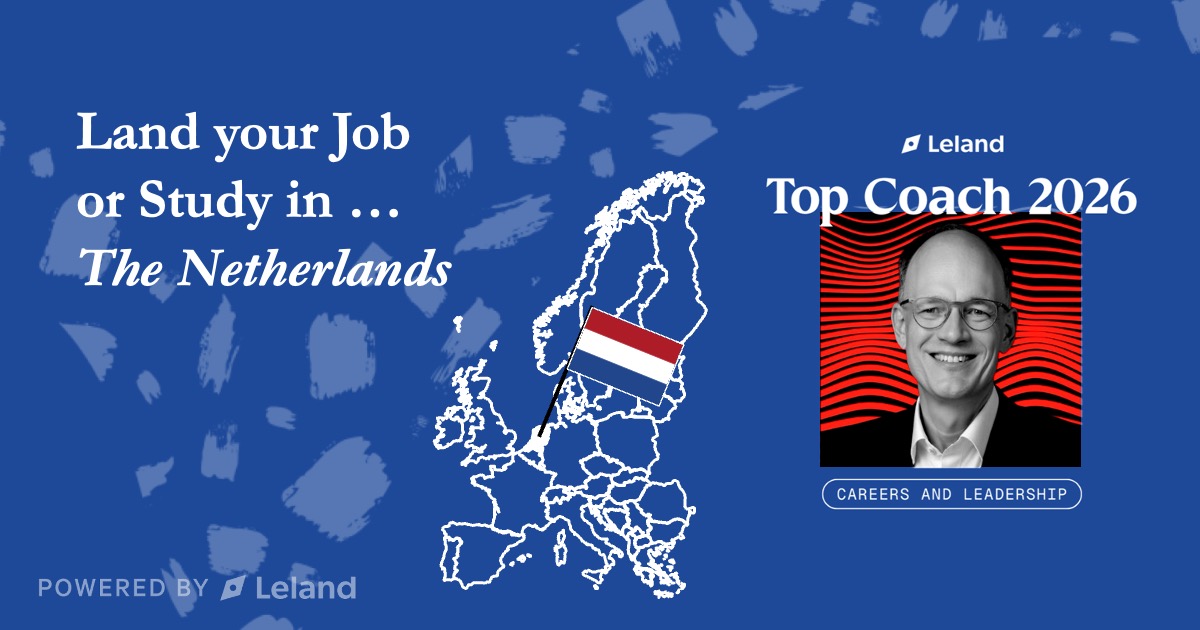
Land Your Job or Study in ... The Netherlands
The Netherlands punches well above its weight. A country of 18 million people hosts the European headquarters of companies like ASML, Shell, Philips, Booking.com, Heineken, and IKEA. Rotterdam is home to the largest port in Europe. Amsterdam ranks among the continent's top financial and tech hubs. For a non-EU professional, this combination of scale, innovation, and openness is rare. The language barrier that slows people down in other European countries simply does not exist here. The Dutch are among the most proficient English speakers in the world outside of native-speaking countries. Most professional environments operate entirely in English. That removes one of the biggest obstacles non-EU candidates face elsewhere. This session covers the study path and the direct job path side by side: visa options, living costs in Amsterdam and beyond, the multicultural workplace culture that makes integration genuinely easier, and how to position yourself in a market that spans logistics, tech, finance, agriculture, and life sciences. Two real cases show how international candidates turned Dutch openness into a concrete career move. The Netherlands is one of the most welcoming labour markets in Europe. This Thursday, we show you how to use that to your advantage. New episodes in this series cover a different European country every Thursday.
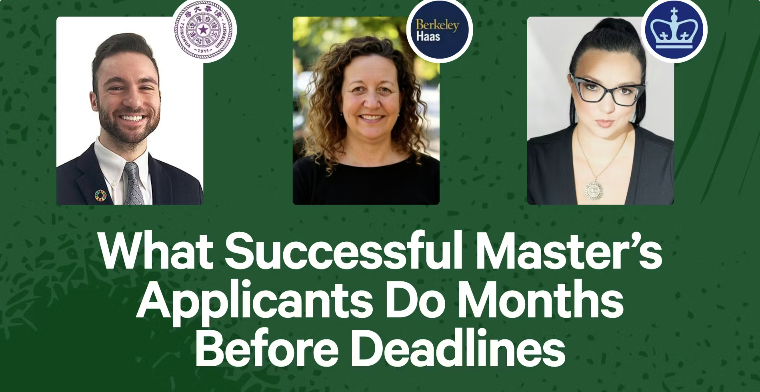
What Successful Master’s Applicants Do Months Before Deadlines
In this session, you will learn how to build a realistic application timeline that starts well before the fall rush, including when to reach out to recommenders, how to begin positioning your professional narrative, and what early research into programs actually looks like when done well. Most applicants underestimate how much groundwork shapes a strong application, and this session will show you exactly where that work starts.


![The 5 Questions to Ask Before Applying to Any Finance Master's [4/9/2026] (Recording)](https://customer-14xsjmjbqk93tdwp.cloudflarestream.com/c580b716a0e529d8ad66914602171a4d/thumbnails/thumbnail.jpg)
The 5 Questions to Ask Before Applying to Any Finance Master's [4/9/2026] (Recording)
Most applicants start with rankings, pick three or four recognisable names, and write the same application for all of them. Then they wonder why the essays feel forced. The problem usually isn't the application. It's that they chose the wrong programme to begin with. Finance vs Financial Economics. Academic vs applied. London vs Paris vs St Gallen. Full-time vs part-time. These choices shape your career in ways a league table won't tell you. I applied to Oxford's MFE and HEC's MSc International Finance, got into both, and chose Oxford, and that decision came down to questions most applicants never think to ask. In 30 minutes I'll walk through five questions you should answer before you apply anywhere: what career this actually leads to, what it really costs, whether your profile fits, and how to tell which programme type matches what you need. I coach applicants through successful admits at Oxford, HEC, and peer programmes across Europe, and this is always where we start. Plenty of time for Q&A. Attendees get priority access to 1:1 coaching at a discounted rate. Best suited for 2026–27 and 2027–28 applicants.