Leland+ for LSAT







Popular on Leland+
![The LSAT Rebuild: Foundations to 170+ [4/29/2026] (Recording)](https://customer-14xsjmjbqk93tdwp.cloudflarestream.com/202f59b08dcaecc0cb8cfe4447d88c3c/thumbnails/thumbnail.jpg)
The LSAT Rebuild: Foundations to 170+ [4/29/2026] (Recording)
In this session, you'll learn how to diagnose and fix the reasoning errors that consistently hold LSAT scores below 160, how to approach logical reasoning questions with a repeatable process rather than instinct, and how to build the structural reading habits that high scorers rely on across all three sections. The focus is on rebuilding fundamentals in a way that compounds, not just patching mistakes one at a time. Attending live means you can ask about your specific score plateau or prep history and hear how a coach who works with LSAT students daily actually thinks through that situation. The patterns that separate 170+ scorers from the rest are recognizable once you know what to look for, and this session is a direct look at how that diagnosis works in practice.

![The Framework for Solving LSAT Flaw Questions [5/21/2026] (Recording)](https://customer-14xsjmjbqk93tdwp.cloudflarestream.com/429437b0a016222729e22ef6f9d49712/thumbnails/thumbnail.jpg)
The Framework for Solving LSAT Flaw Questions [5/21/2026] (Recording)
After this session, you will understand a clear framework for solving LSAT flaw questions with more consistency and confidence under time pressure. This session is designed for students who want to move beyond guessing and learn how to systematically identify flawed reasoning patterns, break down argument structure, and eliminate answer choices more efficiently. These are the patterns that often separate consistent scorers from those who plateau on logical reasoning. Attending live means you can ask about your specific score range, your toughest flaw question types, or the timing issues you keep running into, and hear how an experienced LSAT coach thinks through those situations in real time. The coach works with LSAT students regularly and will be sharing the diagnostic instincts and structural thinking that inform that work every day. If you want a more repeatable approach to LSAT flaw questions, it’s worth joining live.


Mastering Logical Reasoning: Recognizing Flaws
Flaw questions are one of the most common types of logical reasoning questions, and they test a critical skill used in law school and your legal career. Get a jump start on preparing for the LSAT by joining this presentation to become a master at identifying flaws. Megan works for Portland State University and designed an innovative LSAT Prep course that focuses on the real-world applications of the skills tested on the LSAT. Instead of sharing "tips and tricks," Megan teaches her students the "why" behind what the LSAT is testing using examples from legal practice, law school class discussions, and every day life. This approach helps students relate to the material and integrate LSAT skills into everyday practice. Law school teaches you how to think, and with Megan's help you can get a head start!

Mastering this Skill Unlocked the 99th percentile LSAT for Me
The LSAT is one of the biggest hurdles on the law school path—but mastering the right skills can completely change your score trajectory. In this session, we’ll dive into the single most impactful skill that propelled Eshaan S. to a 99th percentile score. You’ll learn why this skill matters, how to practice it effectively, and how to apply it under timed conditions. We’ll also cover broader strategies for test-day preparation, common pitfalls that hold students back, and ways to approach the exam with confidence. Whether you’re just starting LSAT prep or aiming to push from good to great, you’ll leave with concrete techniques you can put into action right away.

Conquering Parallel Reasoning on the LSAT
Struggling to keep up when LSAT Logical Reasoning seems to throw identical arguments with different labels at you? Parallel reasoning is one of the most common stumbling blocks—and yet, the difference between a high score and a great score often comes down to mastery of this one skill. In this session, you'll learn from Adam T., a full-time LSAT instructor since 2016 and curriculum developer at PowerScore with over 15 years of teaching experience. He has helped students hit scores in the 170s and gain admission to top law schools. Adam will guide you through his proven framework to identify parallel argument structures, eliminate distractors that look right but aren’t, and apply the same logic under timed conditions. Space is limited, so RSVP to secure your spot. We’re excited to be on the law journey with you!


Wrong Answer Journal Guide (WAJ) with Examples
The WAJ is a critical tool for improving your LSAT score, and will catalyze your LSAT progress by clarifying technical errors. Included is a WAJ template I teach, and contains real entries from my past students.
Free
![Mastering this Skill Unlocked the 99th percentile LSAT for Me [5/27/2026] (Recording)](https://customer-14xsjmjbqk93tdwp.cloudflarestream.com/d5225b65f7573eded7bf88a234b199a6/thumbnails/thumbnail.jpg)
Mastering this Skill Unlocked the 99th percentile LSAT for Me [5/27/2026] (Recording)
Many LSAT students spend months drilling questions without identifying the one skill that actually drives major score improvement. This session is for test takers who want to sharpen the core ability that separates top scorers from the rest. You’ll learn how to approach LSAT questions with stronger reasoning, improve accuracy under pressure, and develop the habits that consistently lead to higher performance across sections. Join live to ask questions about your own prep and see how a 175 scorer approaches the exam strategically. The speaker is an experienced LSAT coach who regularly helps students raise their scores through more focused, efficient preparation. They’ll share the patterns they see across top performers and the kinds of techniques typically covered in 1:1 coaching sessions.
Free
![Don't Use an LSAT Wrong Answer Journal. Do This Instead. [5/27/2026] (Recording)](https://customer-14xsjmjbqk93tdwp.cloudflarestream.com/869ad5e86313ae2474f45fefd05da86b/thumbnails/thumbnail.jpg)
Don't Use an LSAT Wrong Answer Journal. Do This Instead. [5/27/2026] (Recording)
After this session, you'll know exactly how to identify why you're missing LSAT questions and what to do about it in your next study session. Instead of logging wrong answers in a journal that tells you what went wrong, you'll learn how to track the reasoning errors that actually repeat across question types, and how to build a correction habit that sticks. This session will also cover how to distinguish a knowledge gap from an execution error, because the fix for each is completely different. Attending live means you can describe your current study setup and get a direct response about whether your approach is working or working against you. The coach works with LSAT students at every score level and brings a clear sense of the patterns that separate candidates who plateau from those who break through.

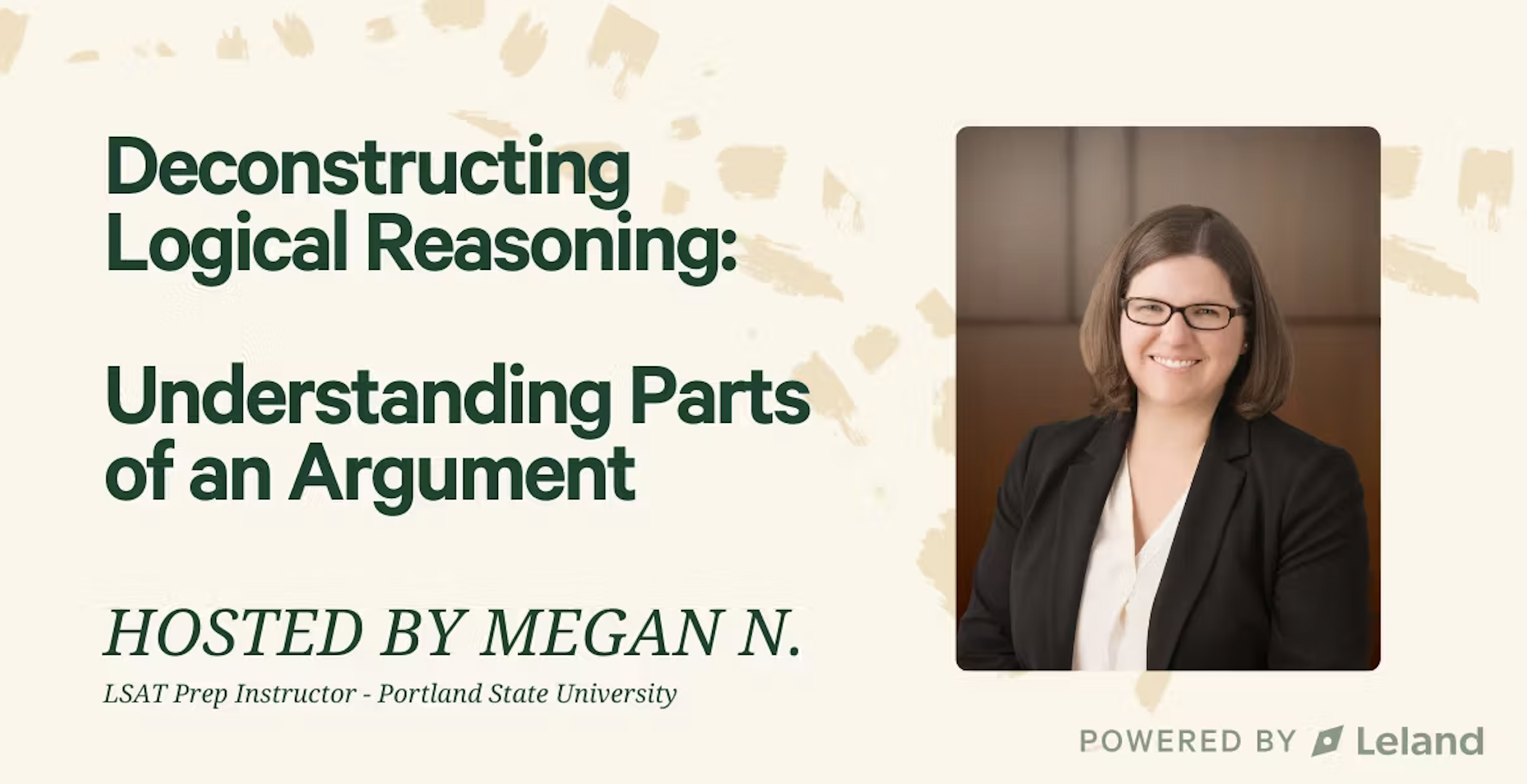
Deconstructing Logical Reasoning: Understanding Parts of an Argument
This presentation builds on a previous session in which I discussed the language used on the LSAT to describe logical reasoning questions and the different types of logical reasoning questions. In this session, we will discuss how to break down a logical reasoning passage (or stimulus) to identify the different parts of an argument. This foundational skill helps with every type of logical reasoning question and carries over to reading comprehension as well.

LSAT Logical Reasoning: Common Flaws and Common Wrong Answers
After this session, you'll be able to identify the logical flaws test-makers return to most often and recognize why certain wrong answers are designed to feel correct. We'll cover the structural patterns behind common flaw types like circular reasoning and false causation, how to spot the specific language that signals a trap answer, and what distinguishes a tempting distractor from a provably wrong choice.
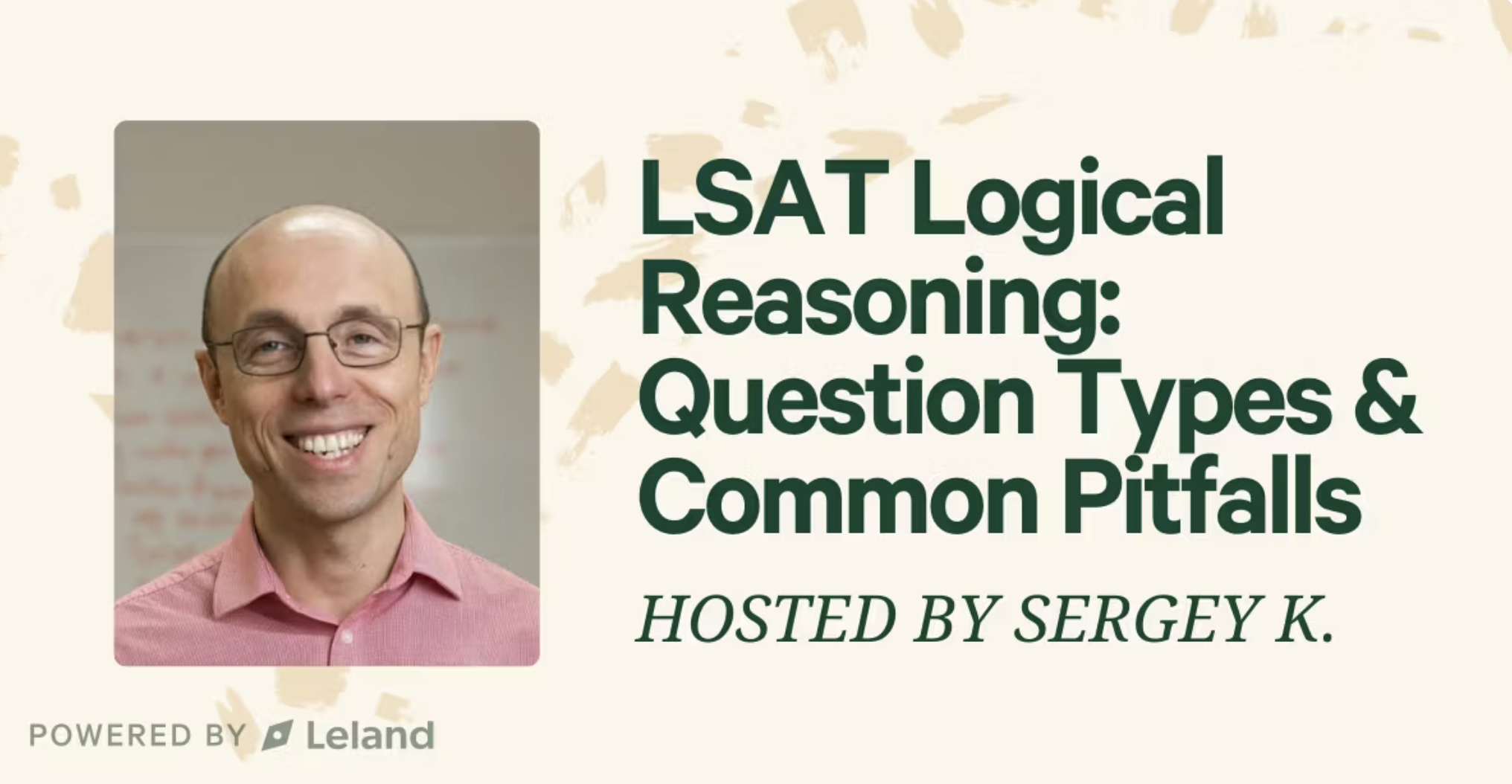
LSAT Logical Reasoning: Question Types & Common Pitfalls
This session breaks down the most common LSAT Logical Reasoning question types and the traps that trip up test takers. You’ll learn how to quickly identify what each question is asking, apply the right approach, and avoid predictable pitfalls that cost points. Attendees will leave with practical strategies to improve accuracy, efficiency, and confidence on LSAT Logical Reasoning sections.


How to Optimize Studying for the LSAT
Studying for the LSAT is about more than putting in hours—it’s about studying smart. This session is designed to help you build an effective, sustainable LSAT study plan that maximizes improvement. In this event, you’ll learn how to structure your study time, prioritize question types, and use practice tests strategically. We’ll also cover common study mistakes, how to track progress, and how to adjust your approach as your score improves. Whether you’re just getting started or trying to break through a score plateau, you’ll leave with practical strategies and clearer direction.
Intro to Logical Reasoning: Breaking Down the Task and the Stimulus
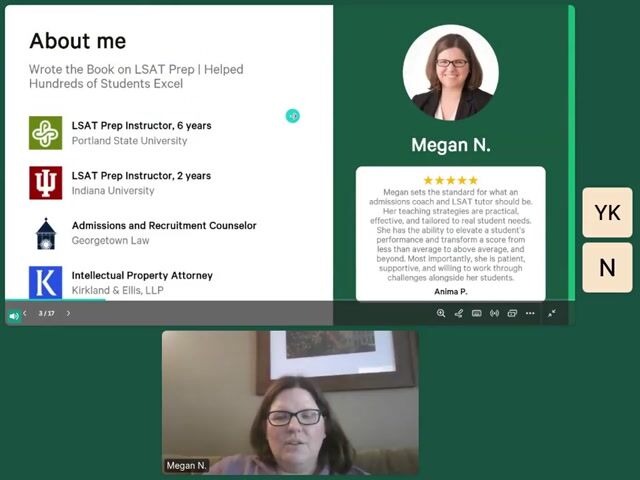
Are you new to studying for the LSAT? Or has a commercial test prep course left you confused with their complicated jargon and unintuitive hacks? This is the first presentation in a series that will break down logical reasoning in a simple, practical way. Many LSAT prep approaches were crafted by people who performed really well on the LSAT but may not have ever practiced law, or possibly never even went to law school. What those courses miss are the every day applications of LSAT skills to real-world law school scenarios and legal practice. I am a graduate of Georgetown Law who scored in the 97th percentile on the LSAT with several years' experience practicing at one of the most prominent law firms in the country, as well as a mid-sized boutique. My work in legal research, case strategy, briefing, discovery, and client relationships have informed my perspective on the LSAT. I know the LSAT is not just a test to be hacked, but rather a sensible evaluation of the skills required to succeed in law school and legal practice. My innovative curriculum has helped hundreds of students in my classes at Indiana University and Portland State University, as well as the private tutoring students I have been working with over the past 13+ years. In this session of the series, we will cover the following topics: - Why logical reasoning? - What is the "task"? - What is the "stimulus"? - How to approach logical reasoning questions - The types of logical reasoning questions, and - Beneficial study resources and strategies
Necessary and Sufficient Assumptions for the LSAT
Assumption questions are some of the most challenging and frequently tested question types on the LSAT, and understanding the difference between necessary and sufficient assumptions is critical to mastering them. In this session, you’ll learn how to identify argument gaps, apply the negation test correctly, and recognize when a question requires bridging logic versus strengthening it. You’ll leave with a clear, repeatable framework to approach assumption questions with greater precision and confidence.

How to Get Started with the LSAT
Starting your LSAT prep can feel overwhelming, especially if you’re not sure where to begin. In this session, you’ll learn how the exam is structured, what skills it truly tests, and how to build a smart study plan that fits your timeline and goals. We’ll cover foundational strategies for Logical Reasoning and Reading Comprehension, how to track progress effectively, and common mistakes to avoid early on. Whether you’re months away from test day or just exploring law school, you’ll leave with a clear, confident starting point.

LSAT 101: Your Guide to Testing in 2026
If you’re studying for the LSAT and want a fast, high-impact way to see improvement, this session is for you. In this workshop, Leland coach Zack, an experienced LSAT instructor who has helped students achieve major score gains, will break down the single most effective strategy you can apply immediately to strengthen your performance. Zack will walk through how this approach works, why it’s so powerful across question types, and how to implement it in just 30 minutes of focused practice. You’ll leave with a clear, practical technique you can start using right away to study smarter and boost your LSAT score.
LSAT Reading Comprehension: Roadmaps to Success
LSAT Reading Comprehension rewards strategy just as much as understanding. This session is designed to help you navigate dense passages with a clear roadmap and a more controlled approach. In this event, you’ll learn how to identify passage structure, track author viewpoints, and anticipate question types before they’re asked. We’ll also cover strategies for managing time and avoiding common traps that cost points. Whether you’re struggling with consistency or aiming to push your score higher, you’ll leave with practical tools and a clearer strategy for LSAT Reading Comprehension.


Defining the 1%: The Skills and Habits Behind 99th Percentile LSAT Scores
Scoring in the 99th percentile on the LSAT requires more than just practice—it reflects a specific set of skills, habits, and ways of thinking that most test takers never fully develop. This session is for students aiming to break into the 170s who want to understand what truly separates top scorers from the rest. You’ll learn how high scorers approach each section, the study habits that drive consistent improvement, and what differentiates performance across the 150s, 160s, and 170s.

Timing Strategies for the LSAT
After this session, you will know how to allocate time across LSAT sections in a way that protects your strongest question types and limits costly guessing. We will cover pacing benchmarks for Logical Reasoning and Logic Games, how to recognize when to cut a question and move on, and the decision framework that separates high scorers from those who run out of time.
How To Master Reading Comprehension on the LSAT
This document will teach you the tips and strategies you need to master the reading comprehension section on the LSAT.