Top 6 Pre-Med Clubs at UCLA (2026)
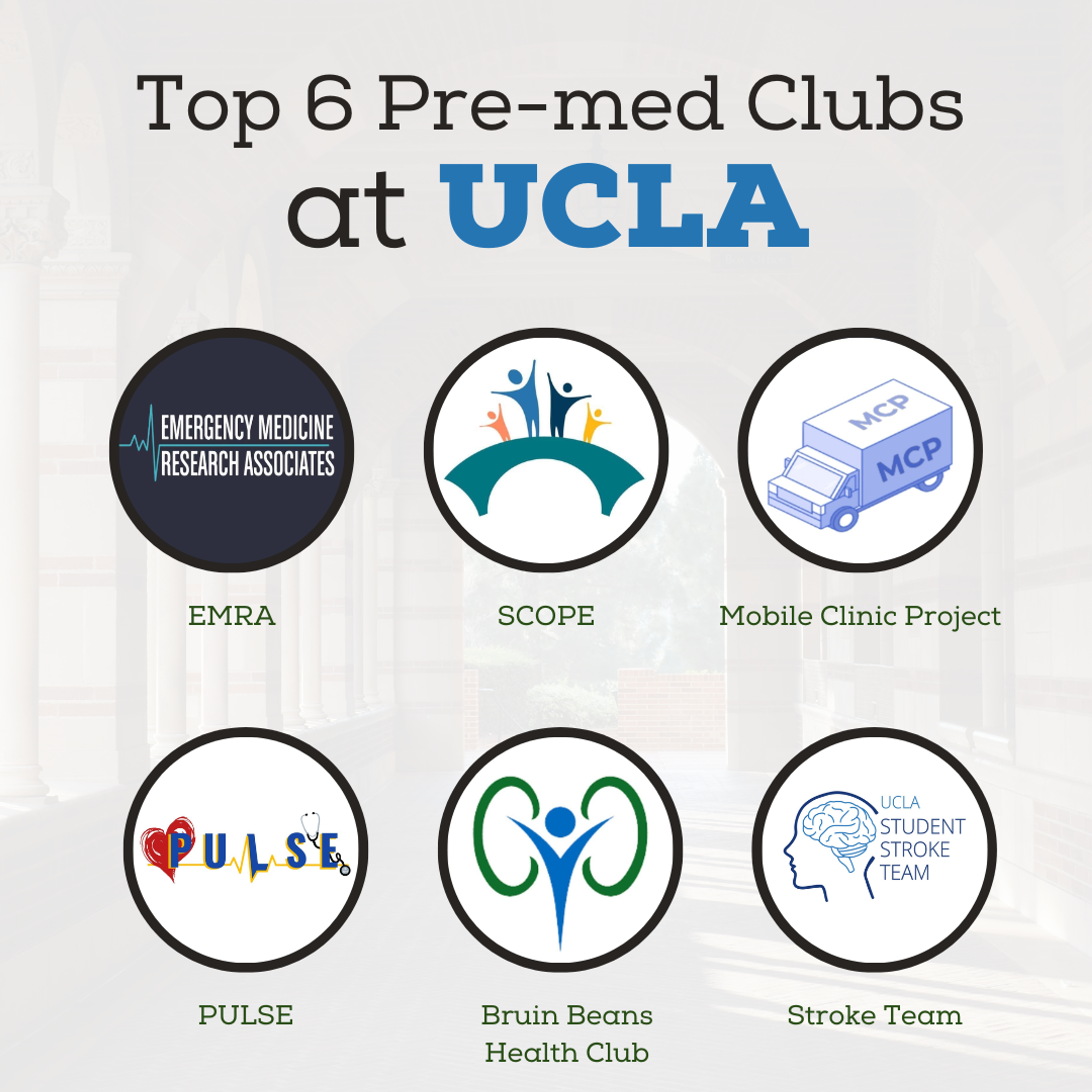
Discover UCLA’s top Pre-med clubs in 2026 - EMRA, SCOPE, Mobile Clinic Project, PULSE, Bruin Beans Health Club, Stroke Team - ranked by Leland for career outcomes, impact, and recruiting success.
Posted December 6, 2025

Table of Contents
UCLA is the college with the most undergrad students interested in medicine. The most competitive pre-med clubs offer shadowing, volunteering, and direct access to research. These are the clubs where students gain the requirements needed to get into the top med schools.
How the Rankings Work
We assessed each club using three core pillars. These pillars reflect not just where members end up, but how their clubs prepare them to get there.
- Career Outcomes: We looked at medical school acceptances and clinical research placements. The top clubs provide exposure to the medical field, which drives long-term success.
- Member Development: The best pre-med clubs offer more than service hours. They provide structured mentorship, MCAT support, physician shadowing, clinical experiences, and leadership opportunities that help students grow into future healthcare professionals.
- Reputation: The top UCLA pre-med organizations are known for producing well-prepared applicants. We evaluated each club’s credibility based on alumni outcomes, physician partnerships, internal programming, and its standing in UCLA’s pre-health community.
EMRA
The Emergency Medicine Research Associates (EMRA) program is UCLA’s most prestigious clinical research opportunities for undergraduates. Operated through the Department of Emergency Medicine at Ronald Reagan UCLA Medical Center, EMRA provides unparalleled access to frontline patient care, real clinical trials, and mentorship from physicians and research faculty. For students pursuing medical school or clinical research careers, EMRA offers a level of immersion that few undergraduate programs can match.
What Makes EMRA a Top Club
- Career Outcomes: EMRA alumni go on to attend top-tier medical schools and pursue competitive clinical or MD/PhD pathways. Recent members have matriculated into programs at the David Geffen School of Medicine at UCLA, the USC Keck School of Medicine, the UC San Diego School of Medicine, and the Stanford School of Medicine. The program’s hands-on involvement with real clinical trials and patient interaction gives applicants concrete stories to tell during interviews, research credentials to cite in applications, and strong letters of recommendation from physicians and research faculty.
- Club Structure: Each EMRA cohort consists of approximately 50 students who work directly in the Ronald Reagan Emergency Department. Members are trained to assist with patient screening and enrollment in ongoing research studies, often supporting NIH-funded clinical trials. After training, members rotate through weekly shifts in the ER, interacting with interdisciplinary healthcare teams. The program also includes structured shadowing opportunities, weekly meetings with research coordinators, and access to instructive sessions from principal investigators.
- Impact: EMRA offers one of the most immersive clinical research experiences available to UCLA undergraduates. In addition to clinical work, members engage in journal clubs, simulation labs, and EMRA’s structured Research and Education Committees, which help members explore their own research interests and present findings. The program also hosts skills workshops, shadowing shifts, and even an annual Research Symposium, providing members with both the hands-on skills and professional connections to thrive in medicine.
Explore EMRA: EMRA's website
SCOPE
SCOPE is one of UCLA’s top pre-health organizations, offering direct clinical experience and a public health lens on healthcare delivery. As Patient Health Advocates (PHAs), students work alongside physicians to support underserved patients through personalized casework and help them navigate social services. SCOPE combines medical exposure with health equity, making it a meaningful volunteer experience for undergraduates interested in patient-centered care.
Why SCOPE Is Unique
- Career Outcomes: SCOPE Patient Health Advocates has built a strong reputation as a launchpad for future healthcare professionals, with alumni going on to top medical schools and public health programs. Recent members have gone on to attend top institutions such as UC San Diego School of Medicine and the Harvard T.H. Chan School of Public Health. Whether pursuing medicine or public health, SCOPE alumni benefit from direct clinical exposure and a deep understanding of the social determinants of health, making them highly competitive candidates for graduate programs.
- Club Structure: All incoming PHAs complete a rigorous for-credit UCLA-approved course developed in partnership with faculty physicians. Over the course of the quarter, students meet weekly to cover casework fundamentals and public health frameworks. The program includes five quizzes, a final project, and a mock casework practical exam that mirrors real clinic interactions. Upon completion, students are ready to enter the clinic as capable and confident advocates. Members also have the opportunity to join one of the club’s seven specialized committees focused on a different dimension of patient advocacy and club operations.
- Impact: SCOPE’s Patient Health Advocates deliver hands-on support to underserved patients by connecting them with vital community resources. Beyond the clinic, SCOPE members volunteer at monthly free clinics in Skid Row with the Vituity Cares Foundation, distributing meals at St. James’ Soup Kitchen, and create tailored resource pamphlets for public health fairs with groups like the UCLA Asian Pacific Health Corps. Internally, the seven dedicated committees drive the organization’s impact, ranging from Member Development, which runs mentorship and career workshops, to Transitional Care, which collaborates with physicians to help young patients manage their health. Whether at the bedside or in the community, SCOPE empowers students to practice meaningful, equity-driven healthcare.
Explore SCOPE: https://www.uclascope.org/
Mobile Clinic Project
The Mobile Clinic Project is one of UCLA’s longest-running, student-led initiatives focused on serving Los Angeles’s unhoused and underserved populations. For over 25 years, MCP has operated weekly street-side clinics delivering medical care and essential services directly to the community. What sets MCP apart is its deeply collaborative model: undergraduate caseworkers team up with UCLA medical, public health, and law students to provide integrated support.
What Sets the Mobile Clinic Project Apart
- Career Outcomes: MCP alumni regularly go on to top medical and graduate programs, thanks to the clinic’s unique mix of hands-on public health exposure and interdisciplinary collaboration. Former volunteers have been accepted into prestigious institutions such as the David Geffen School of Medicine at UCLA, the UC Davis School of Medicine, and the University of Chicago Pritzker School of Medicine. Several alumni have also joined national service programs, such as the Peace Corps. MCP’s reputation for cultivating community-minded future physicians makes it one of the most respected pre-health organizations on campus.
- Club Structure: New MCP members begin with a comprehensive onboarding process that covers clinical protocols, harm reduction, and the social determinants of health. Once trained, volunteers join specialized teams that rotate through essential responsibilities including intake, caseworking, and logistics. Students work alongside other healthcare professionals every Wednesday night and twice a month on Sundays, delivering medical care and essential services directly to unhoused populations in West Hollywood. Through this structure, members gain hands-on clinical exposure and a deep understanding of community health work.
- Impact: MCP serves dozens of unhoused clients each week, delivering consistent human-centered support that builds lasting trust. In collaboration with partners such as the Hollywood Food Coalition and the LA LGBT Center, volunteers provide acute medical care, casework, harm-reduction supplies, and transit passes. MCP also organizes service drives, contributes to public health research, and creates multilingual health education materials. Its continuity of care and close-knit volunteer culture make MCP one of UCLA’s most impactful student-led service organizations.
Explore Mobile Clinic: https://www.mobileclinicproject.org/
PULSE
PULSE is a student‑run physician-shadowing organization at UCLA, designed to give undergraduates a holistic view of medicine by exposing them to diverse clinical specialties. Founded in Spring 2015, PULSE collaborates with the Ronald Reagan UCLA Medical Center, integrating hospital rotations and mentorship with outreach activities that prepare students for careers in healthcare.
How PULSE Supports Student Success
- Career Outcomes: PULSE consistently places members at top medical institutions by providing them with early, frequent hospital experience. Alumni have gone on to the UC San Diego School of Medicine, Stanford School of Medicine, Kaiser Permanente Bernard J. Tyson School of Medicine, and David Geffen School of Medicine at UCLA. The club’s intensive shadowing and connections to practicing clinicians equip students with real clinical context that prepares them for success.
- Club Structure: New members begin shadowing in the fall after spring recruitment. Throughout the year, they rotate through specialties across Ronald Reagan Medical Center, attend quarterly professional development workshops, and complete case study projects that can qualify for SRP 99/199 credit. The club maintains strong ties to faculty advisors and UCLA Health leadership.
- Impact: PULSE’s influence extends far beyond the hospital. Members participate in outreach events that promote healthcare access and awareness. The club leads annual fundraisers like Brave the Shave, which raises thousands for pediatric cancer research in partnership with the St. Baldrick’s Foundation. Through shadowing, community service, and physician mentorship, PULSE develops compassionate and community-focused future healthcare leaders.
Explore PULSE: https://pulseucla.wixsite.com/pulse
Bruin Beans Health Club
Bruin Beans Health Club is an undergraduate organization affiliated with the CORE Kidney division at UCLA Health. It brings undergraduates into collaborative work with nephrologists and research teams to improve awareness, prevention, and care for kidney diseases.
What Sets Bruin Beans Health Club Apart
- Career Outcomes: Bruin Beans alumni illustrate how deeply the club’s experiences can map into healthcare, research, and medicine trajectories. Members from previous years are pursuing their MD at institutions such as the Kaiser Permanente Bernard J. Tyson School of Medicine and USC Keck School of Medicine. Other alumni are working as research associates in top biotechnology companies.
- Club Structure: Membership in Bruin Beans is rigorous and structured. After an application and interview process, members commit to two research shifts per week (typically 4 hours each) and attend regular meetings, training sessions, and outreach events. Members work closely with Dr. Anjay Rastogi, MD, PhD, on various projects spanning clinical research to community outreach. In this way, the club is a near‑lab‑like environment for students.
- Impact: Bruin Beans offers students a rare front-row view into both patient care and public health by combining hands-on hospital experience with community-driven outreach. In the hospital, members have the chance to interview kidney donors and recipients, showing students the human side of chronic illness. Outside the hospital, members engage in outreach initiatives like staffing PKD Walks, running educational booths, and helping organize kidney health screening events for underserved communities. Students also have the opportunity to present their work at research conferences and contribute to published abstracts under the mentorship of UCLA faculty. Bruin Beans gives its members an impactful blend of clinical immersion, research exposure, and public service.
Explore Bruin Beans Health Club: Bruin Beans Website
Stroke Team
Student Stroke Team (SST) is one of the most immersive undergraduate clinical research programs at UCLA, placing students directly in the Emergency Department during acute medical situations. It’s one of the rare opportunities where premed students engage firsthand with emergency medicine, vascular neurology, and clinical research at a top hospital.
What Sets Stroke Team Apart
- Career Outcomes: Student Stroke Team has a strong legacy of sending members to some of the most prestigious medical institutions in the country, including UCSF, Stanford, Harvard, and the David Geffen School of Medicine at UCLA. The program’s combination of high-stakes clinical exposure and rigorous research experience makes its alumni highly competitive applicants.
- Club Structure: SST recruits a highly selective cohort of around 25 undergraduates each year. Members undergo extensive training on stroke pathology, NIH Stroke Scale assessments, and emergency room workflows. Once trained, students are assigned shifts and operate at the level of clinical research associates. They contribute to research trials investigating new interventions for ischemic strokes and learn how to interpret real-time clinical data under pressure. SST members are also mentored by UCLA physicians and senior student leads, creating a collaborative and professionally rewarding environment.
- Impact: SST members play a direct role in enrolling patients into high-stakes clinical trials, accelerating the development of new stroke treatments. Their work contributes to national multicenter studies that can shape the standard of care in vascular neurology. Beyond the data, students gain exposure to the human dimensions of acute care, communicating with patients and families, observing physician decision-making, and engaging with medicine in its most urgent areas. The program gives students a real preview of what life in medicine looks like.
Explore Stroke Team: Stroke Team Website
How to Get Into Top Med Clubs at UCLA
These clubs are highly competitive so to get in:
- Engage with the Club’s Work Before You Apply: Most top clinical and research clubs at UCLA have some public-facing work - read it. Look at SCOPE's resource pamphlets, MCP's blog entries, Stroke Team's study protocols, or EMRA's case report posters. Know what kind of patients they serve, what specialties they focus on, and how they structure their training. When you talk to members, don't ask generic questions like "what's the time commitment?" Instead, ask about how they approach casework, what they've learned from patient interactions, or how their mentorship is structured. If you can name specific projects or medical conditions the club deals with, you're already ahead of 90% of applicants.
- Show You’re Already Thinking Like a Clinician (or Researcher): These clubs aren’t looking for future med school applicants - they want people who already act like one. If it’s a research-based org like Stroke Team or EMRA, read up on clinical trial design, or practice identifying inclusion/exclusion criteria from published studies. Having this kind of prep lets you bring value from day one and shows the club you’re not just applying to get hours, you’re there to actually contribute.
How to Get Your Club Featured
The Leland Rankings highlight student organizations shaping the next generation of business leaders.
If you believe your pre-med club deserves recognition reach out and tell us why!