Leland+ for Private Equity

Break Into Private Equity: Recruiting & Application Basics

Private Equity Resume Workshop
Mastering On-Cycle PE Recruiting: The Ultimate Insider's Guide
A behind-the-scenes look at on-cycle private equity recruiting with tips, timelines, and strategies for success.

Decoding Private Equity Recruiting: 10 Key Attributes That Hiring Managers are Looking For
A guide to private equity recruiting, outlining the top 10 traits firms seek—from modeling skills to strategic thinking and global perspective.

Key Skills for Success in Private Equity: Analytical, Communication & Operational Excellence
Outlines the essential skills needed to succeed in private equity, focusing on analytical rigor, strong communication, and operational effectiveness.
Personal Assessment Guide – Are You a Fit for Private Equity?
Provides a self-assessment framework to help individuals evaluate whether their skills, interests, and career goals align with private equity.
The Perfect Finance Resume Template
This resume template is designed to help candidates pass initial resume screens and compete for investment banking and private equity roles. It includes structured sections, formatting guidance, and examples that reflect what recruiters typically look for during early-stage recruiting.

10 Common Mistakes Applicants Make in Private Equity Recruiting - And How to Avoid Them
Private Equity (PE) recruiting is one of the most competitive processes in finance. Whether you're an investment banking analyst, a management consultant, or coming from corporate development, breaking into PE takes more than just technical know-how. It’s about strategy, preparation, and self-awareness.

Private Equity Interview Prep Crash Course
How to Crush your Finance Behavioral Interviews
In finance interviews, technical skills get you in the room—but behavioral answers often decide who gets the offer. Your ability to tell clear, confident stories about leadership, resilience, and impact can make all the difference. In this session, you’ll learn how to structure powerful answers, anticipate the questions firms consistently ask, and turn your experiences into memorable, results-driven narratives. We’ll break down what interviewers are truly assessing and how to respond with clarity, confidence, and credibility. If you want to walk into your next finance interview prepared to stand out, this is where to start.
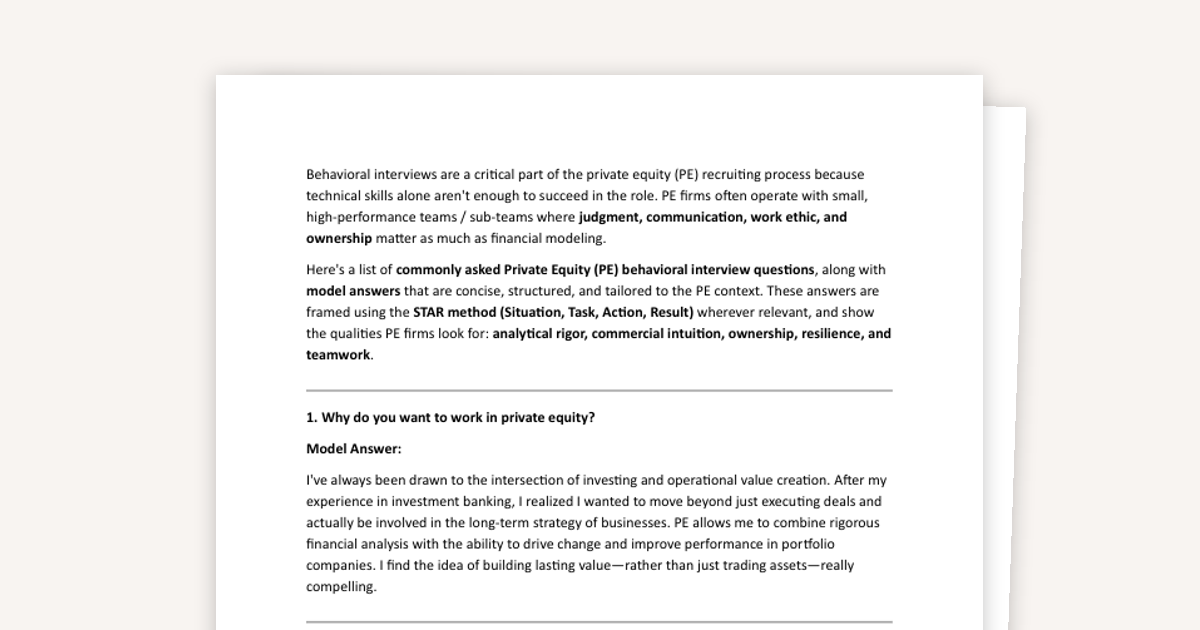
Crushing PE Behavioural Interviews
The most commonly asked questions and model answers for them.
How to Answer “Tell Me About Yourself”
Craft a concise, confident pitch that walks through your background, your "why PE" story, and what makes you different - using the 3-part Narrative Arc framework.
The Funnel Framework: A Tool for Any Technical Question
Use this simple but powerful 3-step thinking structure to break down any investment or business analysis question (e.g., "Would you invest in XYZ?", “How would you evaluate a company?”).

Deal Walk-Throughs: How to Present Your Experience
Learn how to structure a walk-through of your deal or project experience - even if you had limited exposure - by focusing on key drivers, your contribution, and commercial impact.
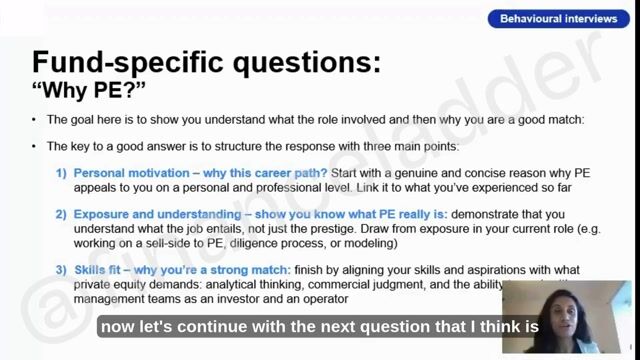
Answering “Why Private Equity?”
Avoid vague or recycled answers. Use a tested framework to build a compelling, specific answer that ties together your skillset, interest in investing, and long-term goals.
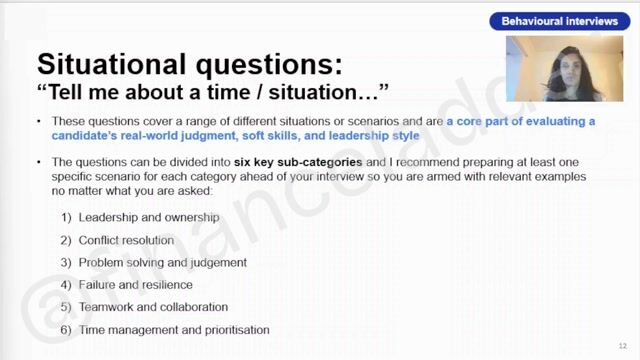
Situational Questions: Handling “Tell Me About a Time...”
Master the STAR+ framework for behavioural stories (Situation, Task, Action, Result + Reflection). Tackle common questions around leadership, failure, teamwork, and ethical dilemmas.
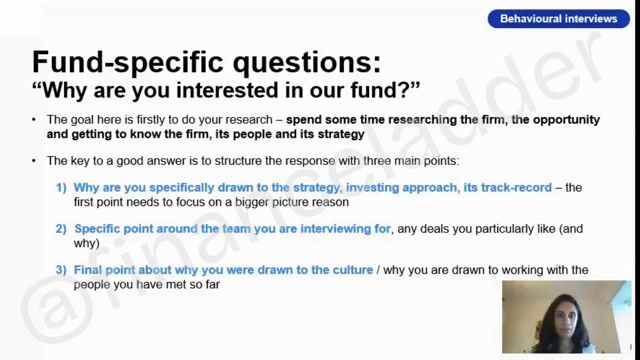
How to Nail “Why This Fund?”
Learn how to research a fund beyond their website - including their strategy, culture, and recent deals - and turn that insight into a response that shows deep alignment.

Behavioural interviews: Overview
Behavioural interviews often make or break candidates - especially when everyone has similar technical backgrounds. In this module, you’ll learn how to craft compelling, authentic stories that show maturity, motivation, and fit for Private Equity. We'll cover all the most common questions, along with frameworks to deliver standout answers.
Technical interviews: Overview
This module is all about mastering the finance concepts and frameworks tested in PE interviews - but without wasting time memorizing every textbook definition. You’ll learn how to approach technical questions like an investor, communicate with clarity, and avoid over-complication.
Verbal Case Studies: Structure & Strategy
How to structure your thinking under pressure - what questions to ask, what assumptions to make, and how to adapt frameworks.