Leland+ for LSAT
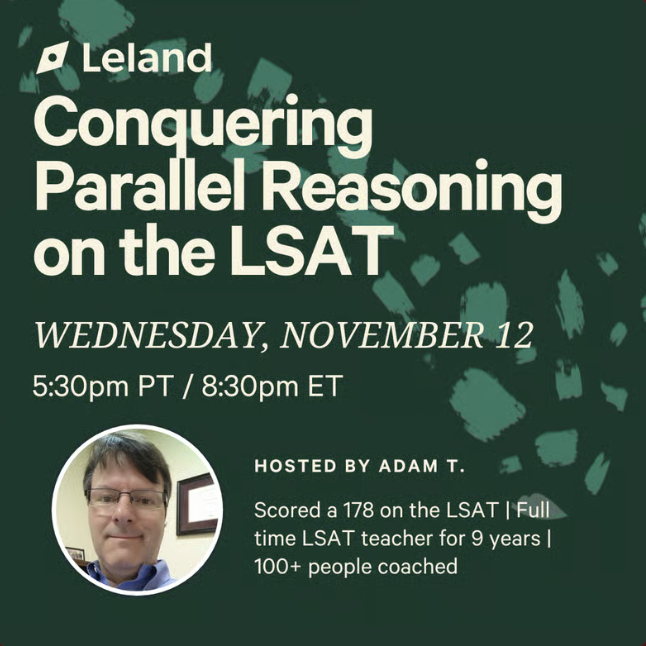
Conquering Parallel Reasoning on the LSAT
Struggling to keep up when LSAT Logical Reasoning seems to throw identical arguments with different labels at you? Parallel reasoning is one of the most common stumbling blocks—and yet, the difference between a high score and a great score often comes down to mastery of this one skill. In this session, you'll learn from Adam T., a full-time LSAT instructor since 2016 and curriculum developer at PowerScore with over 15 years of teaching experience. He has helped students hit scores in the 170s and gain admission to top law schools. Adam will guide you through his proven framework to identify parallel argument structures, eliminate distractors that look right but aren’t, and apply the same logic under timed conditions. Space is limited, so RSVP to secure your spot. We’re excited to be on the law journey with you!

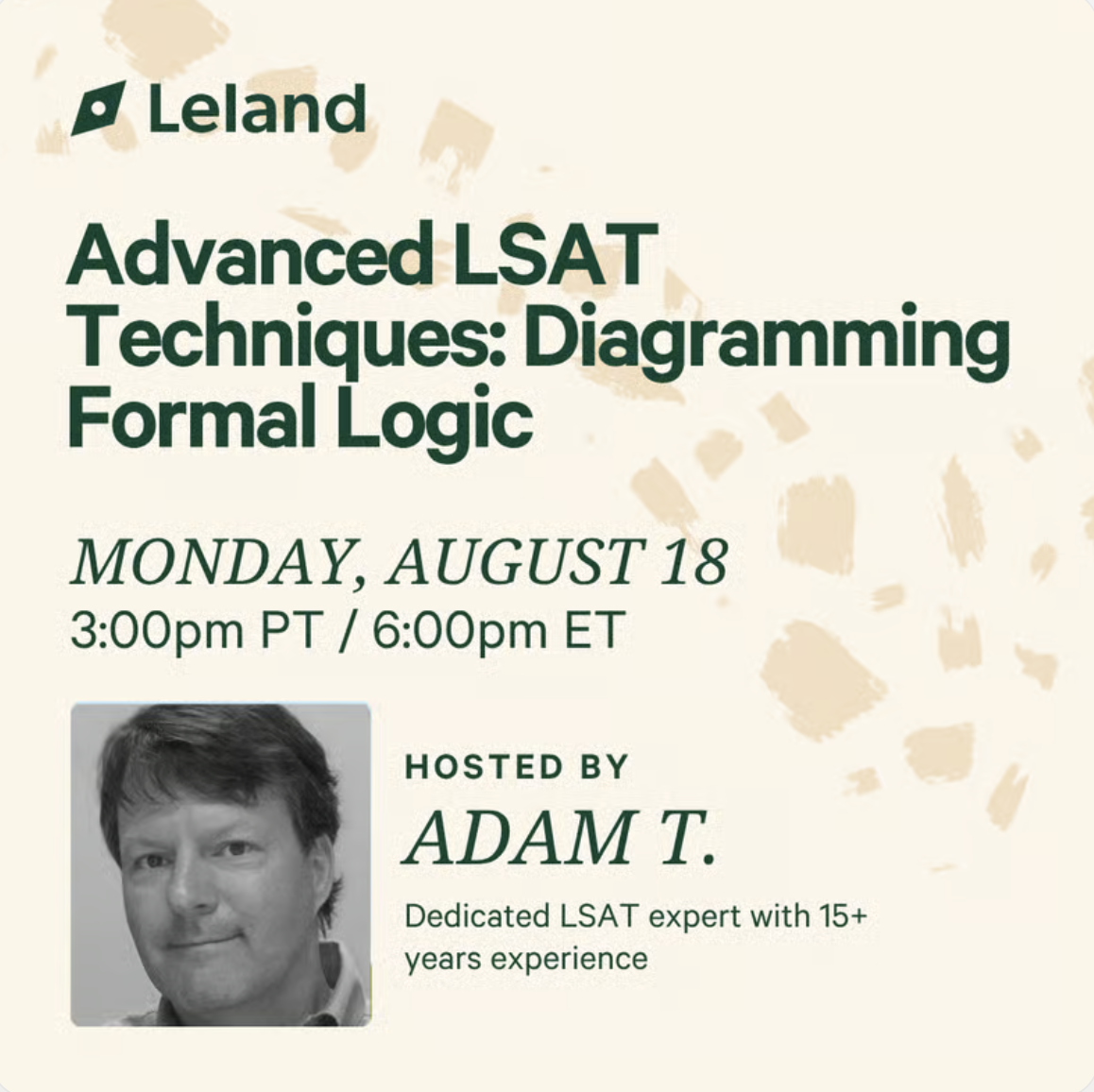
Advanced LSAT Techniques: Diagramming Formal Logic
Ready to take your LSAT prep to the next level? Join LSAT expert Adam T. (experienced LSAT tutor with 15+ years experience) for a deep dive into formal logic! This session will cover diagramming techniques to manage complex logical relationships with confidence and accuracy.
![What's New with the August LSAT? [7/8/2026] (Recording)](https://customer-14xsjmjbqk93tdwp.cloudflarestream.com/1a571f7839cf161393bca55d594bf5b1/thumbnails/thumbnail.jpg)
What's New with the August LSAT? [7/8/2026] (Recording)
The August LSAT includes format changes that affect how you should pace yourself, which question types to prioritize, and how to interpret your score for fall applications. In this session, you'll learn exactly what's different about the August administration, how those changes affect test-day strategy, and whether your current prep timeline still makes sense given the new structure. Attending live means you can ask how these changes apply to your specific score range, section weaknesses, or application deadline, and hear the answer in real time rather than hoping the replay addresses your situation. The coach works with LSAT preppers regularly and will share the patterns that actually separate improving test-takers from those who plateau, which is the kind of thinking that takes years of close observation to develop.
![Running Out of Time on the LSAT? Here's How to Fix It [6/2/2026] (Recording)](https://customer-14xsjmjbqk93tdwp.cloudflarestream.com/85f176f53b5986576ce9a4c1ab062307/thumbnails/thumbnail.jpg)
Running Out of Time on the LSAT? Here's How to Fix It [6/2/2026] (Recording)
Running out of time on the LSAT can be frustrating, especially when you understand the material but struggle to finish sections under pressure. This session is designed for students who want a more structured approach to pacing and a better understanding of where time is actually being lost. You’ll learn how to diagnose timing breakdowns, build strategies for moving through questions more efficiently, and identify the habits that commonly slow test-takers down. The coach works with LSAT students regularly and will share the patterns they see across improving scorers, along with the diagnostic thinking they use when evaluating timing issues. If you want a more repeatable approach to managing LSAT timing, it’s worth joining live.
![Running Out of Time on the LSAT? Here's How to Fix It [6/2/2026] (Recording)](https://customer-14xsjmjbqk93tdwp.cloudflarestream.com/be66a35f394ec725bfb42f0740c7d9f1/thumbnails/thumbnail.jpg)
Running Out of Time on the LSAT? Here's How to Fix It [6/2/2026] (Recording)
Running out of time on the LSAT can be frustrating, especially when you understand the material but struggle to finish sections under pressure. This session is designed for students who want a more structured approach to pacing and a better understanding of where time is actually being lost. You’ll learn how to diagnose timing breakdowns, build strategies for moving through questions more efficiently, and identify the habits that commonly slow test-takers down. The coach works with LSAT students regularly and will share the patterns they see across improving scorers, along with the diagnostic thinking they use when evaluating timing issues. If you want a more repeatable approach to managing LSAT timing, it’s worth joining live.
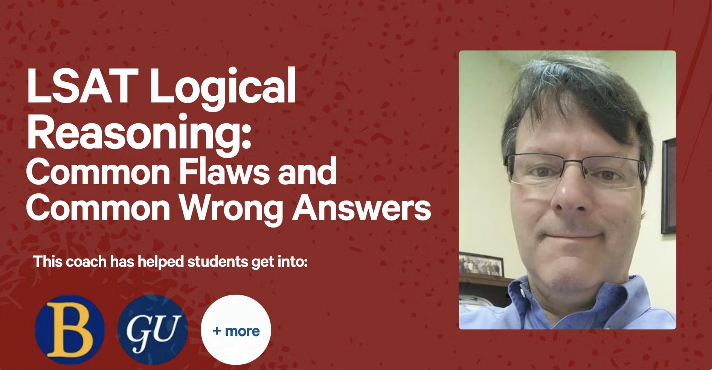
LSAT Logical Reasoning: Common Flaws and Common Wrong Answers
After this session, you'll be able to identify the logical flaws test-makers return to most often and recognize why certain wrong answers are designed to feel correct. We'll cover the structural patterns behind common flaw types like circular reasoning and false causation, how to spot the specific language that signals a trap answer, and what distinguishes a tempting distractor from a provably wrong choice.

How to Get Started with the LSAT
Starting your LSAT prep can feel overwhelming, especially if you’re not sure where to begin. In this session, you’ll learn how the exam is structured, what skills it truly tests, and how to build a smart study plan that fits your timeline and goals. We’ll cover foundational strategies for Logical Reasoning and Reading Comprehension, how to track progress effectively, and common mistakes to avoid early on. Whether you’re months away from test day or just exploring law school, you’ll leave with a clear, confident starting point.
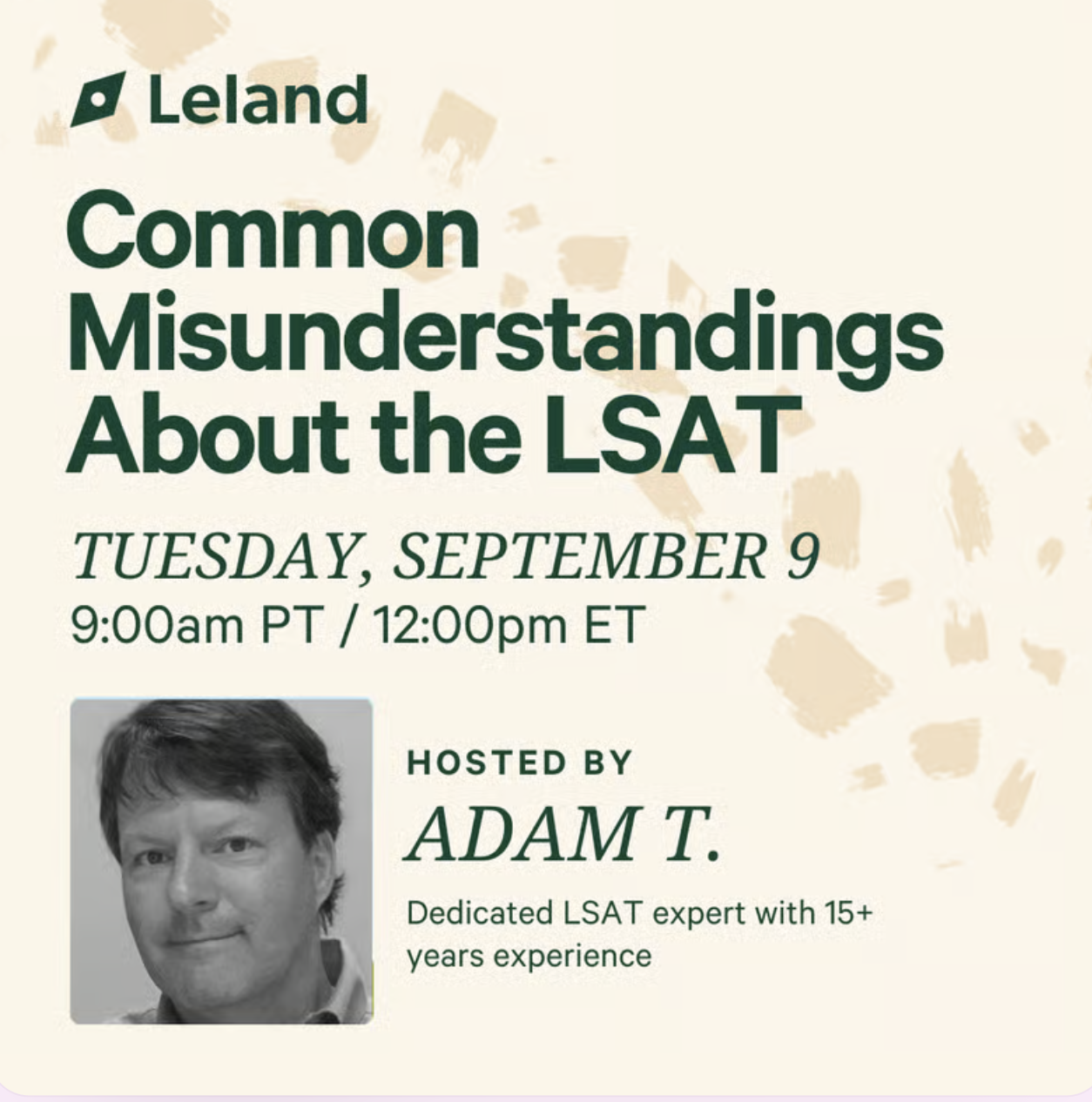
(Sept 2025) Common Misunderstandings About the LSAT
Feeling uncertain about how to approach your LSAT preparation? Whether you're just getting started or already deep into your prep, our Common Misunderstandings About the LSAT session is here to clarify the confusion. Join us for this event hosted by LSAT expert Adam T., who will address some of the most common myths and misunderstandings about LSAT preparation, including when to take the test, what resources to use, effective test-taking strategies, and what your score truly means.
Free
![Identifying LSAT Logical Flaws: What Matters & What Doesn’t [8/11/2026] (Recording)](https://customer-14xsjmjbqk93tdwp.cloudflarestream.com/c249fe1f3a555c32f2aabc35448dc252/thumbnails/thumbnail.jpg)
Identifying LSAT Logical Flaws: What Matters & What Doesn’t [8/11/2026] (Recording)
After this session, you'll know how to distinguish the logical flaws that actually cost points from the ones test-takers routinely overthink. We'll focus on the flaw types that appear most frequently in Logical Reasoning, how to recognize them quickly under timed conditions, and why certain wrong answer choices are designed to exploit the same misreading the flaw depends on. Attending live means you can bring a specific question type or stimulus you've been stuck on and hear how to think through it in real time, not just watch someone work a clean example. The coach works with LSAT students regularly and will share the patterns that separate confident, accurate flaw identification from the hesitation that tends to slow scores down.