Leland+ Content Library
Select a category














































Popular on Leland+
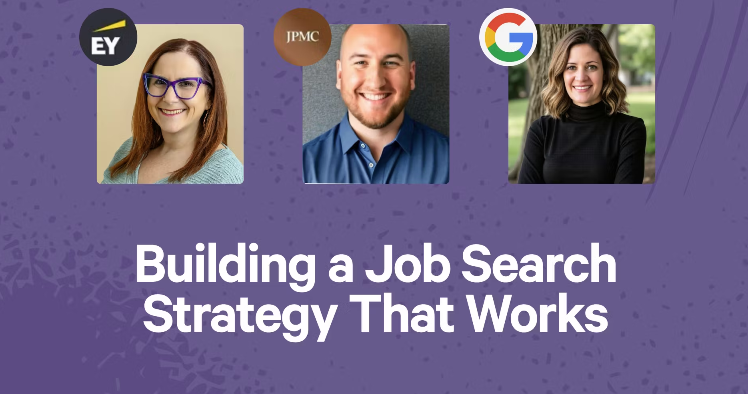
Building a Job Search Strategy That Works
Many candidates approach the job search reactively, sending applications without a clear plan for networking, positioning, or targeting the right opportunities. This panel is designed for professionals and students who want to build a structured job search strategy that actually moves them toward interviews and offers. You’ll learn how successful candidates prioritize outreach, refine their professional narrative, and focus their efforts on the opportunities most likely to convert.


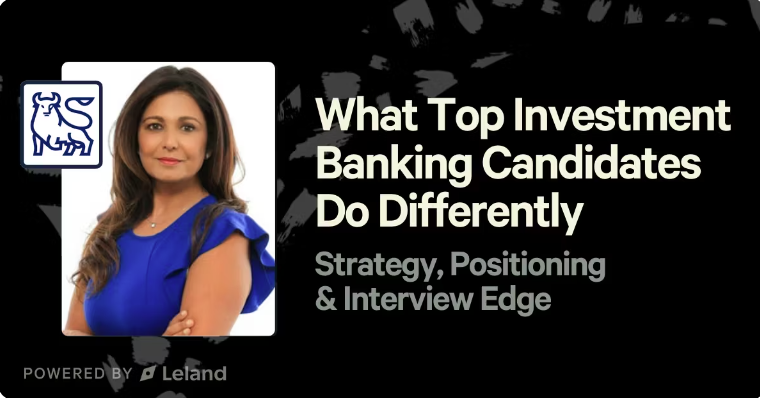
What Top Investment Banking Candidates Do Differently: Strategy, Positioning & Interview Edge
In this session, you will learn how to position yourself as a compelling investment banking candidate before you ever walk into an interview. We will cover how to build a deal experience narrative that holds up under pressure, how to differentiate yourself in a crowded applicant pool, and what interviewers are actually evaluating when they ask behavioral questions.

Anatomy of a Standout Dental School Personal Statement
Writing a dental school personal statement that actually sounds like you—while still hitting the themes admissions committees care about—is harder than most applicants expect. This session is for pre-dental students who want to understand what separates a compelling personal statement from one that reads like every other application. You'll leave knowing how to structure your narrative arc, how to weave in clinical experiences without listing them, and how to convey genuine motivation for dentistry in a way that feels specific rather than generic.

What Top Consulting Candidates Do Differently in Case Interviews
Many consulting candidates prepare extensively for case interviews but still struggle to understand what actually separates top performers from the rest. This session is designed for candidates targeting consulting roles who want to move beyond basic case prep and learn how strong candidates structure problems, communicate their thinking, and adapt in real time. You’ll learn the specific behaviors interviewers look for, how top candidates build clear frameworks, and how they synthesize insights in a way that demonstrates strong business judgment.


What You Need to Have Ready Before Dental School Applications Open
Many applicants wait until dental school applications open before realizing how much groundwork should already be in place. This session is designed for pre-dental candidates who want to approach the cycle prepared, not scrambling at the last minute. You’ll learn what admissions committees expect applicants to have ready before submitting, including clinical experiences, letters of recommendation, personal statement drafts, and a clear timeline for completing the AADSAS primary.



Dental Interviews 101
Dental school interviews can feel high-stakes, but with the right preparation, they’re an opportunity to bring your application to life. In this session, you’ll learn what dental schools are really evaluating in interviews, how to answer common questions with confidence, and how to communicate your motivation, experiences, and professionalism effectively. You’ll walk away with practical strategies, preparation tips, and a clear game plan to approach your interviews prepared and poised.
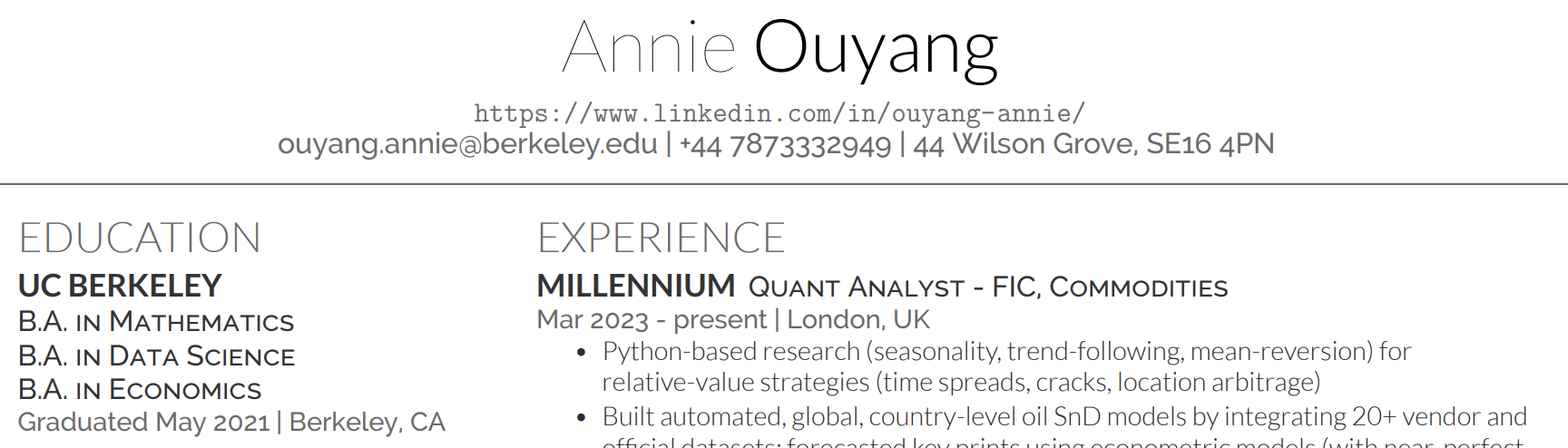
Resume That Landed Interviews at HRT, Jane Street, DE Shaw, Citadel...
This resume got me interviews across every top-tier quant firms (HRT, Jump, Jane Street...) and leading hedge funds (Citadel, Millennium, D.E. Shaw...) You will find: • Focused on demonstrated edge (PnL impact, original research, decision-making) • Combines quant + fundamental investing in a cohesive narrative • Clearly communicates technical depth (Python, modeling, data pipelines) • Structured to highlight independent thinking and idea generation • Uses real examples of market impact and trade contributions • Proven format for top-tier hedge funds and quant trading firms Designed to pass both recruiter screens and impress PMs.
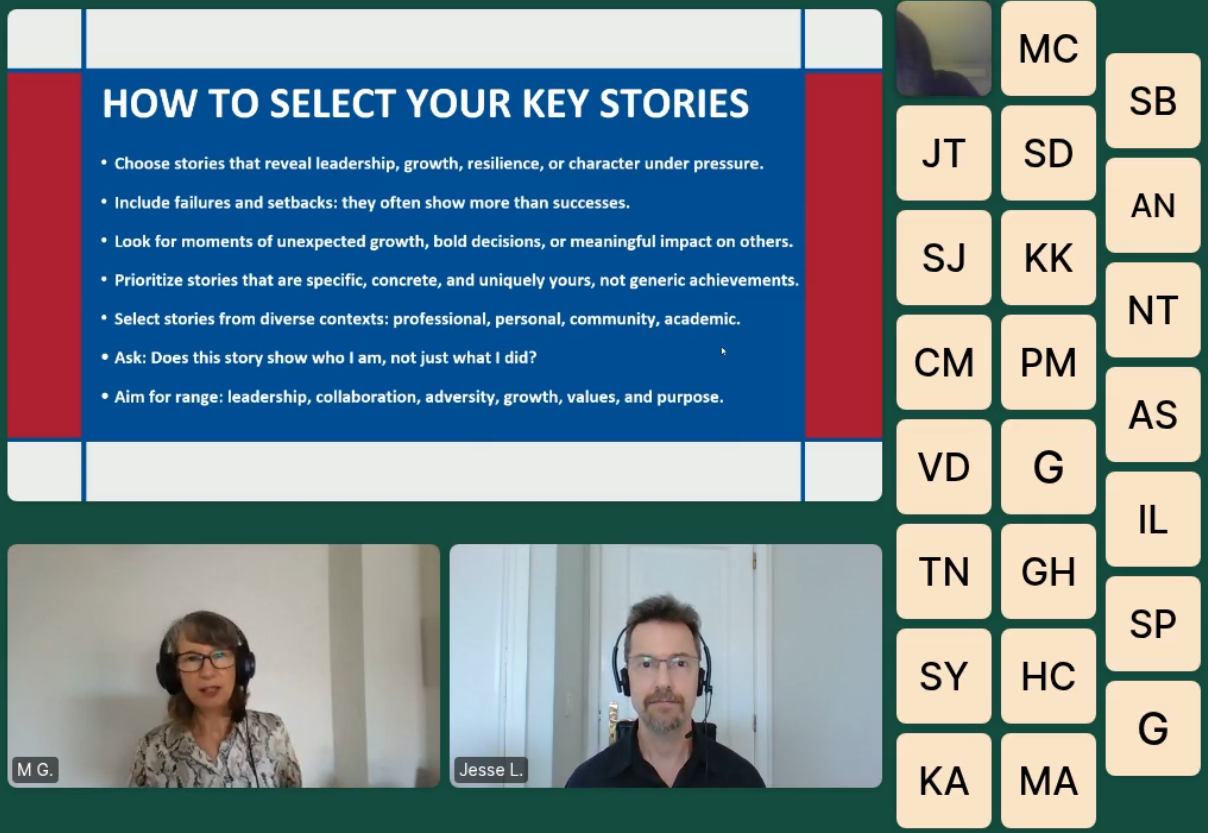
8 Steps to Complete MBA App: 2) Key Stories/Strategic School Outreach
Applying to business school can feel overwhelming! You have dozens of moving pieces: essays, short answers, video content, resume, recommendations, outreach, research, and more. This workshop is the second of a structured 8-part MBA Identity Mapping series designed to take you from fragmented tasks to a clear plan of action. In this session, you will turn your experiences into structured story summaries and begin strategic outreach to students and alumni. These sessions walk you step by step through building one fully aligned MBA application. In every workshop, you will be assigned tasks to complete over the next two weeks, keeping you focused and accountable. By the end, you will have strong, authentic essays and a narrative that runs consistently through your resume, goals, recommendations, school strategy, and interviews. You are absolutely welcome to attend individual sessions if you only need focused help on a specific component(s) of your MBA application. Event 2 transforms your experiences into structured story material and begins meaningful school outreach: • Distill 10–20 high-impact stories from your Life Story Timeline using a structured framework. • Learn how to select stories that reveal leadership, growth, resilience, and character. • Apply tagging to identify recurring themes that will shape your positioning. • Begin outreach to current students and alumni. This is the phase where your raw experiences begin turning into usable material. You move from “I’ve done a lot” to “Here are the defining stories that show exactly who I am.” The MBA Identity Mapping process has guided 100+ applicants into every M7 program, all other top 20 U.S. programs, and leading international programs including INSEAD, London Business School, IESE, Esade, Oxford, Cambridge, NUS, and more. Clients consistently describe it as transformative because it replaces scattered effort with forward momentum and strategic clarity. If you are ready to develop a compelling story bank and begin connecting with your target schools in a thoughtful, intentional way, this is your next step.
Free
OpenClaw for Beginners: Build AI Agents from Scratch (Free)
A complete beginner-friendly course on building and running AI agents using OpenClaw Architecture — 100% free to set up. In this course, you'll learn how to: • Install and configure OpenClaw on a DigitalOcean droplet (cloud server) • Connect your preferred language model (OpenAI, Claude, Gemini, Grok, Qwen, and more) • Understand the core anatomy of an AI agent: soul, identity, skills, memory, heartbeat, and cron jobs • Add Perplexity-powered search capability to your agent • Troubleshoot terminal errors in real time using a "fail fast" methodology • Manage costs and token usage to keep your monthly spend under $50 • Think like a builder: define your success outcome before writing a single line of config This course is built for non-technical beginners and power users alike. You'll watch a live, detailed setup — including real errors and how to fix them — so you know exactly what to expect when building your own agent infrastructure. By the end, you'll have a self-hosted AI agent running autonomously in the background, capable of handling research, sales outreach, content, and more — amplified across everything you do.
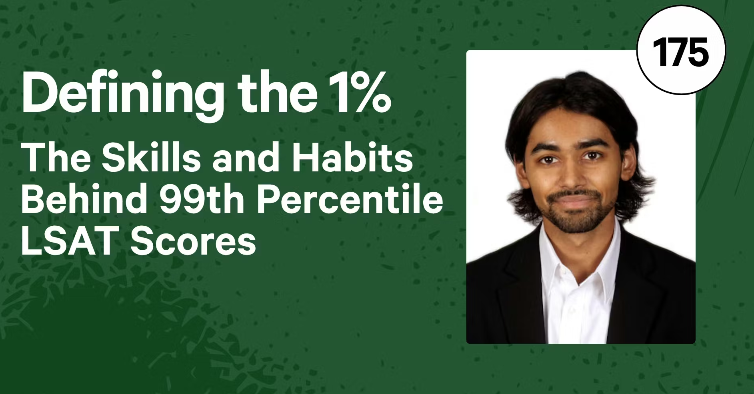
Defining the 1%: The Skills and Habits Behind 99th Percentile LSAT Scores
Scoring in the 99th percentile on the LSAT requires more than just practice—it reflects a specific set of skills, habits, and ways of thinking that most test takers never fully develop. This session is for students aiming to break into the 170s who want to understand what truly separates top scorers from the rest. You’ll learn how high scorers approach each section, the study habits that drive consistent improvement, and what differentiates performance across the 150s, 160s, and 170s.

How Engineers Avoid Burnout During Recruiting Cycles
After this session, you will be able to identify the specific cognitive load patterns that accumulate into burnout and apply practical frameworks for restructuring your workload before you hit a wall. We will cover how to audit where your mental energy actually goes in a typical sprint, how to communicate capacity limits to managers without signaling disengagement, and how to build sustainable systems for context-switching across complex codebases.
My AI Workflow
After this session, you will be able to map out a personal AI workflow that saves time on repetitive tasks and sharpens the quality of your work output. We will cover how to chain AI tools together for multi-step automation, how to build lightweight agents that handle routine decisions without your constant input, and how to identify which parts of your workflow are actually worth automating.

![Home for Ambition #4 — Weekly Live Show [4/8/2026] (Recording)](https://customer-14xsjmjbqk93tdwp.cloudflarestream.com/e85ab393fa4b81128b20cc9e7549a1d6/thumbnails/thumbnail.jpg)
Home for Ambition #4 — Weekly Live Show [4/8/2026] (Recording)
Home for Ambition is a weekly live show, by Leland, for people trying to stay ahead as work, learning, and opportunity keep changing. Each episode tackles a handful of timely, high-signal topics across AI, careers, education, and the future of work. We expect thoughtful debate, unique perspectives, and practical takeaways you can actually use. It is not a typical interview show or a generic news recap. It is a live roundtable built to help ambitious people make sense of what is changing, understand what matters, and leave with a sharper point of view on how to navigate what comes next.

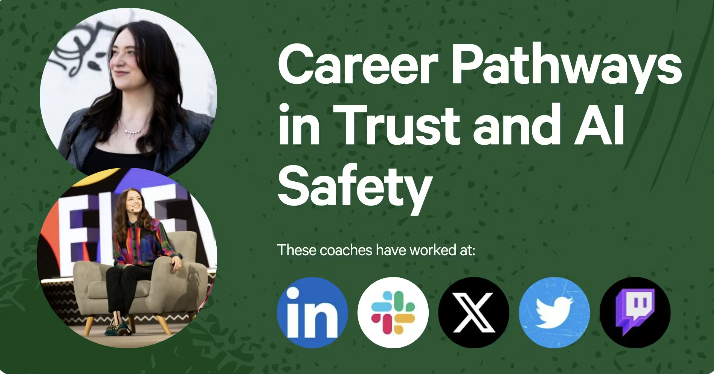
Career Pathways in Trust and AI Safety
Trust and AI safety roles are growing quickly, but the paths into them are often unclear and highly interdisciplinary. This session is for students and professionals who want to understand how to break into this space and what backgrounds actually translate. You’ll learn how to map your current experience to relevant roles, identify the core skills and knowledge areas that matter, and position your interest in AI safety in a credible, differentiated way.
Your Master’s Application Roadmap: Where to Start and What Matters
Starting a master's application can feel overwhelming when you're unsure where to focus your time and energy. This session is for prospective applicants who want a clear, structured approach to the process from the very beginning. You'll leave with a practical understanding of how to prioritize your application components, what admissions committees actually weigh when evaluating candidates, and how to build a timeline that keeps you on track without second-guessing every decision.


What Makes a Competitive Medical School Application
Applying to medical school is competitive, and it’s not always clear what admissions committees actually value beyond strong grades and test scores. This session is for applicants who want to understand what makes an application truly stand out across academics, experiences, and personal narrative. You’ll learn how admissions readers evaluate activities and clinical exposure, what differentiates compelling personal statements, and the patterns admissions committees see across successful applicants.


![The 5 Questions to Ask Before Applying to Any Finance Master's [4/9/2026] (Recording)](https://customer-14xsjmjbqk93tdwp.cloudflarestream.com/c580b716a0e529d8ad66914602171a4d/thumbnails/thumbnail.jpg)
The 5 Questions to Ask Before Applying to Any Finance Master's [4/9/2026] (Recording)
Most applicants start with rankings, pick three or four recognisable names, and write the same application for all of them. Then they wonder why the essays feel forced. The problem usually isn't the application. It's that they chose the wrong programme to begin with. Finance vs Financial Economics. Academic vs applied. London vs Paris vs St Gallen. Full-time vs part-time. These choices shape your career in ways a league table won't tell you. I applied to Oxford's MFE and HEC's MSc International Finance, got into both, and chose Oxford, and that decision came down to questions most applicants never think to ask. In 30 minutes I'll walk through five questions you should answer before you apply anywhere: what career this actually leads to, what it really costs, whether your profile fits, and how to tell which programme type matches what you need. I coach applicants through successful admits at Oxford, HEC, and peer programmes across Europe, and this is always where we start. Plenty of time for Q&A. Attendees get priority access to 1:1 coaching at a discounted rate. Best suited for 2026–27 and 2027–28 applicants.
Free

Land your Job or Study in ... Germany
Germany is not just beer, efficiency, and engineering heritage. It is one of the most accessible countries in the world right now for ambitious non-EU graduates and young professionals who want to build something serious. Over 600,000 skilled positions go unfilled every year. The government rewrote its immigration law in 2023 specifically to bring international talent in. Public universities charge close to nothing. Tech companies, global pharma, and the entire renewable energy sector are actively hiring people with your profile. This session cuts through the noise. We cover the study path and the direct job path, side by side: visa options, living costs, language reality, workplace culture, and what a competitive application actually looks like. Two real cases show how people with no German, applying from abroad, made it work. Germany rewards preparation and specificity. This Thursday, we provide both. New episodes in this series cover a different European country every Thursday.
How to Answer the GRE Quant Questions in Half the Time
GRE quant questions are designed to reward efficiency, but many test takers get stuck using slow or overly complex approaches. This session is for candidates who want practical ways to solve problems faster without sacrificing accuracy. You’ll learn how to recognize common question patterns, apply time-saving shortcuts, and avoid the traps that tend to eat up valuable minutes on test day.

Taking Control of AI Conversations
After this session, you will know how to structure your prompts to get outputs that actually match your intent, how to identify when an AI response needs to be pushed further, and how to build a repeatable workflow that saves time without sacrificing quality. These are the patterns that separate people who use AI effectively from those who get generic results and give up.