Leland+ Content Library
Select a category















































Popular on Leland+

Building a Strong Narrative
Learn a step-by-step framework for identifying your Kellogg “MBA Story”: your cohesive story across essays, resume, and interviews.


Core MBA Story Worksheet
A step-by-step worksheet that helps you articulate your core MBA story to connect your past experiences, goals, and values into a compelling narrative.
Networking & Events Tracker
A customizable tracker to help you organize your Kellogg networking efforts and reference in applications and interviews.
MBA Resume Example - Admitted M7
MBA Resume Example - Admitted M7 - Asian Male - Consulting.

CBS MBA Admitted Sample Essays
CBS MBA Admitted Sample Essays. Lower GMAT - White Female - Luxury Background.
Optional MBA Essay Example – Low GPA
MBA Optional Essay Example addressing a low GPA and mental health challenges. Asian Male.
Wharton 2025-26 Example Essays
Example essays answering the latest Wharton 2025-26 essay prompts. Female candidate with government/defense background.
Sample Outreach Messages
Sample emails and LinkedIn messages to help you confidently connect with Kellogg student and alumni for networking and insights.
Wharton 2025-26 Example Essays
Example essays answering the latest Wharton 2025-26 essay prompts. Asian Male candidate with consulting background.

Leveraging Events & Resources
How to make the most of info sessions, AdCom events, and student panels to build your story.
Mapping Your Strengths to Kellogg’s Values
Assess your personal alignment with Kellogg’s environment and define how your experiences, strengths, and leadership style connect to its values.

Networking with Students & Alumni
Strategies for meaningful outreach to Kellogg students and alumni.
Top 10 Kellogg Facts Every Applicant Should Know
Learn the top 10 facts about Kellogg that applicants should be aware of during the application and interview process.

Industry Placement & Recruiting Landscape
Identify where Kellogg grads go - from consulting and PE/VC to CPG, tech, and sustainability - and what this reveals about the school’s career DNA.
Finding Success as a Non-Traditional MBA Applicant
Learn how Coach Melanie E. went from Fashion to McKinsey as a successful non-traditional MBA applicant to M7 programs.

Master List of PE Firms for Networking
This Firm Database includes thousands of investment banks, private equity (PE) firms, and hedge funds, organized by region — from large money-center banks to small two-person firms.

Kellogg Program & Academics
Understand the structure of the MBA program, including majors, pathways, and global learning experiences that define Kellogg’s academic edge.

Kellogg’s Core Identity
Explore what “high impact, low ego” really means and how this principle shapes the school’s culture, from classrooms to recruiting.

Mastering Necessary and Sufficient Assumptions on the LSAT
Understanding necessary and sufficient assumptions is one of the biggest keys to unlocking higher Logical Reasoning scores on the LSAT. In this workshop, Elias S.—a 177 scorer (99.5th percentile) who has helped students improve their scores by an average of 15–20 points—will break down how to identify these question types, avoid common traps, and apply the right reasoning strategies every time. With experience helping students achieve jumps of up to 40 points and even reach perfect scores, Elias will guide you through a clear, structured approach to mastering these challenging logic concepts. Whether you’re aiming for a top-tier law school or trying to break into the 170s, this session will give you the tools to approach LSAT arguments with precision and confidence.

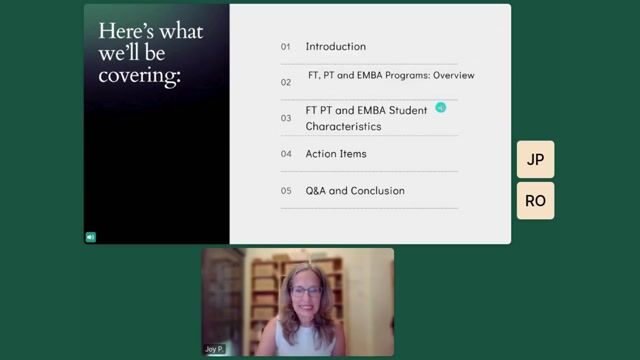
Full-time or Executive MBA - That is the Question!
One question I hear again and again is, "At my age, and with years of experience, should I be aiming towards a full-time MBA or an Executive MBA?" Some candidates worry that they might be too young for an EMBA. Others fear that they are overqualified for a typical full-time program. Still others wonder if a part-time MBA might not be all that they need, and is it really worth pursuing the other programs instead? Each type of MBA program comes with its particular advantages and disadvantages, and each one has its standard cohort, with the expected outliers. The question is really, what are you looking for? Why do you want or need to attend that program? Which will truly be the best for your particular goals? In this webinar we will start to open up these questions to bring clarity to the issue.