Leland+ Content Library
Select a category














































Popular on Leland+
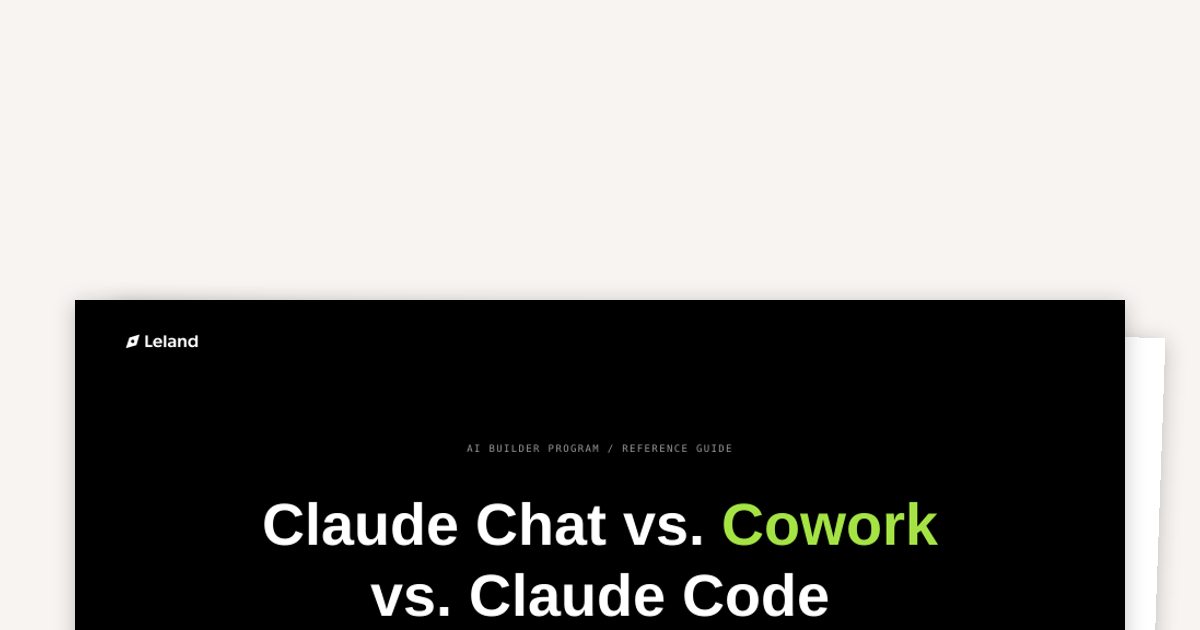
Claude Chat vs. Cowork vs Code
There are a lot of options for how to approach tasks using AI. Learn which interface to reach for why one might be more suited to specific tasks than the others.

Giving Context to Your Agents: Making Your First CLAUDE.md
CLAUDE.md is a plain text file that loads automatically at the start of every Claude Code or Cowork session. It tells Claude who you are, what you are working on, what tools you use, and how you want Claude to behave.
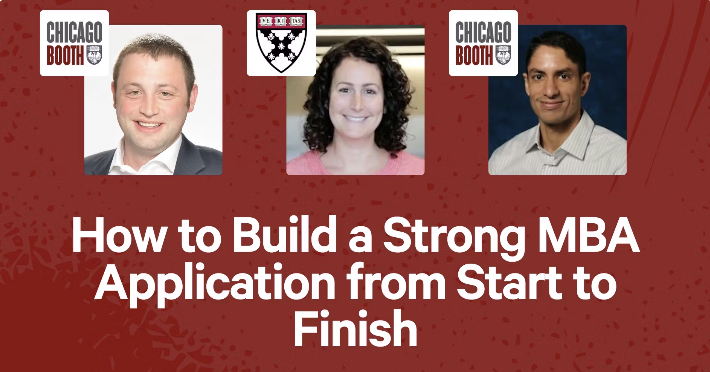
How to Build a Strong MBA Application from Start to Finish
Starting an MBA application can feel overwhelming when there are so many moving pieces and no clear roadmap. This session is for applicants who want to understand how to approach the process from start to finish with a thoughtful, structured strategy. You’ll learn how to evaluate your profile, build a strong school list, and develop a cohesive narrative across essays, recommendations, and interviews.


Using AI to Build a Stronger Private Equity Profile
AI can be a powerful tool for building a stronger private equity profile, but most candidates aren’t sure how to use it in a way that actually adds signal. This session is for aspiring PE candidates who want to leverage AI to sharpen their experience, materials, and overall positioning. You’ll learn how to use AI to refine your resume and deal narratives, deepen your investment thinking, and build differentiated projects that demonstrate real investor judgment.

Headhunters and Resumes: How to Get Noticed in PE Recruiting
Private equity recruiting is highly selective, and your resume and cover letter need to communicate impact, rigor, and investment judgment quickly. This session is designed for candidates targeting PE roles who want to understand how top applicants position their experience and stand out on paper. You’ll learn how to structure a results-driven resume, highlight deal and transaction experience effectively, and craft a cover letter that clearly signals fit and interest in the firm.

GMAT Advanced Quant Workshop: Exponents & Roots - Applied Strategies & Tips
Many high-scoring GMAT candidates hit a ceiling on Quant because of advanced exponent and root problems. These questions aren’t just about knowing the rules—they test whether you can recognize patterns, simplify quickly, and avoid time-consuming calculations. In GMAT Advanced Quant Workshop: Exponents & Roots – Applied Strategies & Tips, you’ll learn how top performers approach the hardest versions of these questions. The coach regularly works 1:1 with GMAT candidates and will share the same problem-solving strategies used in coaching sessions to help students push from strong scores into the top percentile. Who This Is For - GMAT test-takers aiming for a 48–51 Quant score - Students comfortable with basics but struggling with harder exponent and root problems - Candidates looking to improve speed and efficiency on advanced Quant - Test-takers who want a clearer approach to high-difficulty problem types What You’ll Walk Away With - How to simplify complex radical and exponent expressions quickly - The exponent patterns that appear most often in hard GMAT problems - When to calculate exactly vs. when to use estimation strategically - The reasoning patterns that separate a 48 from a 51 on Quant

Ask Me Anything: Medical School Applications with a Current Adcom
The medical school application process can feel opaque, and many applicants have questions that aren’t easily answered by guides or forums. This session is for prospective students who want direct insight from someone evaluating applications every day. You’ll learn what admissions committees prioritize, how to frame your experiences effectively, and what common mistakes to avoid when preparing your application.
Ace Your Consulting Case Interviews
After this session, you'll know how to structure your thinking under pressure, what separates a good case answer from a strong one, and how to handle the moments where candidates most often lose the interviewer. We'll cover the specific frameworks that hold up across McKinsey, BCG, and Bain formats, and how to communicate your reasoning in a way that signals real business intuition rather than rehearsed templates.


How to Transition Into AI from Any Background
Many professionals are interested in working in AI but aren’t sure how to translate their current skills into opportunities in the field. This session is designed for candidates from technical and non-technical backgrounds who want a realistic path to entering the AI ecosystem. You’ll learn how to identify transferable skills, position your experience for AI-related roles, and prioritize the tools, projects, or learning paths that hiring managers actually value.


Three Principles for AI Coding
These three principles form the foundation of effective AI-assisted development. Master them and you'll ship better code faster.
CPT to FTE: Building Your Career Pipeline During Your U.S. Studies
Turning a CPT opportunity into a full-time role requires early planning and a clear strategy. In this session, we’ll break down how students can use internships, part-time roles, and on-campus opportunities to build a strong pipeline toward full-time employment in the U.S. You’ll learn how to choose roles that maximize conversion potential, build relationships with managers and recruiters, and position your experience for return offers or future sponsorship. Whether you’re just starting your studies or already on CPT, this session will help you take intentional steps toward a successful FTE outcome.

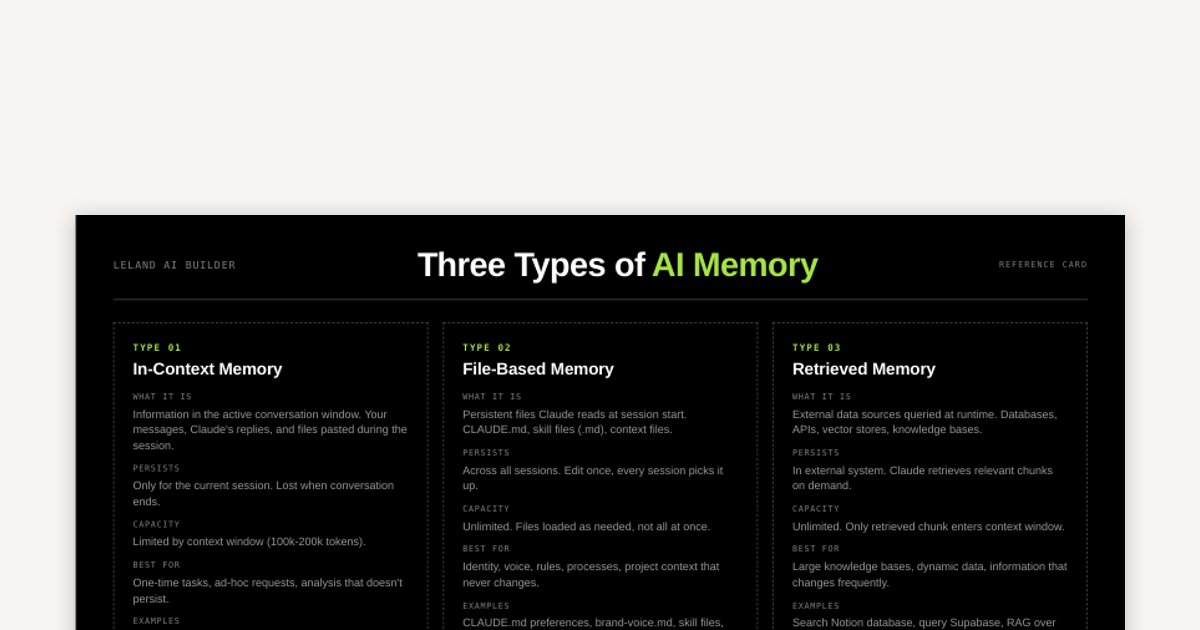
Three Types of AI Memory
There are three types of AI memory: in-context memory, file-based memory, and retrieved memory. This reference card outlines examples of each and tips for how to prioritize how you save and transfer data to AI Agents.
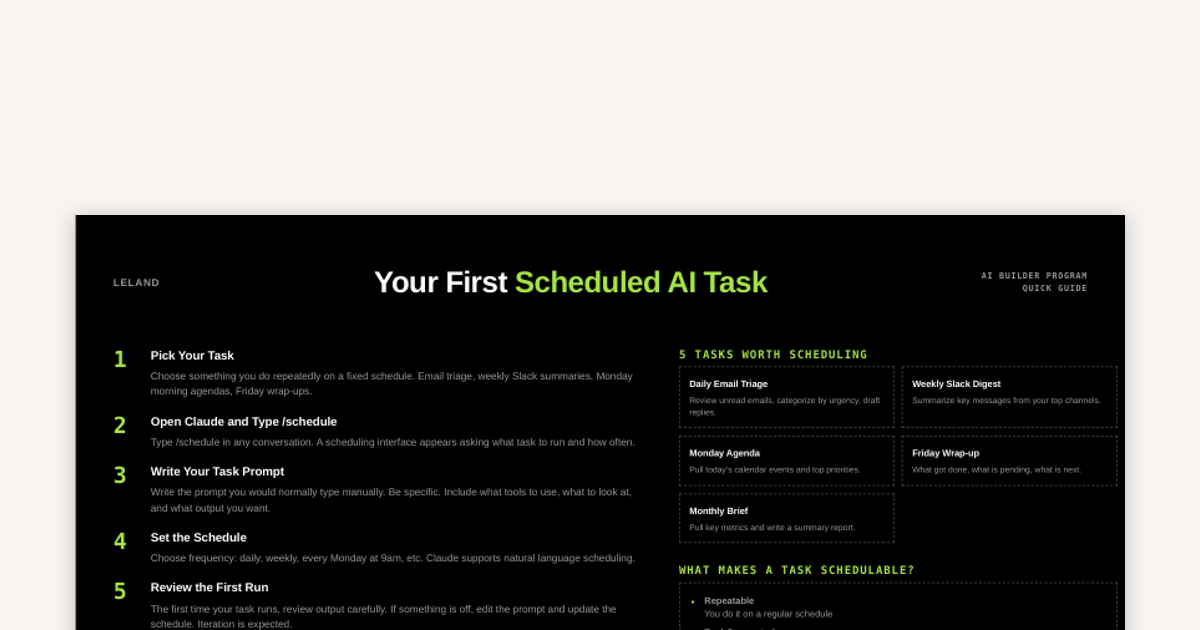
Create Scheduled Tasks in Claude
Learn a quick an easy way to set up automated tasks using either Claude Cowork or Claude Code.

The AI Skillset That Gives PM Candidates an Edge
AI is rapidly becoming part of the product manager’s toolkit, and candidates who understand how to apply it thoughtfully are starting to stand out in hiring processes. This session is for aspiring and current PMs who want to understand which AI skills actually matter and how to incorporate them into their product thinking. You’ll learn how PMs are using AI in real product workflows, which capabilities hiring managers are beginning to value, and how to demonstrate AI fluency in interviews and projects.

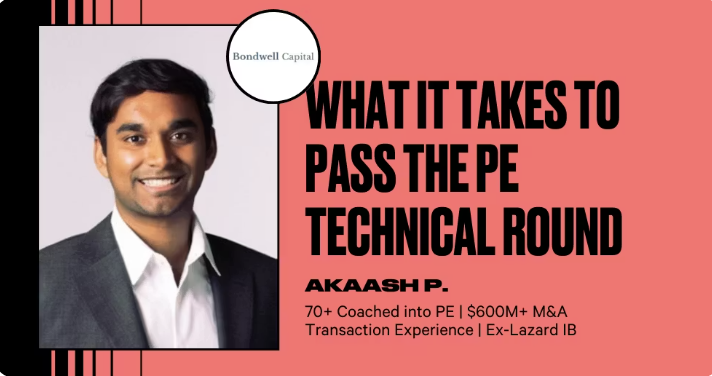
What It Takes to Pass the PE Technical Round
After this session, you will know how to structure a leveraged buyout model under time pressure, articulate an investment thesis that holds up to pushback, and answer the deal experience questions that consistently trip up strong candidates. The focus is on the patterns that separate people who pass from people who stall: where the logic breaks down, what interviewers are actually stress-testing, and how to think through a case you have never seen before.


Inside Private Equity: Ask a PE Founder and Former BlackRock Director Anything
Private equity can be hard to break into and even harder to fully understand from the outside. This session is for candidates who want a candid look into the industry from someone who has operated at a high level and built their own firm. You’ll learn how private equity professionals think about investing, what the day-to-day actually involves, and how candidates can better position themselves for roles in the field.
Free
Startup Financial Modeling Skill
"/startup-financial-modeling" will build comprehensive 3-5 year financial models for early-stage startups, covering cohort-based revenue projections, cost structure, burn rate, runway, headcount planning, and fundraising scenario analysis. To install, run this in your terminal after downloading the file: unzip ~/Downloads/startup-financial-modeling-skill.zip -d ~/.agents/skills/startup-financial-modeling/
Email Manager Skill
"/email-manager" triages the user's inbox, sorts emails by urgency, skips noise, and produces ready-to-review reply drafts in the user's voice without sending anything automatically. To install, run this in your terminal after downloading the file: unzip ~/Downloads/email-manager-skill.zip -d ~/.agents/skills/

Intro to IDEs
Learn what an IDE is, why they matter, and how to get started using one.

Principles of Good Context Engineering
Context engineering is the discipline of designing what information an AI model sees, when it sees it, how it's structured, and what it can touch.