Leland+ Content Library
Select a category














































Popular on Leland+

Identify Your Missing Piece
• Walk through a real or hypothetical example of identifying gaps • How to differentiate between “substance gaps” and “communication gaps” • Example of turning a weakness (e.g., low quant score) into an update plan • Framework recap: Story – Strength – Fit • Call to action: complete your self-audit and select 1–2 improvement priorities


Waitlist Self-Audit Worksheet
• Section 1: Application summary (GMAT/GRE, GPA, goals, recommenders) • Section 2: Strengths (what resonated or differentiates you) • Section 3: Gaps (academic, professional, narrative, or fit-related) • Section 4: Actionable improvements — list 2–3 moves in next 4–6 weeks • Section 5: Reflection prompt — “What new evidence can I show to close these gaps?”
Top 10 Ways to Strengthen Your Profile While Waitlisted
• Examples of high-impact updates: promotions, certifications, quant coursework, new leadership roles • How to frame achievements for the admissions committee • How to show ongoing engagement with the school (events, conversations, visits) • Building credibility through thoughtful updates, not volume • Quick-reference chart: “Update ideas by category (Academic / Professional / Personal / Fit)"
Waitlist Update Letter Builder
• Section 1: Greeting and opening tone • Section 2: New accomplishments or progress since submission • Section 3: Refined clarity on short- and long-term goals • Section 4: Reaffirmed school fit (specific to program culture and resources) • Section 5: Closing statement (gratitude + enthusiasm without pressure) • Example language snippets for each section
Communication Timeline & Etiquette Checklist
• When to send your first update (and how often to follow up) • How to structure your email cadence • Rules for event follow-up (e.g., after attending webinars or coffee chats) • Optional updates vs. overcommunication • Template calendar: sample outreach plan over 8 weeks

FAFSA 101
Leland is excited to partner with CareerVillage to host this free event on navigating FAFSA! Paying for college or graduate school starts with understanding financial aid—and that means knowing how to navigate the FAFSA. In this session, Leland coach Loubna B., who has years of experience guiding students through competitive admissions and funding opportunities, will walk you through the FAFSA process step by step. You’ll learn how to complete the application accurately, avoid common mistakes, and maximize your eligibility for grants, loans, and work-study programs. Whether you’re applying for the first time or renewing your FAFSA, this session will give you the clarity and confidence you need to take control of your financial aid journey.

Inside the Waitlist: How Admissions Really Uses It
• Define what a waitlist decision actually means • Explain why schools use the waitlist (class balancing, yield management, diversity mix) • Common misconceptions (e.g., “It’s a soft reject” vs. “It’s still active consideration”) • How timing, round, and school culture affect outcomes • Typical timelines • High-level do’s and don’ts immediately after being waitlisted
Overview of the Waitlist Process
• Visual timeline from decision release → movement → final outcomes • Key decision points: R2 admit shifts, summer yield management • Typical volume of waitlisted candidates and admit conversion rates • School-specific examples (generalized, not data-heavy) • Summary: What you can and can’t control at each stage
Checklist: PhD School List Development and Prospective Faculty Search
Stop wasting time: Use this actionable framework to build your PhD school list and find the right faculty mentors. Learn how to target programs that match your research and maximize your admissions odds.

Columbia Business School: Interview Question Bank
Question bank covering the most commonly asked questions in Columbia Business School interviews.
Columbia Business School: Interview Answer Worksheet
Worksheet designed to help applicants prepare for Columbia Business School interviews by organizing responses to behavioral questions using the STAR framework.

MBA Essays with AI the Right Way
AI tools are changing how applicants approach MBA essays—but using them effectively (and ethically) is the real challenge. In this session, expert Leland coach Eric L. will show you how to leverage AI to brainstorm, structure, and refine your essays while keeping your unique voice front and center. By the end, you’ll know exactly how to make AI your ally in the application process and walk away with actionable strategies to craft essays that stand out to admissions committees.
Columbia Business School: Essay Brainstorming Template
A template to help prospective applicants to Columbia Business School brainstorm essay ideas.
Columbia Business School: Recommender Guide
A template to ensure you have strong recommendations for your Columbia Business School application.
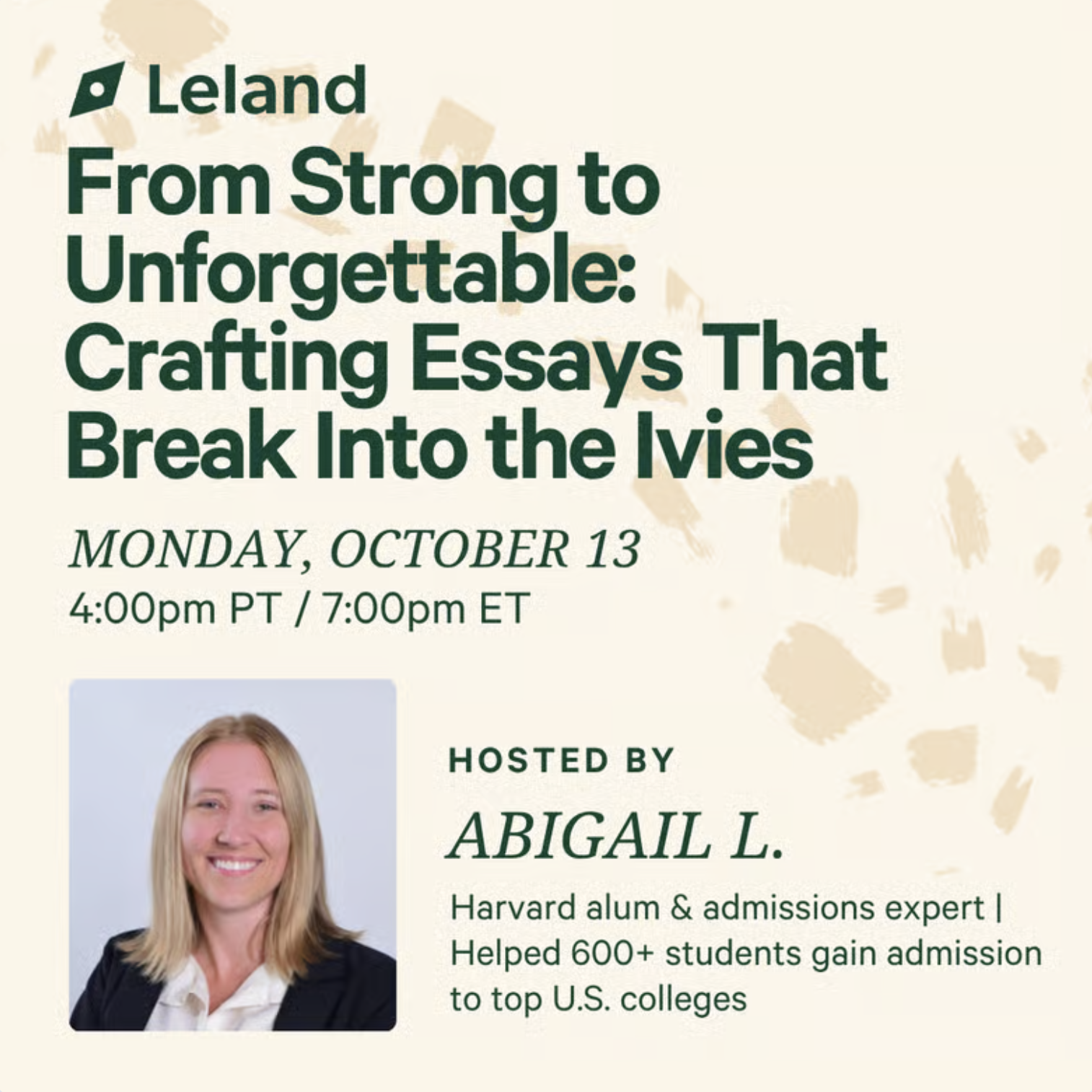
From Strong to Unforgettable: Crafting Essays That Break Into the Ivies
Applying to college can feel overwhelming—but with the right strategy, your application can truly stand out. In this workshop, Abigail L.—a Harvard-educated admissions consultant who has guided 600+ students to top schools including Harvard, Yale, Princeton, Stanford, and MIT—will share what sets successful applicants apart.


Columbia Business School: Essay Strategy
An overview of how to best approach Columbia Business School's application essays and how to stand out.
Columbia Business School: General Overview
Holistic information about Columbia Business School's admission statistics and program.

Columbia Business School: The NYC Advantage
A deep dive into how Columbia Business School's geographic positioning puts it at a unique advantage.

Boston Consulting Group: Interview Prep
Overview of BCG’s interview process. Learners will master both the case and behavioral formats, understand what interviewers evaluate, and develop habits to stay calm, structured, and authentic throughout.

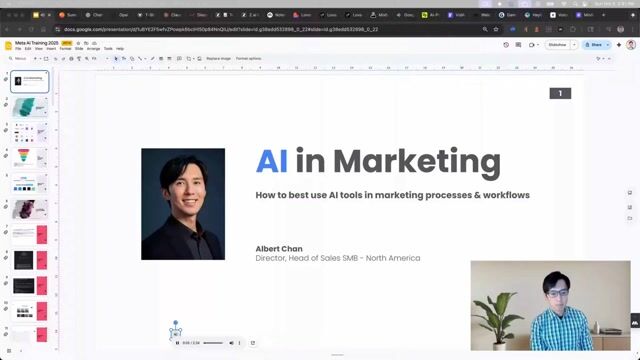
AI Marketing: Introduction
Introduction to the AI in Marketing course.