Leland+ Content Library
Select a category














































Popular on Leland+

Columbia Business School: The NYC Advantage
A deep dive into how Columbia Business School's geographic positioning puts it at a unique advantage.

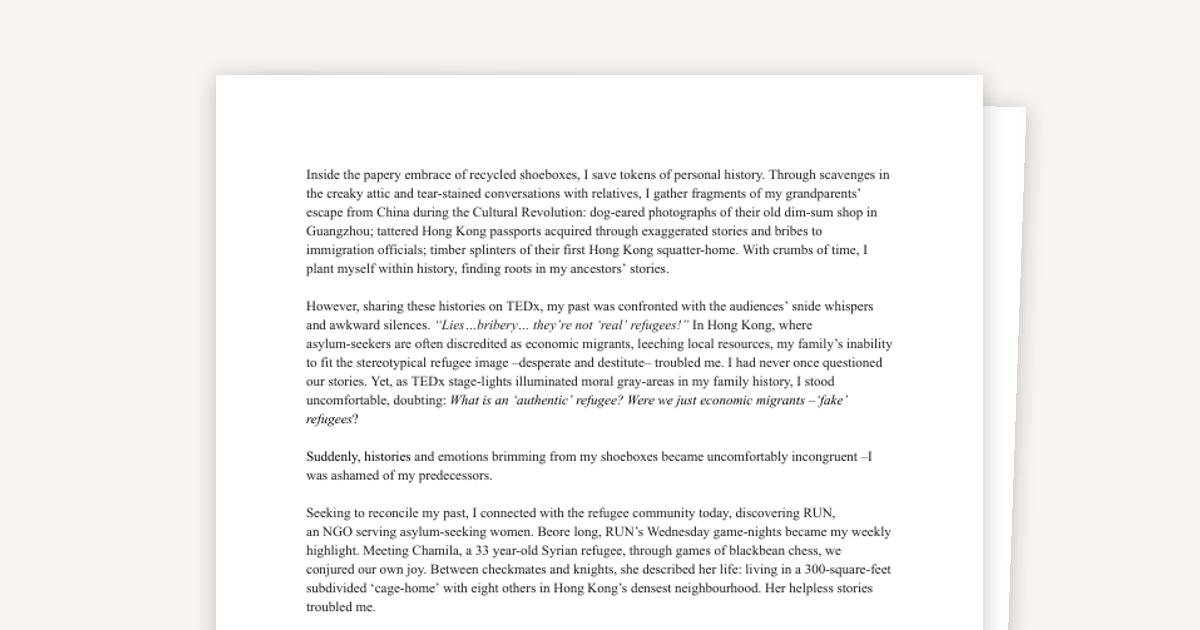
Stanford Accepted Personal Statement: Crafting a Story of Identity
A deep dive into a powerful personal statement. Learn to craft a unique, compelling narrative from your own life experiences to stand out to admissions.


Brainstorming Workshop
Use this worksheet to pull out your best stories before you write a single sentence.

Statement of Purpose Essay Checklist
Don’t hit submit until you’ve checked every box on this list. Following these steps will help you ensure your essay is flawless and focused.
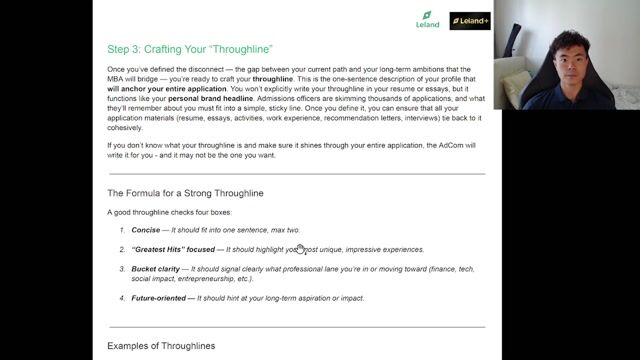
Crafting Your Throughline
Distill your story into a central theme or “throughline” that ties together your experiences and goals.


Boston Consulting Group: Interview Prep
Overview of BCG’s interview process. Learners will master both the case and behavioral formats, understand what interviewers evaluate, and develop habits to stay calm, structured, and authentic throughout.

Work With Me!
Learn about personalized coaching options to refine your essays, story, and overall MBA strategy. Get an overview of the personalized coaching options Joshua can offer to refine your essays, story, and overall MBA strategy.
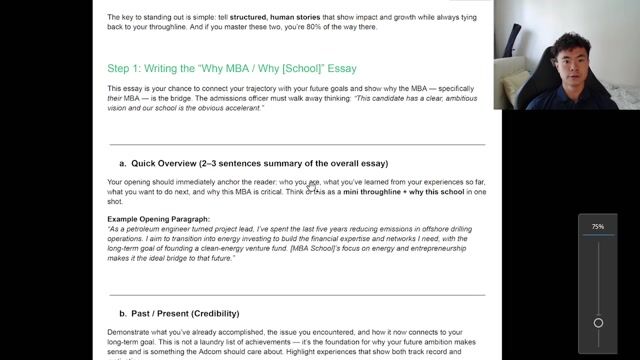
Writing the “Why MBA?” Essay
Learn to clearly articulate why you need an MBA now, why each school fits, and how it connects to your long-term vision.
Tailoring Your Story for Different Schools
Adapt your core story for different MBA programs while maintaining consistency and authenticity.

Boston Consulting Group: Firm Overview
An introduction to BCG’s identity, mission, and culture. This module explores BCG’s “One BCG” philosophy, its collaborative and entrepreneurial environment, and how its values of integrity, curiosity, and impact shape its global brand and career experience.
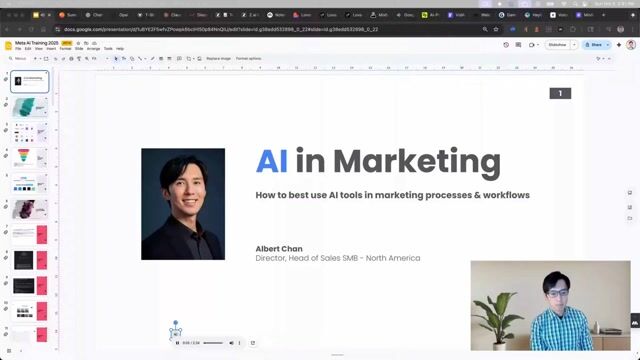
AI Marketing: Introduction
Introduction to the AI in Marketing course.

Tailoring Your Story for Different Schools
Adapt your core story for different MBA programs while maintaining consistency and authenticity.

How to Break Into YC: Advice from Alumnus
Getting into Y Combinator is a dream for many founders—but the application, pitch, and selection process can feel opaque and daunting. In this session, join Nick V., co-founder & former COO of Relay (a YC-backed startup) and top-rated Leland coach, as he pulls back the curtain on what makes a YC application stand out. Nick will walk you through what YC looks for, how to frame your idea and progress, and what mistakes most founders make (and how to avoid them). You’ll leave this session with sharper clarity and concrete steps to strengthen your candidacy.

AI Marketing: Full Course Lecture Slides
Lecture slides for the full Leland+ AI in Marketing Course
Columbia Business School: Essay Brainstorming Template
A template to help prospective applicants to Columbia Business School brainstorm essay ideas.
Columbia Business School: Interview Answer Worksheet
Worksheet designed to help applicants prepare for Columbia Business School interviews by organizing responses to behavioral questions using the STAR framework.
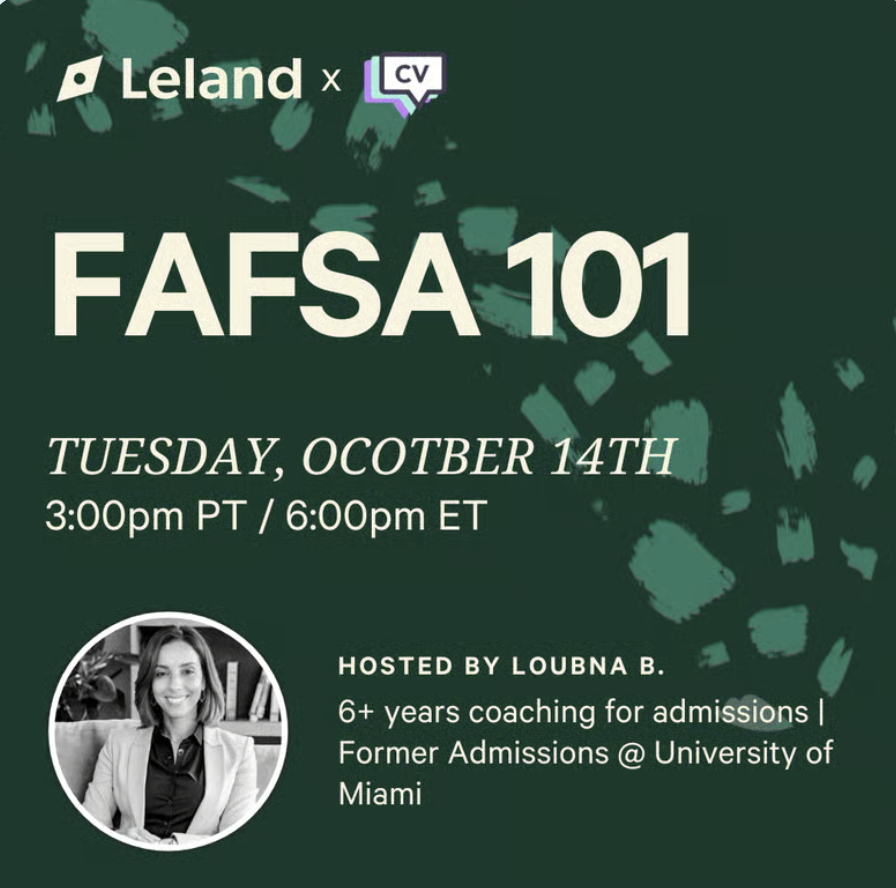
FAFSA 101
Leland is excited to partner with CareerVillage to host this free event on navigating FAFSA! Paying for college or graduate school starts with understanding financial aid—and that means knowing how to navigate the FAFSA. In this session, Leland coach Loubna B., who has years of experience guiding students through competitive admissions and funding opportunities, will walk you through the FAFSA process step by step. You’ll learn how to complete the application accurately, avoid common mistakes, and maximize your eligibility for grants, loans, and work-study programs. Whether you’re applying for the first time or renewing your FAFSA, this session will give you the clarity and confidence you need to take control of your financial aid journey.

Inside the Waitlist: How Admissions Really Uses It
• Define what a waitlist decision actually means • Explain why schools use the waitlist (class balancing, yield management, diversity mix) • Common misconceptions (e.g., “It’s a soft reject” vs. “It’s still active consideration”) • How timing, round, and school culture affect outcomes • Typical timelines • High-level do’s and don’ts immediately after being waitlisted
Waitlist Self-Audit Worksheet
• Section 1: Application summary (GMAT/GRE, GPA, goals, recommenders) • Section 2: Strengths (what resonated or differentiates you) • Section 3: Gaps (academic, professional, narrative, or fit-related) • Section 4: Actionable improvements — list 2–3 moves in next 4–6 weeks • Section 5: Reflection prompt — “What new evidence can I show to close these gaps?”
Waitlist Update Letter Builder
• Section 1: Greeting and opening tone • Section 2: New accomplishments or progress since submission • Section 3: Refined clarity on short- and long-term goals • Section 4: Reaffirmed school fit (specific to program culture and resources) • Section 5: Closing statement (gratitude + enthusiasm without pressure) • Example language snippets for each section