Leland+ Content Library

Fit Is Not a Freebie: How Firms Actually Evaluate Your Behavioral Interviews [8/11/2026] (Recording)
Most candidates spend 90% of their prep time on cases and assume fit will take care of itself. It doesn't. Fit is evaluated with the same rigor as the case at every MBB firm, and the interviewers asking behavioral questions are trained to score them. As a former BCG interviewer, I've sat on both sides of that table, and the gap between what candidates think they're being evaluated on and what's actually happening is significant. This session covers what firms are actually looking for and how to build a fit preparation strategy that works. How Fit Is Actually Scored at MBB: This isn't a casual conversation, it's a structured evaluation with specific criteria. -Why fit isn't just about whether your interviewer likes you, but it's a scored component with defined qualities -The qualities that interviewers are looking for in every fit story, regardless of firm Telling Fit Stories That Actually Work: The format most candidates use produces weak answers. -Why STAR produces flat, unmemorable answers and what to do instead -How to structure a leadership, impact, or conflict story so it actually lands -What makes a fit story memorable vs. one that interviewers forget before the next candidate walks in Building Your Story Bank Before Recruiting Season: Having one good story is not enough. -How many stories you actually need and how to choose which experiences to use -Why most candidates recycle the same stories across question types and how to avoid it -How to adapt a single experience to multiple fit questions without it sounding rehearsed Live Example: A strong fit answer, broken down for what makes it work, and the common version of the same story that doesn't.

Free

Slides for Fit Is Not a Freebie: How Firms Actually Evaluate Your Behavioral Interviews
Most candidates spend 90% of their prep time on cases and assume fit will take care of itself. It doesn't. Fit is evaluated with the same rigor as the case at every MBB firm, and the interviewers asking behavioral questions are trained to score them. As a former BCG interviewer, I've sat on both sides of that table, and the gap between what candidates think they're being evaluated on and what's actually happening is significant. This session covers what firms are actually looking for and how to build a fit preparation strategy that works. How Fit Is Actually Scored at MBB: This isn't a casual conversation, it's a structured evaluation with specific criteria. -Why fit isn't just about whether your interviewer likes you, but it's a scored component with defined qualities -The qualities that interviewers are looking for in every fit story, regardless of firm Telling Fit Stories That Actually Work: The format most candidates use produces weak answers. -Why STAR produces flat, unmemorable answers and what to do instead -How to structure a leadership, impact, or conflict story so it actually lands -What makes a fit story memorable vs. one that interviewers forget before the next candidate walks in Building Your Story Bank Before Recruiting Season: Having one good story is not enough. -How many stories you actually need and how to choose which experiences to use -Why most candidates recycle the same stories across question types and how to avoid it -How to adapt a single experience to multiple fit questions without it sounding rehearsed Live Example: A strong fit answer, broken down for what makes it work, and the common version of the same story that doesn't.

Career Breakthrough Masterclass [6/17/2026] (Recording)
🔓 Corporate Hiring Secrets Uncovered Do you want the unvarnished truth? The most qualified candidate rarely gets the corporate job. The candidate who knows how to package their value does. To dismantle these systemic roadblocks, I am partnering with international executive resume writer and career strategist Andrew Stoner for the Career Breakthrough Masterclass on June 17 on the following: 1. Resume & LinkedIn Architecture: Build a bulletproof profile and high-impact narrative that instantly captures global decision-makers. 2. Elite Personal Branding: Master the executive presence and strategic positioning needed to command top-tier rooms. 3. The Interview Process: Learn the exact storytelling frameworks to confidently navigate and dominate high-stakes conversations. Meet Your Hosts Sarika Puri is a Career Strategist with nearly two decades of global HR leadership and executive hiring experience at top firms like Spencer Stuart, Lenskart, and BYJU’S. She uses her deep insider knowledge of the hiring table to help ambitious professionals conquer imposter syndrome, master executive presence, and land top-tier roles. Andrew Stoner is an International Executive Career Coach with over 20 years of experience shaping personal brands and crafting over 500 elite resumes for corporate leaders. He specializes in transforming complex career histories into powerful storytelling frameworks and bulletproof LinkedIn profiles that instantly hook global decision-makers. Together, we are exposing the friction points between elite document architecture and the cold realities of the executive hiring room. Join us live on June 17 at 8:00 PM IST / 10:30 AM EDT for this high-value, 90-minute intensive session, complete with a live Q&A and a full recording provided afterwards. Register immediately by clicking on the link in this event and follow this space for more.
I Didn’t Get an IB Internship - What Do I Do Now? [10/15/2026] (Recording)
Not getting the IB internship you wanted can feel like you’ve fallen behind, but it doesn’t mean your path into investment banking is over. There are still ways to build relevant experience, strengthen your candidacy, and position yourself for the next recruiting cycle. This session is for students who missed out on an IB internship and want a clear plan for what to do next. You’ll learn how to make the most of the experience you can get, strengthen your resume, and put yourself in a better position for future IB opportunities. Join live to hear from an IB expert with deep career services experience at UC Berkeley’s elite Master of Financial Engineering program, a leading pipeline for investment banking talent. The speaker will share practical strategies for recovering from a missed internship opportunity, building relevant experience, and approaching your next recruiting cycle strategically. Bring your questions and leave with a clearer roadmap for getting back on track toward an IB offer.


Becoming an AI-native Seller: Offload 25% of Your Sales Week [10/24/2026] (Recording)
Most sellers use AI to rewrite emails. AI-native sellers use it to take over the hours around selling: account research, call prep, CRM updates, follow-ups and pipeline reviews. I've spent 10 years in sales and now build AI and automation systems for revenue teams. This session is a live build, not a list of tools: Where a seller's week actually goes, and which 25% is automatable today Live build: I take one registrant's real sales workflow and automate it on screen Research that happens automatically: account briefs, trigger events and a point of view before every call Call notes into CRM updates and follow-up drafts, without retyping The line between what AI should handle and what you should never hand off You'll leave with a map of your own week and one automation you can build that night. Best for: AEs, SDRs/BDRs, account managers and founders who sell. Registration question: What's the most repetitive part of your sales week? Be specific: what you do, how often, and which tools it touches.
What Actually Kills a PhD Application (From an Ex-Adcom Perspective) [8/16/2026] (Recording)
Most PhD applicants don’t get rejected because they’re unqualified. They get rejected because their application raises quiet concerns that are never explicitly communicated. In this session, I’ll walk you through how admissions committees actually evaluate PhD candidates behind closed doors—and more importantly, what tends to kill otherwise strong applications. Drawing from my experience reviewing applications, I’ll break down the specific patterns I’ve seen across candidates who were ultimately denied, even with solid GPAs, research experience, or strong institutions. We’ll go beyond surface-level advice and focus on the real decision drivers: research fit, narrative clarity, faculty alignment, and how convincingly your trajectory makes sense for a PhD. You’ll learn how small positioning gaps can create doubt, and how those doubts translate into a rejection. This session is designed for both first-time applicants and reapplicants who want to approach the next cycle more strategically. You’ll leave with a clear understanding of where your application may be falling short and what to fix before the next round of deadlines. There will also be time for live Q&A, where you can ask questions about your own profile and get direct, candid feedback.

Starting Your GMAT Journey: An Introduction to the GMAT Focus Edition [5/21/2026] (Recording)
Starting GMAT prep can feel confusing when you’re not sure what’s changed in the Focus Edition or how to begin effectively. This session is for anyone looking for a clear introduction to the GMAT Focus Edition and what it takes to succeed. You’ll learn how the exam is structured, what each section tests, and how to build a study plan that aligns with your strengths and target score. Join live to ask questions about your starting point and get guidance on how to approach your prep with confidence. The speaker is an expert GMAT coach who regularly helps candidates navigate the early stages of studying. They’ll share the patterns they see across successful test takers and the foundational strategies typically covered in 1:1 prep sessions.

Starting Your GRE Journey: An Introduction to the GRE General Test [5/14/2026] (Recording)
Starting your GRE prep can feel overwhelming when you’re not sure what the test actually involves or how to begin. This session is for anyone looking for a clear introduction to the GRE General Test and how to approach it effectively. You’ll learn how the exam is structured, what each section tests, and how to build a study plan that sets you up for steady improvement. Join live to ask questions about your starting point and get guidance on how to approach your prep with more confidence. The speaker is an experienced GRE coach who regularly helps students navigate the early stages of preparation. They’ll share the patterns they see across successful test takers and the foundational strategies typically covered in 1:1 prep sessions.

Starting Your GRE Journey: An Introduction to the GRE General Test [6/23/2026] (Recording)
Starting GRE prep can feel overwhelming when you’re not sure how the test works or what it actually takes to reach a competitive score. This session is for anyone looking for a clear introduction to the GRE General Test and a smarter way to begin preparing. You’ll learn how the exam is structured, what each section is really testing, and how to build an effective study plan from the start. Join live to ask questions about your own prep and hear directly from a GRE coach who scored a 336 and has tutored 100+ students. The speaker has helped test takers across a wide range of score goals and will share the patterns they see across successful students and the foundational strategies that consistently make the biggest difference.

Starting Your GMAT Journey: An Introduction to the GMAT Focus Edition [6/30/2026] (Recording)
Starting GMAT prep can feel overwhelming when you’re not sure how the Focus Edition works or where to begin. This session is for anyone looking for a clear introduction to the GMAT and the strategies that lead to strong performance over time. You’ll learn how the exam is structured, what each section is designed to test, and how to build a study plan that sets you up for steady improvement. Join live to ask questions about your own starting point and get guidance from a GMAT expert with over 25,000 hours of tutoring experience. The speaker has worked with students across a wide range of score goals and will share the patterns they see across successful test takers and the foundational strategies that consistently make the biggest difference.

Management Consulting 101
The Career Pivot Playbook: How to Change Lanes Without Starting Over [9/8/2026] (Recording)
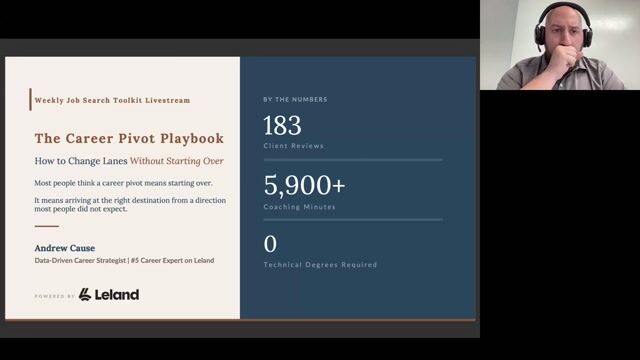
Most people think a career pivot means starting over. It doesn't. It means arriving at the right destination from a direction most people didn't expect. I made the move from full-cycle recruiter and sourcer at JPMorganChase, EY, and Fisher Investments to People Analytics Developer at JPMorganChase. No CS degree, no data science bootcamp. Just a clear why, a transferable story, and a strategy for making the move without walking away from everything I had built. This session is that exact playbook. The data backs it up: 80% of career changers report greater happiness after making the move. 77% earn the same or more within two years. The risk is real but it's smaller than the fear makes it feel. The timing also matters: 53% of employers have dropped degree requirements in favor of demonstrated skills. The credential gap that used to stop most pivoters is closing. The playbook has changed. This session is built around that reality. Here's what we'll cover: The Decision: How to tell the difference between a real signal and a bad week, and the excuses that keep people stuck. The Internal Pivot Advantage: The most underrated career move available. Why pivoting before you have to, inside your current company, can change everything. Your WHY as the Thread: Most people answer the pivot question defensively. We build the narrative that makes your non-linear path look intentional, not accidental. The Transferable Asset Audit: You are not starting from zero. We map what already transfers, and identify the one gap actually worth closing. Overcoming It in Interviews: The three pivot traps that trip up career changers, and how to handle each one without apologizing for your path. Live Q&A closes the session.

MBA Submit & Speak Part 3: The Interview Questions You Cannot Predict [10/8/2026] (Recording)
You cannot know which behavioral questions you will be asked. You can still be ready. This is the final session of the MBA Submit & Speak series. Invitations are landing, and the questions that help decide many interviews are the ones no list can anticipate. Rather than memorizing answers, we build the system that lets a small set of real stories cover a very large set of possible questions. Across the three sessions, we move from the last days before you submit to the interview that follows. Attend all three to go from deadline to interview with one continuous plan, or drop into the single session you need most. In this session, you will build the preparation that unpredictable questions require: • Build a story bank of five or six real experiences, and learn how a single experience answers several different questions depending on how you frame it. • Handle the failure question and the conflict question, where most applicants either flinch or confess too much. • Answer a situational question about something you have never done, without inventing experience you do not have. • Recover when a question lands and no story comes to mind. • Ask the questions you have for your interviewer, and close the conversation on your terms. This is where interviews are won and lost. Two applicants with the same record can walk out having told completely different stories about themselves, and the disparity is almost never talent. It is preparation of a kind most applicants never do. They are not short of question lists. They are either overwhelmed by how long those lists are and unsure where to start, or working through them one by one, writing out an answer to every question. Neither approach survives contact with a real interview. This session gives you a system that does. I have guided more than 100 applicants into every M7 program, across the top 20 in the U.S., and into leading international programs, including INSEAD, London Business School, IESE, Esade, Oxford, Cambridge, NUS, and more. Walk in ready for anything they ask. Register now to claim your spot.
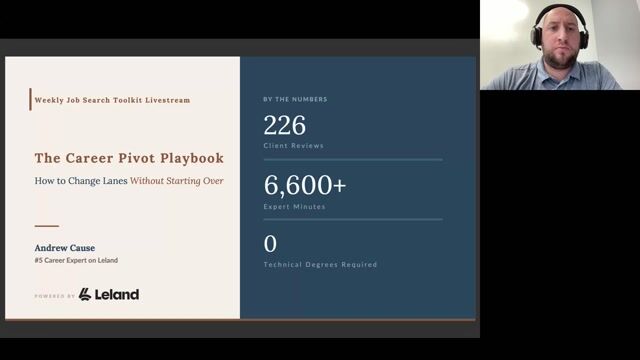
The Career Pivot Playbook: How to Change Lanes Without Starting Over [10/6/2026] (Recording)
Most people think a career pivot means starting over. It doesn't. It means arriving at the right destination from a direction most people didn't expect. I made the move from Full-Cycle Recruiter and Sourcer at JPMorganChase, EY, and Fisher Investments to People Analytics Analyst at JPMorganChase. No CS degree, no bootcamp. Just a clear why, a transferable story, and a strategy for making the move without walking away from everything I had built. The data backs it up: 80% of career changers report greater happiness after making the move. 77% earn the same or more within two years. The risk is real but it's smaller than the fear makes it feel. The timing also matters: 53% of employers have dropped degree requirements in favor of demonstrated skills. The credential gap that used to stop most pivoters is closing. The playbook has changed. This session is built around that reality. Here's what we'll cover: The Decision: How to tell the difference between a real signal and a bad week, and the excuses that keep people stuck. The Internal Pivot Advantage: The most underrated career move available. Why pivoting before you have to, inside your current company, can change everything. Your WHY as the Thread: Most people answer the pivot question defensively. We build the narrative that makes your non-linear path look intentional, not accidental. The Transferable Asset Audit: You are not starting from zero. We map what already transfers, and identify the one gap actually worth closing. Overcoming It in Interviews: The three pivot traps that trip up career changers, and how to handle each one without apologizing for your path. Live Q&A closes the session. Bring your current role, your target direction, and your biggest blocker. Attending live means you can bring your specific situation and hear how the framework applies to your actual pivot, context a recording can't replicate.
How to Build an MBA Application That's Actually Ready for Round 1 [8/3/2026] (Recording)
Preparing for Round 1 can feel overwhelming when you're trying to balance essays, recommendations, test scores, and school research all at once. This session is designed for MBA applicants who want to make sure every part of their application is truly ready before they hit submit. You’ll learn how to assess your application for gaps, prioritize the highest-impact improvements, and build a realistic plan for submitting a polished, competitive Round 1 application. Attending live gives you the opportunity to ask questions about your own application timeline and get real-time guidance on what deserves your attention before deadlines arrive. The speaker works closely with MBA applicants and will share the patterns they see across successful candidates, along with how they evaluate whether an application is genuinely ready for submission. If you want to approach Round 1 with more confidence and a clear plan, it’s worth joining live.


Getting Started With an Always-On AI Agent for the Working Professional [5/19/2026] (Recording)
After this session, you will know how to set up an AI agent that runs in the background of your work life, handling recurring tasks without requiring your attention each time. We will cover how to identify which professional workflows are worth automating first, how to choose and configure the right tools for a working professional's setup, and how to keep an agent running reliably after the initial build. Attending live means you can describe your actual job and get a direct read on where automation would give you the most leverage, something a recording cannot replicate. The coach works with AI agents daily and will share the patterns that separate setups that hold up over time from ones that quietly break.

Applying for an MBA in 2026? 6 Things You Could be Doing Now to Get Ahead
Planning to apply for an MBA in 2026? Join me, Meghna (HBS '28), for a high-impact session to help you get ahead in your MBA application journey. With acceptances and scholarship offers from multiple M7 and T15 programs, I’m excited to share the strategies, lessons learned, and insider insights that helped me navigate the process successfully, and that can help you do the same. In this session, we’ll cover practical, actionable strategies you can start implementing now - from refining your target school list and clarifying your “Why MBA,” to a structured framework for brainstorming essays and building a personalized application timeline. I’ll also share candid advice on where to invest (and where not to invest) your time and money when it comes to test prep, networking, and other application resources. Space is limited, so RSVP today to secure your spot and take the first step toward a standout application. Attendees will also receive an exclusive discount code for 1:1 coaching for the 2026 cycle.

The Non-Traditional Applicant's Playbook: How to Turn an Unconventional Path Int [7/30/2026] (Recording)
Most MBA prep content assumes a standard path: two or three years at a bank or consulting firm, clean career progression, obvious "why MBA." If that's not you, most of the advice out there doesn't apply, and following it will make your application worse, not better. As a Ross admissions interviewer who has interviewed candidates with every kind of background, I know what separates the non-traditional applicants who get admitted from the ones who don't. This session is for anyone who's ever worried their resume won't make sense to adcom. What "Non-Traditional" Actually Means to Adcom: It doesn't mean what most applicants think — and the anxiety around it is usually misplaced. -How adcom actually defines non-traditional and what it signals to a reader -The difference between a non-traditional background that's an asset and one that raises real concerns -Why some of the most compelling applications come from candidates without the standard pedigree Reframing Your Story So Your Background Works For You: Trying to make an unconventional path sound traditional is the wrong move. -How to find the through-line in a career that doesn't look linear on paper -Why your differentiated experience is more valuable than you've been told -How to position yourself as a distinct perspective Where Non-Traditional Applicants Lose Points (And How to Avoid It): The mistakes that hurt non-traditional candidates are specific and largely avoidable. -The essay and resume mistakes that come up most often in non-traditional applications -How to handle "why now" and "why MBA" when your path doesn't have an obvious answer -What adcom is actually concerned about when they see an unconventional background — and how to address it directly -How to use your recommenders strategically when your background is atypical
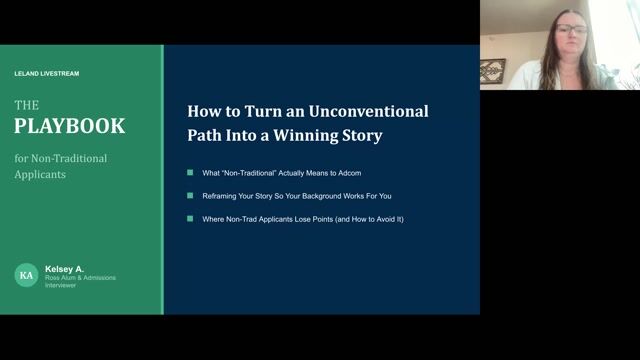
The Non-Traditional Applicant's Playbook: How to Turn an Unconventional Path Int [10/15/2026] (Recording)
Most MBA prep content assumes a standard path: two or three years at a bank or consulting firm, clean career progression, obvious "why MBA." If that's not you, most of the advice out there doesn't apply, and following it will make your application worse, not better. As a Ross admissions interviewer who has interviewed candidates with every kind of background, I know what separates the non-traditional applicants who get admitted from the ones who don't. This session is for anyone who's ever worried their resume won't make sense to adcom. What "Non-Traditional" Actually Means to Adcom: It doesn't mean what most applicants think — and the anxiety around it is usually misplaced. -How adcom actually defines non-traditional and what it signals to a reader -The difference between a non-traditional background that's an asset and one that raises real concerns -Why some of the most compelling applications come from candidates without the standard pedigree Reframing Your Story So Your Background Works For You: Trying to make an unconventional path sound traditional is the wrong move. -How to find the through-line in a career that doesn't look linear on paper -Why your differentiated experience is more valuable than you've been told -How to position yourself as a distinct perspective Where Non-Traditional Applicants Lose Points (And How to Avoid It): The mistakes that hurt non-traditional candidates are specific and largely avoidable. -The essay and resume mistakes that come up most often in non-traditional applications -How to handle "why now" and "why MBA" when your path doesn't have an obvious answer -What adcom is actually concerned about when they see an unconventional background — and how to address it directly -How to use your recommenders strategically when your background is atypical
The Layered Approach to Law School Personal Statements (Straight From an Admissions Insider) [8/3/2026] (Recording)
After this session, you will know how to build a personal statement that works on multiple levels at once, revealing character, demonstrating self-awareness, and giving admissions readers a clear reason to advocate for you. The coach will walk through how successful candidates layer narrative and reflection, and what separates statements that feel complete from those that read as surface-level. Attending live means you can ask how this approach applies to your specific story, background, or circumstance, and hear the coach reason through it in real time. This coach works directly with law school applicants and brings a reader's eye to every session, shaped by recognizing the patterns that consistently move applications forward.