Get a Competitive Step 2 (From someone who got a 260 as an MS2)
I was an MS2, but maybe you're an M2-4 now. You've been on rotations, or you're in the thick of it. You've seen patients, written notes, presented cases. But Step 2 isn't a preclinical memory test — it's clinical reasoning under pressure. The gap most students face: they know how to study for facts, not how to translate what they've actually seen into the clinical decision-making Step 2 demands. They're studying like they're still in the library instead of like they're on the wards. We build a plan that bridges that gap. Your study architecture accounts for your actual clinical workload. Your content priorities are anchored to your specialty and the patterns you've already encountered. Your practice exams measure not just volume, but whether you're building the differential diagnosis process and clinical reasoning that matters for intern year. By exam day, you're not hoping you've retained enough. You've been connecting clinical experience to knowledge for months. Your Step 2 score reflects actual clinical readiness — not a luck-based pass, but a score that positions you competitively for your specialty while building the reasoning foundation you'll use as an intern. You've run this plan alongside real clinical work. You know how to think like a clinician taking an exam, not a student taking a test. I got a 260. Using what I've learned in hindsight, lets make that your floor.
What's included
- A clinical decision-making study architecture — Your specific resources (UWorld, AMBOSS, case-based deck), your daily schedule, and how to translate clinical rotation experience into Step 2 performance.
- A realistic timeline bridging rotations and studying — Week-by-week breakdown that accounts for clinical workload. You're not trying to study like a preclinical student. You're studying like someone who's actually seen and maybe actively seeing patients.
- Weekly progress checkpoints — You're tracking not just volume but clinical reasoning depth. What patterns are you recognizing? What's your differential diagnosis accuracy improving on?
Meet your expert
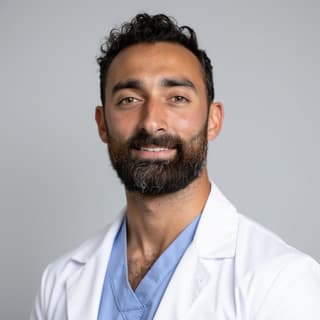
Jibreel A.
Learn how I passed Step 1 after MS1, and Step 2 after MS2 and got a 260.
I grew up in a family that taught people how to keep other people alive. Both my parents are physicians. My mother is a pediatrician, my father an emergency physician who worked the Albania-Kosovo border with war refugees. Our family trips were training trips. By the time I was ten I was running skill stations at tactical medicine courses, teaching tourniquets to grown men twice my size. The point was never that I was precocious. The point was that the method was simple enough for a ten year old to teach. That has shaped how I approach almost everything since. Most of what looks impossible is a sequence nobody has broken down for you yet. Before medical school I was an ocean lifeguard and an EMT. I did street medicine and volunteered doing global health work with an NGO at the U.S.-Mexico border in as well as field research in rural northern India. I am a Wilderness First Responder. I still surf, and I help run outdoor programming for my community, mostly getting people into mountains and water they assumed were not for them. Now I am a fourth year medical student going into emergency medicine. My current research is on head injury in big wave surfers, the people who get held under, surface, and paddle back out. Here is what I have learned mentoring premeds. Most of you already have the pieces. Hours, a score, a lab, an experience you have never once said out loud in the right order. What is missing is the line running through them. I am equally interested in whether you get in this cycle as in the next decade you are building toward, because getting in without knowing why is its own kind of trouble later. You are not assembling a résumé. You are becoming someone strangers will have to trust on the worst day of their life.