How to Get Into Cornell Law School (2026)
Learn how to get into Cornell Law School in this helpful guide.
Posted January 1, 2026



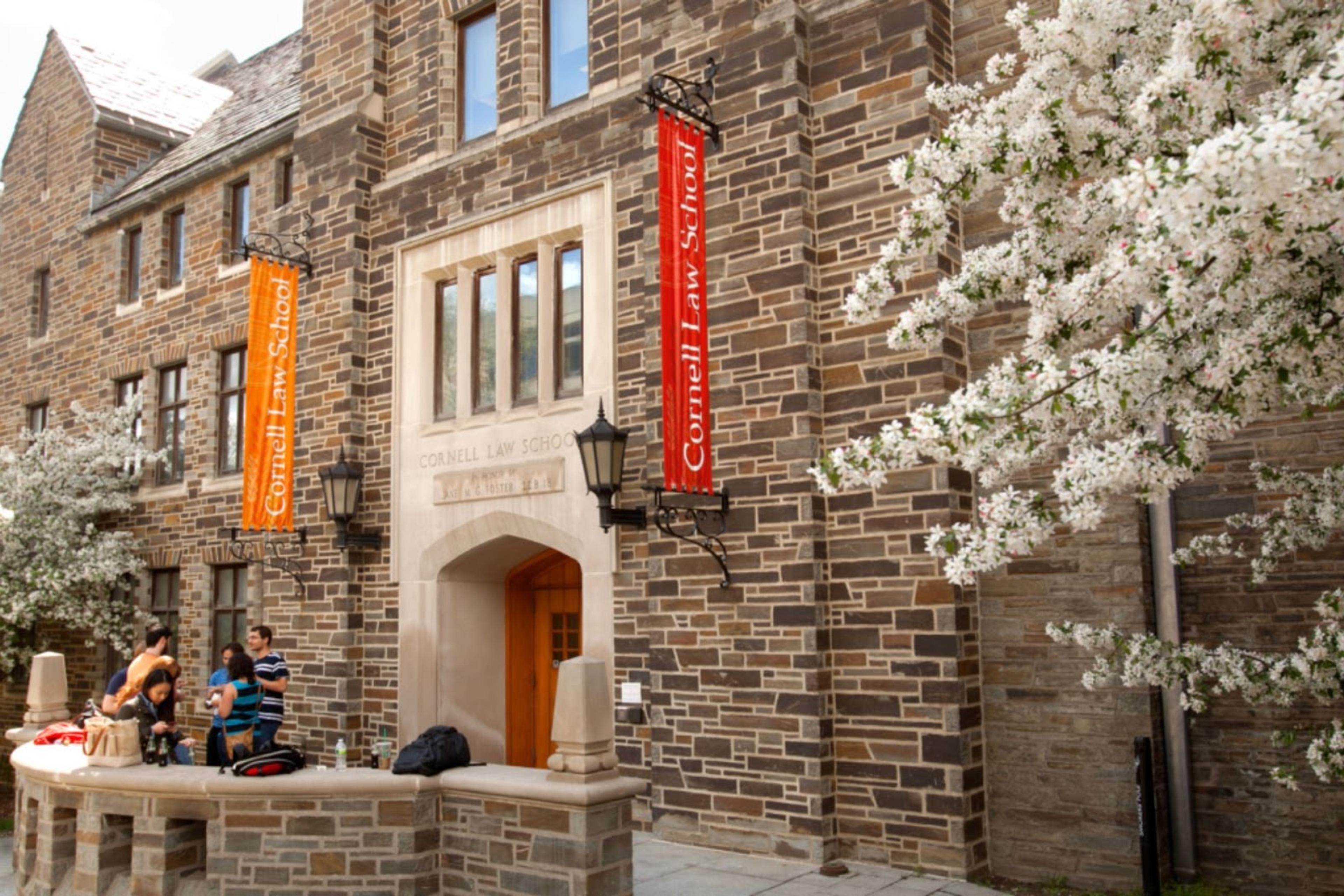
Table of Contents
How Hard Is It to Get Into Cornell Law School?
Cornell Law School, located in Ithaca, New York, is consistently ranked among the top law schools in the nation. Known for its rigorous academics, diverse curriculum, and strong community, Cornell Law School attracts applicants from across the country and around the world. For the J.D. Class of 2028, Cornell Law School received approximately 4,641 applications, offered admission to a select group, and enrolled 218 students, resulting in an acceptance rate of around 18%.
This competitive admissions process requires prospective students to submit compelling applications that highlight academic excellence, leadership qualities, and a commitment to the legal profession. For the incoming class, the median LSAT score was 173, and the median undergraduate GPA was 3.92, placing Cornell among the most academically selective law schools in the country.
The admissions committee values diverse experiences and holistic achievement, ensuring that the class includes individuals from a wide range of backgrounds and professional experiences. With its iconic Myron Taylor Hall, close-knit learning environment, and access to global opportunities, Cornell Law School remains one of the most prestigious and selective law schools in the U.S.
Cornell Law Acceptance Rate Over Time
| Class Year | Applications Received | Offers of Admission | Enrolled 1Ls | Acceptance Rate | Yield Rate |
|---|---|---|---|---|---|
| 2028 | 4,641 | ~835 (est.) | 218 | ~18.0% | ~26.1% |
| 2027 | 3,746 | 877 | 216 | 23.4% | 24.6% |
| 2026 | 4,368 | 843 | 191 | 19.3% | 22.7% |
| 2025 | 5,198 | 956 | 187 | 18.4% | 19.6% |
| 2024 | 4,261 | 811 | 160 | 19.0% | 19.7% |
| 2023 | 4,126 | 789 | 158 | 19.1% | 20.0% |
| 2022 | 4,000 | 760 | 152 | 19.0% | 20.0% |
Cornell Law’s consistently selective acceptance rate demonstrates its commitment to admitting top-tier applicants who can thrive in its academic environment and contribute meaningfully to the legal profession.
Read: T14 Law Schools: Acceptance Rates & Class Profiles
What Programs Does Cornell Law School Offer?
Cornell Law School programs cater to a wide range of legal interests, combining rigorous academics with practical experience.
Juris Doctor (J.D.) Program
The JD program at Cornell emphasizes a strong foundation in core legal concepts like international and comparative law, corporate law, and constitutional law. Its interdisciplinary approach prepares students for diverse career paths.
Master of Laws (LL.M.) Program
This program attracts international students and U.S. lawyers seeking advanced legal studies in areas such as international and comparative law or trial advocacy.
Doctor of Juridical Science (J.S.D.) Program
Designed for individuals pursuing legal academia, this program involves extensive research in fields like justice and comparative law.
Joint Degree Programs
Students can combine their J.D. with degrees in fields such as business, public administration, and international studies.
Clinical Courses and Public Service
Like other law school programs, Cornell offers hands-on learning opportunities through clinics like the International Human Rights Clinic and public interest law initiatives, equipping students with practical skills for impactful legal careers.
The Cornell Law Library in Myron Taylor Hall supports these programs with extensive research resources and expertise, enhancing the academic experience for Cornell law students.
Admissions Requirements: Who Gets Into Cornell Law School?
Cornell University seeks students who demonstrate strong academic credentials, leadership potential, and a commitment to community engagement. The admissions committee holistically evaluates applications to build a diverse and accomplished student body.
Class Profile
- Women: ~50.5%
- Men: ~49.5%
- International Students: ~15%
- Median Age: 23
- Age Range: 19 to 37
- Colleges/Universities Represented: 108
- Cornell Undergraduate Alumni: 26
Note: Cornell Law School currently does not publicly report a consolidated “Students of Color” figure for the J.D. class in the official profile; race/ethnicity breakdowns are available in broader enrollment reports or may be released in ABA Standard 509 disclosures. The reported data above reflects what Cornell currently lists for the Class of 2028 incoming profile.
Academic Metrics
| Percentile | GPA | LSAT Scores |
|---|---|---|
| 75th | 3.97 | 175 |
| 50th | 3.92 | 173 |
| 25th | 3.75 | 168 |
Strong LSAT scores and a competitive GPA are critical, but the admissions committee also values a compelling personal statement, diverse life experiences, and professional accomplishments.
How to Strengthen Your Application to Cornell Law School
If your GPA or LSAT score is below Cornell’s medians, you can focus on other areas to enhance your application.
Craft a Compelling Personal Statement
Your personal statement is a chance to highlight your journey, aspirations, and fit for Cornell Law. Discuss meaningful experiences, challenges overcome, and goals aligned with Cornell’s focus on legal studies, comparative law, or public service.
Submit Strong Letters of Recommendation
Letters of recommendation from professors, employers, or mentors should emphasize your academic strengths, leadership qualities, and potential contributions to the Cornell Law community.
Highlight Relevant Professional Experience
Professional training in fields such as public service, corporate law, or environmental law demonstrates your readiness for Cornell’s rigorous curriculum and your commitment to the legal profession for big law firms.
Apply Early
Submitting your application early in the cycle shows enthusiasm and ensures that your materials are reviewed while more spots are available.
Application Process for Cornell Law School
Application Deadlines (2026)
- Binding Early Decision: January 1, 2027 (applicants must also meet test score deadlines to be considered complete)
- Regular Decision (Priority Deadline): March 1, 2027 (strongly recommended)
- Regular Decision Final Deadline: July 1, 2027
Application Requirements
- Application Fee: $80 (fee waivers available)
- Standardized Test Scores: LSAT or GRE
- Transcripts: Submitted via LSAC
- Letters of Recommendation: Two required
- Personal Statement: Highlight goals, values, and alignment with Cornell’s mission
- Optional Essays: Diversity statements and additional essays are encouraged to provide further context
5 Expert Tips for Applying to Cornell Law School
- Highlight Cornell’s focus on comparative law – In the Cornel Law interview, showcase your interest in fields like international and comparative law, and how Cornell Law School’s programs align with your goals.
- Leverage public service opportunities – Demonstrate your commitment to public interest law or human rights, aligning with Cornell’s emphasis on advocacy and community engagement.
- Tailor your personal statement – Personalize your essays to reflect Cornell’s unique strengths and your fit within its collaborative environment.
- Mention Myron Taylor Hall – Reference the resources and support available at this iconic law school building to show your understanding of Cornell’s offerings.
- Engage with Cornell’s admissions team – Attend Cornell webinars or reach out for guidance to show initiative and genuine interest in attending Cornell Law School. More so, students can engage with Cornell graduates for more knowledge.
With the guidance of seasoned admissions coaches, you can create a standout application that highlights your strengths and aligns with Cornell’s values. Let the experts help you turn your aspirations into acceptance!
The Bottom Line
- Aim high academically – Target an LSAT score of 172+ and a GPA of 3.90 or higher.
- Focus on public service – Highlight contributions to public service or trial advocacy.
- Personalize your application – Reflect Cornell’s strengths, such as its diverse curriculum and focus on international and comparative law.
- Apply early – Early applications improve your chances in Cornell’s rolling admissions process.
Top law school admissions coaches specialize in helping applicants like you craft compelling personal statements, tailor applications to specific programs, and navigate the complex admissions process. Partner with an expert to enhance your chances of gaining admission to Cornell Law School. Start your journey to success today!
You can also join one of Leland’s law school application bootcamp or free law school events, where top admissions coaches break down real questions, common mistakes, and what it takes to stand out.
See: The 10 Best Law School Coaches: Who to Hire and Why
Top Coaches
Read these next:
- How to Get Into Harvard Law School
- Stanford Law School: Acceptance Rates, Deadlines, & How to Get In
- How to Get Into Yale Law School
- How to Get Into Duke Law School
- How to Get Into the University of Chicago Law School
FAQs
Is Cornell in the Ivy League?
- Which universities are part of the Ivy League and where are they located? A. The Ivy League universities are Brown University, Columbia University, Cornell University, Dartmouth College, Harvard University, the University of Pennsylvania, Princeton University, and Yale University.
Is Cornell easier to get into than Harvard?
- Is It Harder to Get into Cornell or Harvard? It is harder to get into Harvard than Cornell. This is because the acceptance rate for Harvard, which is 3%, is low compared to that of Cornell, which is 7%
Is Cornell a Tier 1 school?
- Tier 1 schools include Stanford, Harvard, Princeton, Yale, MIT, UChicago, Caltech, Columbia, Brown, Northwestern, The University of Pennsylvania, Dartmouth, Duke, Vanderbilt, Cornell, Johns Hopkins, and Rice.
Why is Cornell so prestigious?
- Cornell University has always been a national and global leader in research and innovation. As previously mentioned, Cornell was one of the first campuses in the U.S. to use electricity in 1883. The university introduced the world's first courses in electrical engineering that same year.
Is Cornell good for law?
- Cornell Law School offers one of the country's oldest and most distinguished programs in international and comparative legal education.