Medical School Applications | Comprehensive Package
Your full medical school application, built with me from school list to submit: personal statement, Work and Activities, letters, secondaries, a fact pack per school and mock interviews. AMCAS, AACOMAS and TMDSAS. Unlimited drafts, 48-hour turnaround.
Since packages can be a little vague, I like to break down exactly what I offer: This package covers a medical school application through AMCAS (MD), AACOMAS (DO) and TMDSAS (Texas), including MD-PhD and dual-degree applications. Each tier is the number of schools I support you on. How we'll work together, step by step Most packages tell you what you get. Here is the order it actually happens in. Essays 1. Find your fit. Before any writing, we work out what you actually want: the kind of medicine you want to practice, a research-heavy program or a community-focused one, MD or DO, geography, cost, the life you are building. The school list comes out of that rather than the other way around, and the work gets ordered by what depends on other people, which is why letters of evaluation come first. 2. We get to know each other. Wide-ranging conversations about your work, your family, where you grew up, the patient or the physician who got you here, what you almost did instead. I go first and tell you mine. The material for these essays is almost never where you expect it, and it rarely shows up on an agenda. 3. Pre-work: three videos and four questions. Ze Frank's "The Human Test", Vonnegut on the shapes of stories, and a James Baldwin interview. None of them are about medicine. They tune how you read your own writing: how someone brings an audience in, what they are actually trying to get across, and which moments land. Under an hour. 4. The 1:1 essay workshop. 90 minutes, built out of roughly 20 admissions bootcamps and 100+ essay sessions. We read real essays from people who got in, in full, and take them apart together. You read first and tell me what you see before I say anything. The point is not whether you like them. It is that you understand how they function, so you can do it in your own voice. 5. The Self-Discovery Workbook. 40 pages, 13 sections, 60+ questions on your goals, values, strengths, challenges, behavioral stories and story bank. Built for several sittings, not one. Most of it will never reach an essay, and that is the point: the thinking is the deliverable. I read every answer, comment in it, and then we go through it live, trading descriptions for examples until something you wrote in passing turns out to be the essay. 6. Fact packs, then architecture. Once your goals are real, I build you a fact pack per school: the clinical sites, curriculum, research groups, service-learning programs and dual degrees (MD/MPH, MD-PhD, MD/MBA) that match what you said you want, so a "why this school" answer reads like a student there instead of an applicant. Then we decide what each piece of writing is for before you write it, and which story carries which prompt at which school. 7. Drafting. The personal statement first. AMCAS gives you 5,300 characters for one essay that goes to every MD school on your list, and AACOMAS and TMDSAS have their own versions, so what you build there carries into everything else. Then Work and Activities: up to 15 entries, three of which you mark most meaningful. Then secondaries school by school, with the common prompts drafted before the schools send them. A couple of drafts a week across months rather than crammed into weeks, 48-hour turnaround, comments in the document, and a message naming the two or three things to fix next. No cap on drafts: eight to twelve on a single essay is normal, and the one that clicks is often draft nine or ten. We get work done offline and make decisions live, so calls are for choices, not for watching me edit. 8. Editing until it sounds like you and your narrative emerges. Once the structure holds, the work becomes the sentences. Write how you speak. Do not describe things in general, drop me into the room with you. Cut the clinical-report voice. If a sentence could refer to anything, it is not good enough yet. I will not edit your voice out to make a line of mine better, and line-level notes stay in the document so the message you get stays at the level of the essay. 9. Final polish, then submit. A full read of every written element in the order the committee sees it, character counts checked against AMCAS, AACOMAS, TMDSAS and each school's limits, and a straight answer from me on when something is finished. Then you submit, on a date we set weeks earlier and tracked the whole way. Interviews 1. A written question set, the day you are invited: the questions medical schools actually ask, with the second-order follow-ups they use when your first answer is good. Work on them out loud, not on paper. 2. Gap audit. I build your question set from your own application, because most people prep their application and never ask where the holes are. 3. Mock #1: live, full length, in that school's real format and harder than the real thing on purpose. One-on-one, panel, or MMI stations with an ethics or role-play prompt at each, timed the way the school times them. That includes the ethics and healthcare-policy questions, and why medicine, why MD or DO, and why this school. 4. Debrief. You score yourself first, then I give you mine out of 10, and we spend most of the time on the questions you were hoping I would not ask. Above an 8 is where the interview stops being a risk and starts being an asset. 5. A written recap of everything we covered, plus the school's fact pack scoped to what you actually care about. 6. Mock #2 on a deliberately different slate, because no single interview covers the ground. One or two per school is typical and we decide together whether you want another. 7. The last mile. The question you ask at the end, about something the interviewer knows and never about your own candidacy. What to do in the hour after you walk out, and the thank-you notes and update letters where a school accepts them. Tangible Work Products / Sessions • A 90-minute personalized 1:1 essay workshop: the class I built for my Leland group sessions, turned into a 1:1. It gets you started, and you'll see example essays that show how strong openings, stories and endings work. • Unlimited personal statement and secondary drafts and revisions: I don't like limiting people on this. We work on them until they're great. Your personal statement goes to every school on your list, so short-changing it isn't an option in my book. As a former speechwriter, I also don't know how to leave a piece of writing unfinished. • Work and Activities: every entry (clinical experience, shadowing, research, service, leadership, work) rewritten so it shows what you did and what changed, not just the hours, plus your three most meaningful experiences. • 1-2 mock interviews per school: I'll challenge you in the exact way your interviewers will, in the school's real format, whether that's one-on-one, a panel or MMI stations. • Letters of evaluation: no one can write your letters for you, but I'll give you a process for choosing your writers, including the physicians you've worked with or shadowed, and a packet of information so they have what they need to write compelling letters. • CV review: a full revamp if needed, with design upgrades and line edits. Same approach as above: it's not done until it's right. • Secondary applications: two full reviews of every school's secondary essays and every other written piece in the application. I always recommend looking through the entire application before getting started to get the full picture. System-level / project management • Timeline tracking and deadlines: we set a deadline for each item on this list, and I keep a project tracker so we can see how we're mapping against our goals and check items off as we go. Most schools review on a rolling basis, so the whole plan is built around submitting early in the cycle. • Bi-weekly calls: I typically suggest we meet for 30 minutes every other week to chat through where things are. Sometimes we don't need these at all because we've already been messaging in the interim. Sometimes we need to hop on a few weeks in a row, especially if we're moving quickly. This is a suggested cadence, though more than one 30-minute call on top of our normal work together can be tough from a scheduling perspective. Some weeks may call for it, but I'm putting this out there as a general standard. • Shared folder: to keep things in one place, I suggest all documents live in one shared folder, organized by school, with a sub-folder for each application piece (personal statement, Work and Activities, letters, secondaries). I prefer Word docs for essays so we keep every old draft in case we want to recycle material. MCAT note: MCAT prep isn't part of this package. If you're still testing, we build the timeline around your test date. Turnaround time: 48-hour turnaround is my general M.O. for any document you send through, and many come back faster. If I need more time because of a busy week or travel, I'll tell you ahead of time, but 48-hour turnaround I can guarantee 90-95% of the time. Keeping lines of communication open is the key. Feedback / iterating as we go: if at any point you have thoughts on how to make working together faster, easier or simpler, just let me know. If something isn't working for you, I'm a call away. There are a million individual pieces to this process, and it can be frustrating or overwhelming as you discover there's more work than meets the eye. Every single person I've worked with has found it psychologically taxing at some point. That is probably the most important part of being your coach. I'll check in proactively, but please don't sit on something if you're feeling it. We'll work together and figure it out. There's a very good chance I've dealt with it before, and if I haven't, I'll get advice from fellow coaches who have. If there's anything you have questions on or want to incorporate here, we can adjust this process to make it work for you. Drop me a line whenever you're ready for an initial conversation. Schools I coach for: every U.S. MD and DO program. MD (AMCAS, and TMDSAS for the Texas public schools) AL: UAB Heersink, South Alabama Whiddon AZ: Arizona Tucson, Arizona Phoenix AR: UAMS, Alice L. Walton CA: Stanford, UCSF, UCLA Geffen, UC San Diego, UC Davis, UC Irvine, UC Riverside, USC Keck, Loma Linda, Kaiser Permanente Tyson, Charles R. Drew, California Northstate, California University of Science and Medicine CO: University of Colorado CT: Yale, UConn, Quinnipiac Netter DC: Georgetown, George Washington, Howard FL: University of Florida, Miami Miller, USF Morsani, UCF, Florida State, FIU Wertheim, FAU Schmidt, Nova Southeastern Patel GA: Emory, Medical College of Georgia, Mercer, Morehouse HI: Hawaii John A. Burns IL: Chicago Pritzker, Northwestern Feinberg, Loyola Stritch, Rush, University of Illinois, Carle Illinois, Rosalind Franklin Chicago Medical School, Southern Illinois IN: Indiana University IA: Iowa Carver KS: University of Kansas KY: University of Kentucky, University of Louisville LA: Tulane, LSU New Orleans, LSU Shreveport MD: Johns Hopkins, University of Maryland, USU Hebert MA: Harvard, BU Chobanian & Avedisian, Tufts, UMass Chan MI: University of Michigan, Michigan State Human Medicine, Wayne State, Oakland Beaumont, Western Michigan Stryker, Central Michigan MN: Mayo Clinic Alix, University of Minnesota MS: University of Mississippi MO: WashU, Saint Louis University, University of Missouri, UMKC NE: Creighton, University of Nebraska NV: UNLV Kerkorian, Nevada Reno, Roseman NH: Dartmouth Geisel NJ: Rutgers New Jersey Medical School, Rutgers Robert Wood Johnson, Cooper Rowan, Hackensack Meridian NM: University of New Mexico NY: Columbia Vagelos, Weill Cornell, NYU Grossman, NYU Grossman Long Island, Icahn Mount Sinai, Albert Einstein, Hofstra/Northwell Zucker, SUNY Downstate, SUNY Upstate Norton, Stony Brook Renaissance, Buffalo Jacobs, Rochester, Albany Medical College, New York Medical College, CUNY NC: Duke, UNC, Wake Forest, East Carolina Brody ND: University of North Dakota OH: Case Western, Cleveland Clinic Lerner, Ohio State, Cincinnati, Toledo, Wright State Boonshoft, NEOMED OK: University of Oklahoma OR: OHSU PA: Penn Perelman, Pitt, Jefferson Kimmel, Temple Katz, Drexel, Penn State, Geisinger Commonwealth PR: University of Puerto Rico, Ponce, Universidad Central del Caribe, San Juan Bautista RI: Brown Alpert SC: MUSC, South Carolina Columbia, South Carolina Greenville SD: South Dakota Sanford TN: Vanderbilt, University of Tennessee, East Tennessee State Quillen, Meharry, Belmont Frist TX: UT Southwestern, Baylor, UTHealth Houston McGovern, UT Health San Antonio Long, UTMB, Dell UT Austin, Texas A&M, Texas Tech Lubbock, Texas Tech El Paso Foster, UT Rio Grande Valley, UT Tyler, TCU Burnett, Houston Fertitta UT: University of Utah VT: UVM Larner VA: UVA, VCU, Virginia Tech Carilion, Eastern Virginia WA: University of Washington, Washington State Elson S. Floyd WV: West Virginia University, Marshall Edwards WI: Medical College of Wisconsin, UW School of Medicine and Public Health DO (AACOMAS) Alabama College of Osteopathic Medicine, A.T. Still Kirksville, A.T. Still Arizona, Arkansas COM, Baptist Health Sciences University, Burrell COM, California Health Sciences University, Campbell, Chicago School Illinois COM, Des Moines University, Duquesne, D'Youville, Edward Via (VCOM), Idaho COM, Kansas City University, Kansas Health Science Center, Lake Erie (LECOM), Liberty, Lincoln Memorial DeBusk, Marian, Meritus, Michigan State, Midwestern Arizona, Midwestern Chicago, New York Institute of Technology, Noorda, Nova Southeastern, Ohio University Heritage, Oklahoma State, Orlando COM, Pacific Northwest (PNWU), Philadelphia (PCOM), Pikeville Kentucky COM, Rocky Vista, Rowan-Virtua, Sam Houston State, Touro California, Touro Montana, Touro Nevada, Touro New York, UNT Health Science Center Texas COM, University of New England, University of the Incarnate Word, West Virginia School of Osteopathic Medicine, Western University (COMP), William Carey
What's included
Meet your expert
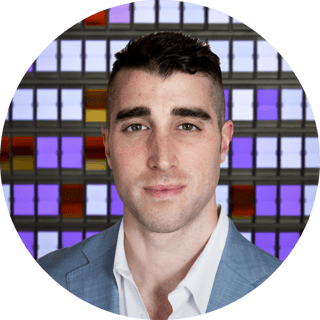
Ben Lazaroff
i help future doctors write -> admits to top 10 MD, PhD & MPH programs
• Stanford GSB Alum, Class of 2021 -- see relevant background & experience below: • Coaching | Advised 400+ admits into Stanford GSB, HBS, Wharton, Kellogg, MIT Sloan, INSEAD, Haas, and more (230+ Leland reviews), while teaching multiple courses through Leland • What I'm Doing Now | Based in NYC, building a publication 'Staying Human', working on a stealth, marketplace startup, coaching and playing chess profssionally, and advising a slate of Seed to Series C startups through Elevate LLC • Public Policy | Prior to Stanford, worked on the Policy Team for the Chicago Mayor's Office under Mayor Rahm Emanuel, focusing on 5G infrastructure policy, criminal justice policy, and citywide corporate/economic development deals • McKinsey | Before policy, worked at McKinsey & Co , with casework focused on job training for the formerly incarcerated and workforce development for at-risk youth • PE / VC / Startup Advising | After Stanford, worked in Bain's Private Equity Group on various due diliegences, managed deals with several venture capital firms, and advised multiple startups on growth and go-to-market strategy • Professional Writing | Speechwriting in public policy & political environments, Lead Editor for Nondisclosure (Stanford GSB's magazine) and Managing Editor for the Stanford International Policy Review • Additional Writing | Crafting op-eds, ghostwriting for major publications, developing a fictional short story collection, policy deep dives, a book on chess applications to life, and application essays of all sorts • GMAT / Test-Taking | Scored in the highest percentile of GMAT test-takers, but more importantly I've honed my ability to help others extrapolate top test-testing strategies in the areas they're weakest • Additional Coaching Details | 5+ years experience working with >750 individuals on essay writing and resume professionalization for top consulting firms, MBA programs, execs, and the broader job market • Interview Training | I was interview-trained with McKinsey, helping me give high-quality mock interviews for MBBs and any MBA program; I've also held 10+ events through Leland on interview prep for McKinsey's PEI and GSB's interview process in particular
More offerings from Ben
Medical School Coaching | Block of Hours
3, 5, 10 or 15 hours of my time on whatever your medical school application needs most: school list, personal statement, Work and Activities, secondaries, letters or interviews. Live calls and document review both count, at my $390 hourly rate.
Starting at
$1,170
Medical School Mock Interview Package
Mock interviews in your school's real format, one-on-one, panel or MMI, run harder than the real thing, with a scored debrief and written recap after each. For MD, DO and MD-PhD applicants.
Starting at
$860
MBA Applications | Comprehensive Package
Starting at
$8,000