Leland+ Content Library
![Stop Memorizing Frameworks: How to Build a Structure That's Actually Specific to [7/17/2026] (Recording)](https://customer-14xsjmjbqk93tdwp.cloudflarestream.com/d76b3381c7f867d4bc72b7bc5b607625/thumbnails/thumbnail.jpg)
Stop Memorizing Frameworks: How to Build a Structure That's Actually Specific to [7/17/2026] (Recording)
The first few minutes of a case interview reveal more than most candidates realize. A weak opening signals that you don't have a structure. A scripted opening signals that you're not actually thinking. As a former BCG interviewer and Ross peer coach, I've watched both play out dozens of times, and I know exactly what interviewers are evaluating. This session is about building a case opening that's structured, specific, and sounds like you. Why the opening matters more than candidates think and what interviewers are actually assessing -The difference between having a structure and reciting a framework, and why interviewers can tell immediately -What a confident, specific case opening and framework sound like vs. what most candidates do A Repeatable Approach to Structuring Any Case in Real Time: You shouldn't be memorizing issue trees. You should be building them. -What to do in the 30–45 seconds of thinking time before you speak (and why most candidates waste them) -How to build a structure that's specific to the prompt in front of you rather than pulled from a template -How to adjust when the case type isn't immediately obvious Live Walkthrough: Watch the approach applied to a real case prompt from opening to structure.


Example Stanford GSB Essay - Sports, Education, Leadership
This essay answers: "What matters most to you, and why?" Discover how to deeply articulate your core motivations and their influence on your life and ambitions.

Practice Paper LBO: A Downloadable Drill
Master the pen-and-paper LBO interview with this downloadable practice problem. Learn to quickly and accurately calculate IRR and returns without a calculator or Excel.


Measuring Success in UX
Learn how to define and measure success in UX. This guide covers key metrics and analytics to prove the value and impact of your design decisions.


Awards & Honors: Example & Analysis
A detailed breakdown and analysis of a successful awards and honors list, with tips for showcasing your achievements and making a strong impression on admissions committees.


How to Stand Out in the Standford GSB Interview
The Stanford GSB interview is known for being highly personal and introspective, and many candidates struggle to strike the right balance between authenticity and structure. This session is for applicants preparing for Stanford who want to approach the interview with more clarity and confidence. You’ll learn how to answer behavioral questions with depth, communicate self-awareness and values, and align your responses with what Stanford is truly evaluating.


Medical School Week Kickoff 2026
Medical School Week is here—and this kickoff session sets the tone for a week focused on navigating the med school admissions process with clarity and confidence. Join us for an opening event designed to introduce the week’s themes and help you make the most of the events ahead. In this session, we’ll explore key strategies for approaching the med school admissions journey, highlight critical milestones to focus on, and offer guidance for setting priorities that align with your goals. Whether you’re exploring medicine for the first time or actively applying this cycle, this kickoff will help you chart a focused path for the week ahead.

![Your Investment Banking Resume [8/18/2026] (Recording)](https://customer-14xsjmjbqk93tdwp.cloudflarestream.com/b8cf827b196503b8aeb65ff71f37b522/thumbnails/thumbnail.jpg)
Your Investment Banking Resume [8/18/2026] (Recording)
A banker reads your resume in about ten seconds. The format is solved. One page, three sections, one line per bullet, strongest first. Most people know some version of that and still spend weeks iterating, because they are trying to be completely understood on the page. That is the most common mistake and it is the one people refuse to fix. Your resume is a conversation starter and a first impression, not a full account of you. We will go through the whole page. What each section is for, how to rank what goes inside it, and the bullet formula that makes a line worth reading. Then the words to cut, starting with the ones nobody says out loud in an interview. What we'll cover: - Why ten seconds decides the format, and what that rules out - The three sections, what belongs in each, and which one should be longest - The bullet formula: strong verb, specific work, scale, result - Resume-ese and what to say instead, including why "reported" beats "researched" - Putting a number in every bullet, and how to round it - The most common mistake, which is over-explaining Want to solidify your resume and be done with it? Send it over and I will pass back a full rewrite, at a discount for anyone here. Book a free 15-minute intro to learn more. Part 1 of Coffee Chat Ready, a six part run on Tuesdays and Thursdays. Each one stands alone, so jump in anywhere. I'm the founder of OFFERGOBLIN and ex-Centerview tech.
![The Framework for Solving LSAT Flaw Questions [5/21/2026] (Recording)](https://customer-14xsjmjbqk93tdwp.cloudflarestream.com/429437b0a016222729e22ef6f9d49712/thumbnails/thumbnail.jpg)
The Framework for Solving LSAT Flaw Questions [5/21/2026] (Recording)
After this session, you will understand a clear framework for solving LSAT flaw questions with more consistency and confidence under time pressure. This session is designed for students who want to move beyond guessing and learn how to systematically identify flawed reasoning patterns, break down argument structure, and eliminate answer choices more efficiently. These are the patterns that often separate consistent scorers from those who plateau on logical reasoning. Attending live means you can ask about your specific score range, your toughest flaw question types, or the timing issues you keep running into, and hear how an experienced LSAT coach thinks through those situations in real time. The coach works with LSAT students regularly and will be sharing the diagnostic instincts and structural thinking that inform that work every day. If you want a more repeatable approach to LSAT flaw questions, it’s worth joining live.

Free
![Make Your Voice Heard: Use Your Story to Stand Out in College Admissions [9/9/2026] (Recording)](https://customer-14xsjmjbqk93tdwp.cloudflarestream.com/6b72e2c258f8caade5ee13abc2cec475/thumbnails/thumbnail.jpg)
Make Your Voice Heard: Use Your Story to Stand Out in College Admissions [9/9/2026] (Recording)
Your college application should give admissions officers a clear sense of who you are, but finding the right way to tell your story can be challenging. This session is designed for college applicants who want to use their experiences and perspective to create a more distinctive, authentic application. You’ll learn how to identify the experiences that best represent you, turn them into compelling stories, and use your voice effectively across your essays and application materials. Attending live gives you the opportunity to ask questions about your own story and get real-time guidance on how to present it effectively. The speaker will share practical best practices from working with college applicants, including what makes a story feel genuine and what can cause an otherwise strong essay to lose its impact. If you want your application to communicate more clearly who you are and what makes you distinctive, it’s worth joining live.
Advanced Problem Solving Tips & Tricks
Move beyond the "Profitability Framework" into industry-specific and capability-oriented problem-solving. This lesson covers advanced quant shortcuts for rapid mental estimation and introduces "Modular Frameworks" that allow you to adapt to unconventional cases. We’ll teach you how to think like an industry expert on the fly, whether the case is about private equity due diligence or a digital transformation.


MBA Resume Guide 2.0
A step-by-step guide to crafting an MBA application resume that stands out to admissions committees. Covers who your audience is, how to structure and format your resume, how to turn work experience into impact-driven bullet points, and common mistakes to avoid — with concrete writing tips throughout. Editable Word version attached so you can build directly from the guide.

Prototyping with AI: How to Quickly Turn Your Idea Into Reality
After this session, you will know how to take a rough idea and turn it into a working AI-powered prototype without a traditional engineering background. We will cover how to choose the right AI tools for your specific use case, how to structure an agent workflow that actually runs, and how to avoid the scoping mistakes that stall most early-stage builds.

Why is the Personal Statement Important?
An overview of why the personal statement is a critical part of your college application, with a focus on how it allows you to showcase your unique voice, personality, and personal growth.

REAL UNC Kenan-Flagler MBA Interview Mocks
Multiple UNC Kenan-Flagler mock interview sequences, based on real questions clients reported in interviews. Use these sequences to practice and ensure you convert your UNC Kenan-Flagler interview into an admit.

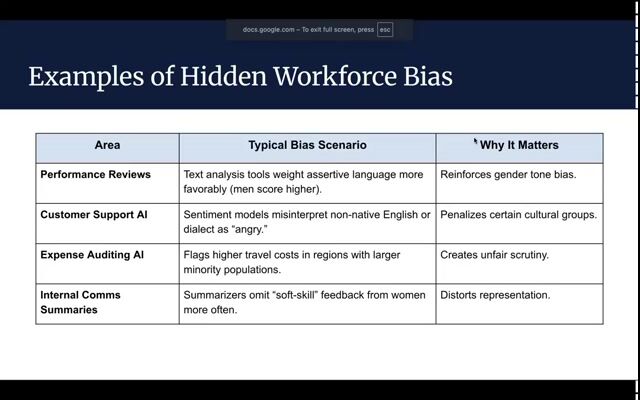
Spotting Bias & Building Fairness in AI
Discover how to identify and reduce bias in AI-generated content and workflows.

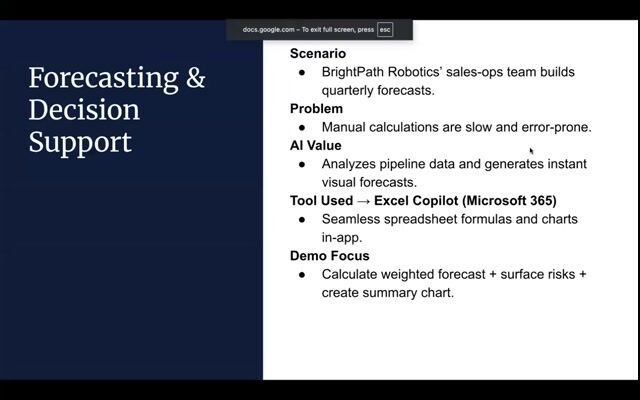
Forecasting & Decision Support (using ChatGPT)
Discover how AI analyzes patterns and predicts outcomes to improve planning and forecasting.

How to Write the First Draft of Your Master’s Application SoP in 60 Minutes (or less)
Your Statement of Purpose (SoP) is one of the most important parts of your master’s application—but getting started can feel overwhelming. At the end of this session, you'll walk away with the first draft of your SoP in 60 mins or less. You’ll learn a step-by-step framework to draft a strong first version in under an hour. We’ll cover how to identify your key themes, structure your story, and highlight your academic and professional goals in a way that resonates with admissions committees. The session will be led by Kanishka E., a Leland coach with extensive experience guiding students through competitive graduate applications. You’ll leave with a clear process to take the guesswork out of writing, so you can move from blank page to a compelling SoP draft quickly and confidently. Mostly importantly, we'll get you through the hardest part of your Master's application: getting started.


Product Case Interview Prep: “What’s Your Favorite Product?”
“What’s Your Favorite Product?” Description: “Tell me about your favorite product” sounds simple, but in PM interviews it’s often a test of how clearly you think about users, tradeoffs, and product decisions. This session is for candidates preparing for product management interviews who want a stronger, more structured way to approach this common question. You’ll learn how to break down a product through a PM lens, communicate user insight and product judgment, and structure an answer that shows how you think rather than just what you like.


Roadmap to R1: A Step-by-Step Plan to Apply Without Losing Your Mind
Applying to MBA programs isn't just about checking boxes, it's about telling your story, managing MANY moving parts, and doing it all while keeping your head above water! In this 40-minute presentation, admissions coach and former CBS Admissions Officer Kelsey Kephart will walk through the essential phases of the MBA application journey; what to tackle when, how to avoid common pitfalls, and how to build momentum without burning out. The second part will be an Ask Me Anything (AMA) style session where you can ask questions!