The Reapplicant Rebuild — Apply Again Without Repeating the Cycle
Applying again is not resubmitting. Schools can often see that you applied before, and the fastest way to get the same answer is to hand them the same file with a new date on it. So this starts with a diagnosis, not a draft. Most rejected applications fail for a reason the applicant never identifies. Sometimes it is the numbers. More often it is a school list built on hope, an application submitted in February, a personal statement that described a person instead of making an argument, or recommenders who wrote warmly and said nothing. Those are different problems with different fixes, and guessing wrong costs you an entire cycle. We read last cycle's application the way an admissions reader would, and name what actually went wrong. Then we rebuild the parts that failed and keep the parts that worked, because throwing out a personal statement that was already strong is its own kind of mistake. If something real has changed since you applied — a new score, a degree in progress, a year of actual work — we make sure the file says so plainly. A reapplication that does not show change reads as a repeat. Five hours. You apply with a different application, not the same one in a new envelope.
What's included
Send me last cycle's file before we meet: personal statement, school list, where you were rejected and waitlisted, your numbers, and the dates you submitted. I read it cold, the way a reader would, and come to the first session with the diagnosis already written. I will also tell you if the honest answer is that your numbers need to move before you apply again. That is sometimes the finding, and it is far better to hear it in August than in April.
- A written diagnosis of why last cycle ended the way it did, specific enough to act on
- A rebuilt personal statement, or a documented decision to keep the one that was already working
- A corrected school list, including the schools that were never realistic and the ones you missed
- A timing, recommender and addendum plan for this cycle, so the same mistakes do not repeat
Meet your expert

Aviaé G.
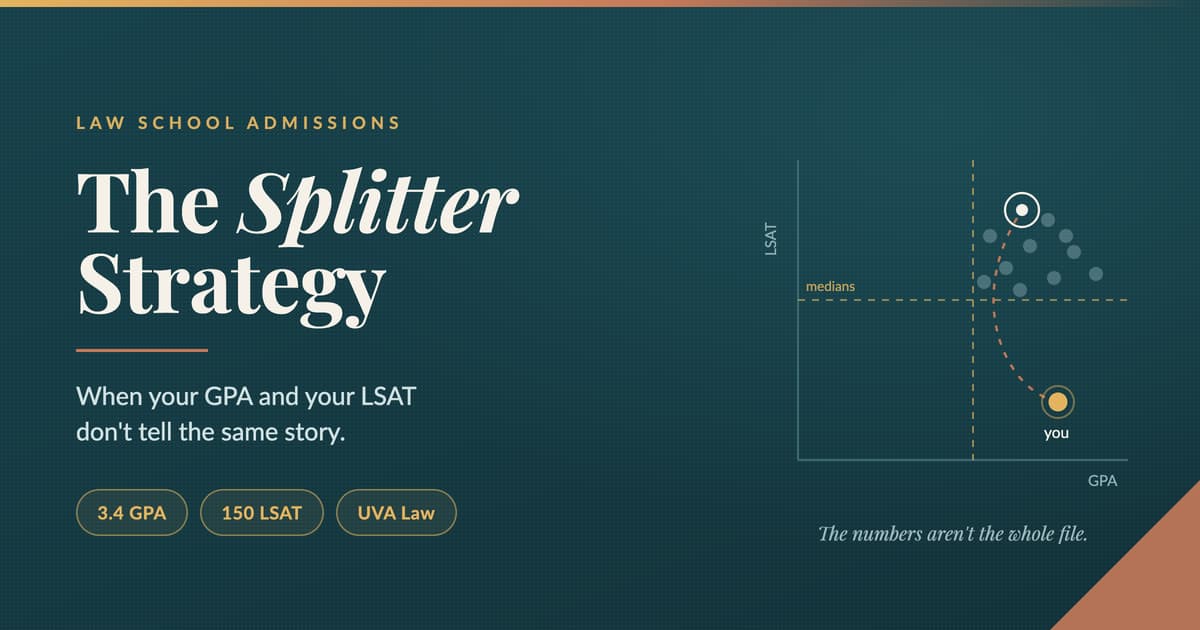
3.4/150 → UVA Law. I get splitters in. Now a practicing litigator.
I'm a first-generation, low-income college grad who got into UVA Law — a top-14 school — with numbers below their medians (a 3.4 GPA and a 150 LSAT). I applied with no connections, no roadmap, and a stack of chance-calculators telling me I didn't have a shot. I did it anyway — and then I started helping other people do the same, first informally, then as an admissions counselor at Empowerly and as my law school's BLSA Membership Chair, working alongside admissions on recruiting. The applicants I've mentored have gone on to UVA Law, Duke, and Stanford. Today I'm a practicing commercial litigator at a boutique trial firm, working complex disputes hands-on — so unlike a coach who went through this years ago or never practiced law, I'm living the legal career you're working toward, and I can help you aim past the acceptance at the job you actually want. My focus is splitters and underdog applicants — first-generation, low-income, and non-traditional students who keep getting told their numbers aren't good enough. I'm here to show you they can be, with the right strategy.