Leland+ Content Library

AI Automation Tools 101: Zapier, Make, and n8n for Beginners
Automation tools are making it possible for anyone to connect apps, streamline workflows, and use AI to handle repetitive tasks. In this beginner-friendly workshop, you’ll get a practical introduction to three of the most widely used automation platforms: Zapier, Make, and n8n. In this workshop, you’ll learn how these tools work, when to use each one, and how they enable AI-powered workflows that connect your everyday apps. The session will include quick demos of real automations so you can see how triggers, actions, and AI steps come together to automate tasks like notifications, summaries, and data updates. This workshop is designed for beginners—no coding or prior automation experience required. By the end, you’ll understand the basic landscape of AI automation tools and how to start building simple workflows to save time in your work.

Stuck on MBA Essays? Use AI to Fix Story/Structure Before R2 deadlines
This is not about having AI write your essays. Instead, we’ll focus on how to use AI to: *Diagnose what’s not working in your current drafts *Clarify your core story and positioning *Strengthen structure, flow, and impact *Get unstuck when revision fatigue sets in
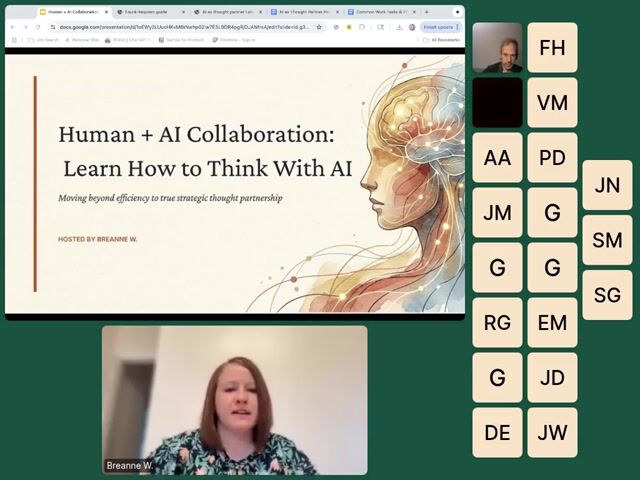
Human + AI Collaboration: Learn How to Think With AI
In this reflective and practical workshop, you’ll learn how to use AI as a true thought partner--one that helps you reason through ideas, uncover blind spots, and make better decisions. Through live examples, you’ll see how to move beyond surface-level use (like writing or summarizing) and instead use AI to challenge assumptions, explore alternatives, and clarify strategy. You’ll practice “collaborative prompting,” a method that turns AI into a sparring partner that helps you think deeper, faster, and more creatively. Outcomes: You’ll leave with a set of conversational prompts for strategic thinking, a clearer understanding of what humans do best in an AI-powered world, and confidence using AI as an extension of your judgment and creativity. Learning Objectives: *Recognize when to rely on human intuition vs. AI reasoning *Practice “collaborative prompting” for deeper insight and reflection *Use AI strategically to analyze, debate, and refine complex ideas

Build Your First Custom GPT (No Code Required)
Imagine having an AI assistant that already knows your workflow, your writing style, and how you like things done. That’s what Custom GPTs can do: write content, answer client questions, summarize reports, train new team members, and organize project plans. In this hands-on workshop, you’ll learn how to build one from scratch (no coding required). We’ll walk step-by-step through defining your GPT’s purpose, adding your own examples or instructions, and refining how it responds—so by the end, you’ll have a personalized AI assistant that works the way you do. (Note: You’ll need ChatGPT Plus to create a GPT, but anyone with the free version can attend, follow along, and learn the process.) Outcomes: You’ll walk away with your first working Custom GPT, a clear understanding of how to teach AI your preferences, and ideas for expanding your assistant’s capabilities for different roles or teams. Learning Objectives: *Understand what Custom GPTs are and how they extend AI beyond one-time chats *Learn the step-by-step setup process (no coding required) *Build and test your first GPT for your own use case or workflow

Prompt Design 2.0: How to Get Consistently Great Results with AI
If you’ve tried using AI but get inconsistent results, this session is for you. Learn how to think like an AI architect, using context, constraints, and iteration to get reliable, high-quality output every time. You’ll see real examples, practice refining prompts, and leave with frameworks you can reuse in your own work. Outcomes: You’ll leave knowing how to diagnose why prompts succeed or fail, improve them systematically, and create prompt templates that deliver consistent results for writing, research, or communication tasks. Learning Objectives: *Understand how context, constraints, and iteration affect AI output quality *Diagnose why a prompt isn’t working and apply structured methods to improve it *Develop reusable prompt frameworks tailored to your professional role

AI at Work: 5 Ways to Save an Hour a Day
Feeling overwhelmed by AI but not sure where to start? This hands-on workshop shows you exactly how to use AI for real work—today. This session is for professionals who want to work smarter, not harder, using free AI tools like ChatGPT or Claude. Outcomes: You’ll leave with a clear framework for prompting AI effectively, five ready-to-use examples for real work, and customized prompts to fit your own role. Learning Objectives: *Understand how AI fits into everyday workflows *Identify 3+ tasks AI can do faster and better *Practice a repeatable method for effective prompting

The AI Workflow Audit: Discover Where AI Can Help You Most
Learn how to use AI to make your work faster and easier. In this hands-on session, you’ll turn ChatGPT or Claude into an audit partner that helps you map where your time goes, pinpoint repetitive or draining tasks, and uncover where AI can make your work easier. Outcomes: You’ll leave with a personalized “AI Audit Map” showing your top three opportunities to use AI for real impact, along with a practical framework and prompts to help you evaluate and redesign your workflows. No coding or automation required—just better ways to work. Learning Objectives: *Recognize the types of tasks best suited for AI support *Evaluate your own workflow to spot inefficiencies and AI opportunities *Apply a structured framework to redesign everyday processes for greater efficiency

AI Change Management Playbook
Learn how to communicate, train, and pilot AI projects effectively across your organization.
Build a 90-Day AI Roadmap
Plan your first AI pilot, define metrics, and set a timeline for measurable progress.
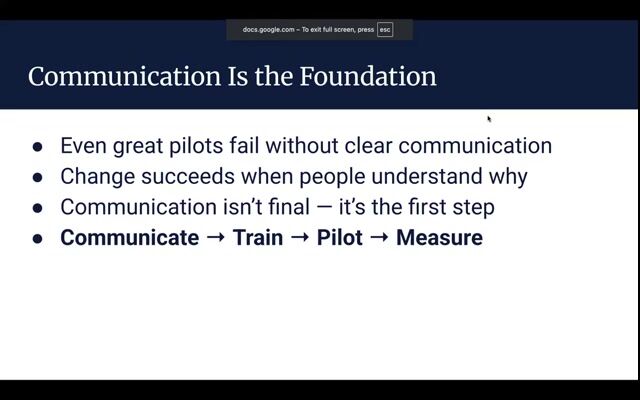
How to Lead AI Change with Confidence
Learn how leaders can frame AI adoption, involve teams, and communicate effectively.
AI Ethics Policy Template
Use this template to draft or refine your organization’s responsible AI policy.
AI Ethics Leader’s Guide
Learn how to model responsible AI use and communicate ethical standards to your team.
Audit an AI Use Case for Risk
Practice identifying potential risks and safeguards for a specific AI use case.
Responsible AI Frameworks and Laws at a Glance
Review major frameworks and regulations shaping responsible AI practices.
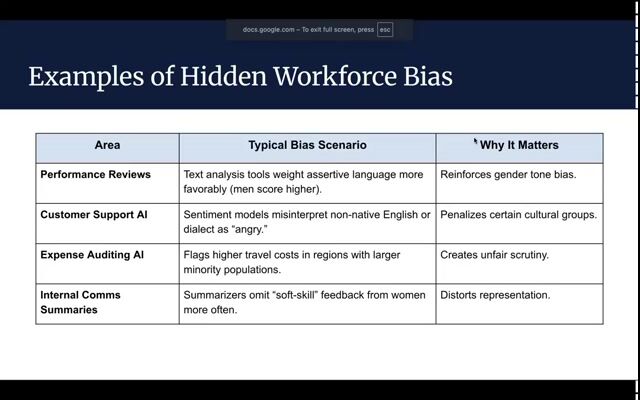
Spotting Bias & Building Fairness in AI
Discover how to identify and reduce bias in AI-generated content and workflows.
Common AI Roadblocks (and Quick Wins)
Identify frequent barriers to AI adoption and learn practical ways to overcome them.
Why Responsible AI Matters
Learn the core principles of responsible AI and why trust is critical for sustainable adoption.
Responsible AI Principles
Review five key principles that ensure AI supports people rather than replaces them.
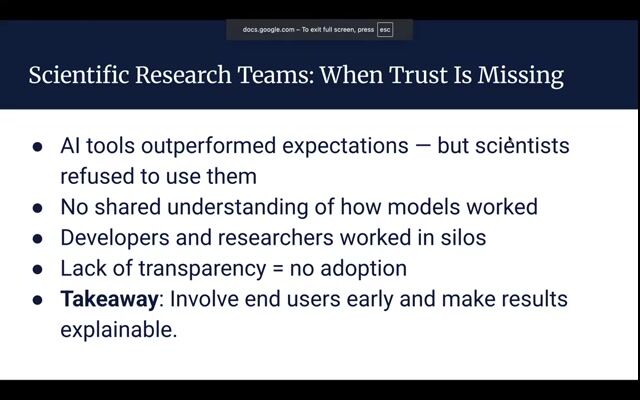
Why AI Adoption Fails (and What Success Looks Like)
Analyze real-world case studies to understand why AI initiatives stall and how successful ones sustain progress.
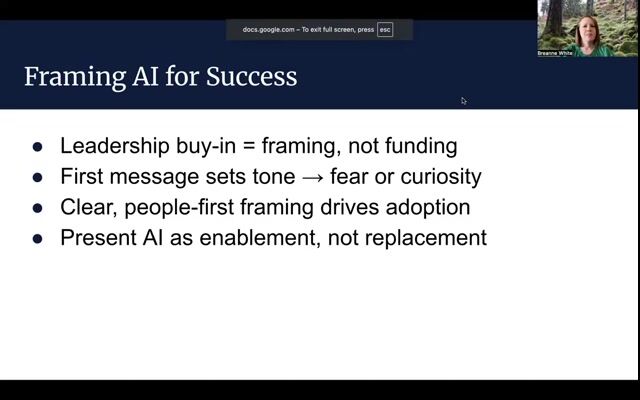
Leadership & Action: Framing AI for Success
See how leadership communication and small pilots build trust and accelerate adoption.