Best MBA Programs for Entrepreneurship: Top Schools, Rankings, and How to Choose (2026)
From Stanford to MIT Sloan, see the best MBA programs for entrepreneurship in 2026 and how to pick the one that fits your founder journey.
Posted August 21, 2026




Join a livestream
Learn from top experts and industry experts in live, interactive sessions you can join for free.
 Starts in 2 hours40 registered

 Starts in 3 hours49 registered
 Starts in 3 hours25 registered
 Oct 13, 2026 at 10:00 PM37 registered

Table of Contents
Choosing the right MBA program can be a game-changer for aspiring entrepreneurs. Whether you're looking to launch your own startup, join an early-stage venture, or bring innovation to an established company, the right business school can equip you with the tools, network, and mindset to turn big ideas into reality. But with so many options out there, figuring out which programs truly support entrepreneurial ambitions can feel overwhelming.
In this article, we’ll explore the best MBA programs for entrepreneurship in 2025, based on rankings, reputation, resources, and real-world outcomes. You’ll learn which schools stand out for their startup ecosystems, access to funding, mentorship opportunities, and hands-on learning. We’ll also walk you through how to choose a program that aligns with your goals,
Is an MBA Worth It for Entrepreneurs?
It depends on what stage you’re at and what kind of entrepreneur you are. An MBA isn’t required to build a successful business, but it can offer high-leverage resources depending on your goals and gaps.
When an MBA makes sense for founders:
- You’re switching industries or roles. If you’re moving from, say, product design to venture-backed fintech, an MBA gives you the credibility and exposure to make that leap with support.
- You’re building a startup, but haven’t done it before. Business school can be a safe place to test ideas, find co-founders, access pitch competitions, and tap into seed-stage investors.
- You’re scaling a product and need to upskill. Understanding growth, hiring, cap tables, and investor relations is easier when you’ve learned from top professors and founders-in-residence.
- You want a strong backup plan. If your startup doesn’t take off, an MBA gives you access to top-tier jobs in VC, growth, or strategy that align with your long-term goals.
What makes an MBA valuable?
- The network: Co-founders, advisors, future investors; many top founders meet their team at school.
- The capital access: Warm intros to seed investors and VCs through pitch nights, clubs, and alumni.
- The structured time: Two years to work on ideas without the pressure of generating revenue right away.
- The skill-building: You’ll cover fundraising, go-to-market strategy, leadership, and scaling culture, all through case-based or experiential learning.
But it’s not always the right call.
If you’re already building something with traction like real users, paying customers, maybe even early funding, you might be better off doubling down. That momentum is rare and hard-earned. Taking time off for school could stall your growth.
Likewise, if you’ve got deep domain knowledge or investor backing already, the value of an MBA shrinks. And if you’re a solo founder who thrives on bootstrapping and staying lean, the structure of an MBA might feel too slow or too corporate.
If you're seeking structure, credibility, co-founders, or investor access, an MBA can be a powerful accelerator. But if you’re already in motion with traction and support, it might be smarter to keep building.
Want help figuring out whether an MBA aligns with your startup goals? A coach or mentor can help you map the tradeoffs.
What to Look for in an Entrepreneurship-Focused MBA
Not all MBA programs are built the same for founders. Some have deep venture ecosystems; others treat entrepreneurship like just another elective. If you're serious about starting or scaling a business, look beyond rankings and dig into the startup-specific support.
Here’s what actually matters:
1. A Curriculum That Helps You Build
You want more than lectures; look for courses where you can prototype, get user feedback, and iterate. Prioritize programs that offer startup labs, venture creation bootcamps, or real go-to-market sprints. Electives in pricing, product strategy, negotiations, and fundraising are more valuable than general management theory at this stage.
2. Access to Incubators and Accelerators (On-Campus or Partnered)
A strong entrepreneurship MBA will plug you directly into accelerators or incubators. Look for schools with internal startup accelerators or guaranteed spots in programs like Techstars, Y Combinator fellowships, or local venture labs. Bonus if they help you refine a real MVP with mentor feedback.
3. Real Capital Access (Not Just “Exposure”)
Ask what kind of funding is actually available for student founders. Are there non-dilutive grants, pitch competitions, or startup challenge prizes? Do student-run venture funds exist on campus? Will you get warm intros to angels and pre-seed investors through clubs or alumni circles?
4. Professors and Mentors With Founder Credentials
You don’t just want academics, but you also want teachers who’ve been in the trenches. Former founders, product leads, or venture partners who can give honest feedback on your pitch deck or growth model. Programs with “founder-in-residence” roles or mentors embedded in the entrepreneurship center are often a green flag.
5. A Founder-Friendly Alumni Network
One of the biggest advantages of a top MBA is the network. But for it to matter as a founder, that network should include builders. Dig into the school’s founder outcomes:
- Who raised funding?
- Who exited?
- Who bootstrapped a 7-figure SaaS business?
You want a community where intros, feedback, and even co-founder relationships can actually come to life.
The best entrepreneurship MBA programs are less about textbooks and more about traction. If you're investing two years of time and six figures of capital, make sure you're choosing a program that gives you room to test, build, fail fast, and launch with real momentum.
Best MBA Programs for Entrepreneurship (2025-2026)
1. Stanford Graduate School of Business (GSB)
- Acceptance Rate: ~6% (Class of 2027; 7,295 applications)
- % of Graduates Who Start Companies: Approximately 16% (Class of 2025 pursued entrepreneurship; 42% of those built tech ventures)
- Entrepreneurship Classes:
- Startup Garage
- Formation of New Ventures
- Entrepreneurial Finance
- Founder-Focused Resources:
- Stanford Venture Studio
- Stanford GSB Seed, Center for Entrepreneurial Studies
- access to the broader Stanford ecosystem including the engineering school
- Notable Alumni Founders:
- Phil Knight (Nike)
- Reed Hastings (Netflix)
- Jeff Skoll (eBay)
Why it stands out: Located in the heart of Silicon Valley, Stanford GSB offers unparalleled access to venture capital, tech innovators, and a culture deeply rooted in entrepreneurship. The school's close ties with the broader Stanford University provide interdisciplinary opportunities, fostering innovation at the intersection of business, technology, and design.
Read: Stanford GSB MBA: Acceptance Rate, Deadlines, Cost, Requirements, & Program Overview
2. Harvard Business School (HBS)
- Acceptance Rate: ~11% (Class of 2027; 943 enrolled)
- % of Graduates Who Start Companies: 17% (Class of 2025, roughly 150 graduates launching ventures, up from 14% for the Class of 2024)
- Entrepreneurship Classes:
- The Entrepreneurial Manager
- Launching Technology Ventures
- Entrepreneurial Finance
- Founder-Focused Resources:
- Harvard Innovation Labs
- Arthur Rock Center for Entrepreneurship
- i-lab, Rock Accelerator
- Twenty25 Ventures
- Notable Alumni Founders:
- Ray Dalio (Bridgewater Associates)
- Joshua Kushner (Thrive Capital, Oscar Health)
Why it stands out: Harvard Business School combines a rigorous general management curriculum with robust entrepreneurial resources. The school's extensive alumni network and initiatives like the student-led venture fund provide budding entrepreneurs with mentorship, funding opportunities, and a platform to launch and scale their ventures.
Read: Harvard Business School MBA: Acceptance Rate, Deadlines, Cost, Requirements, & Program Overview
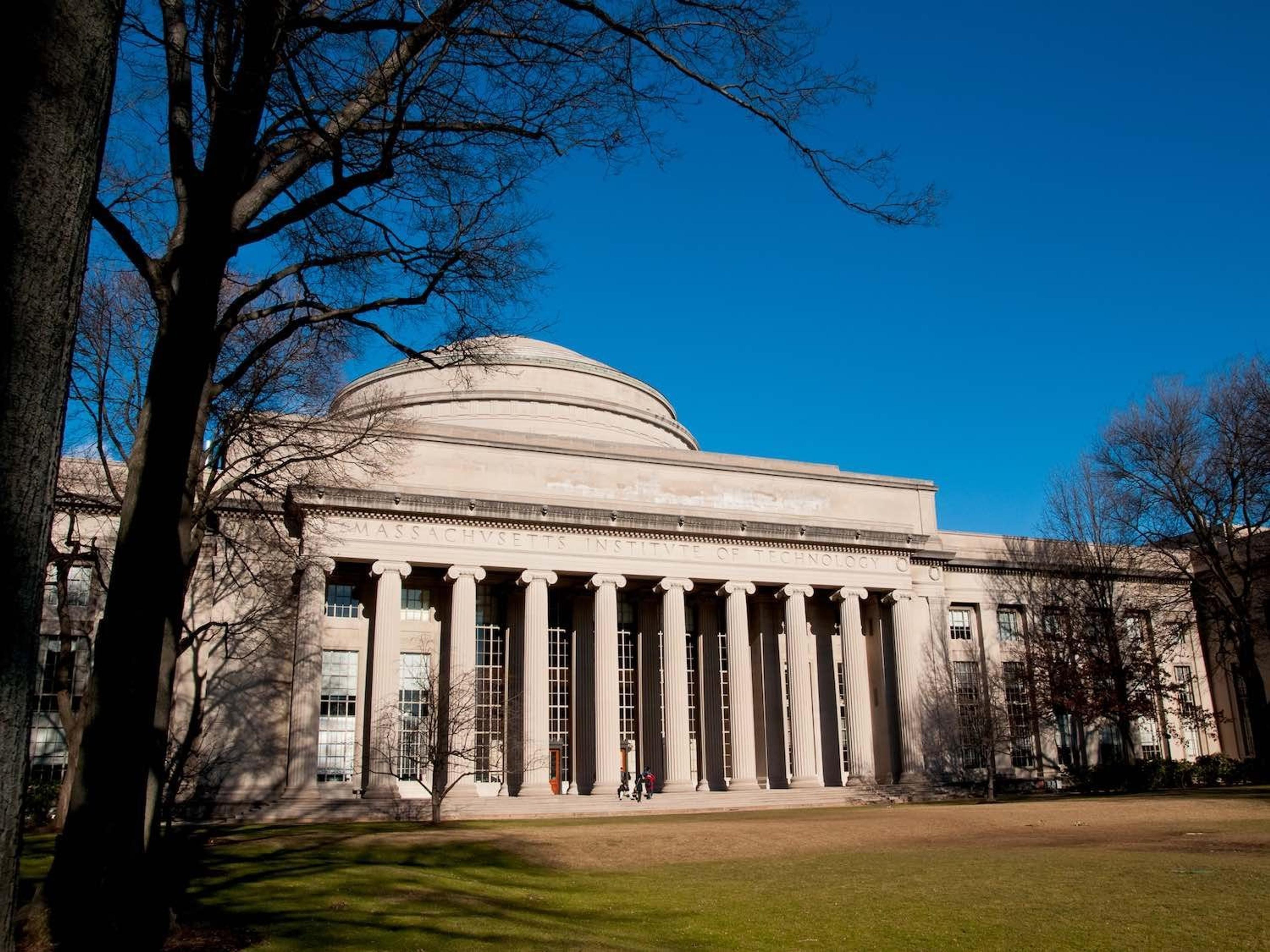
3. MIT Sloan School of Management
- Acceptance Rate: ~14-19% (14% for the Class of 2026; higher for the expanded 450-student Class of 2027)
- % of Graduates Who Start Companies: 11.1% (Class of 2025 started their own businesses)
- Entrepreneurship Classes:
- New Enterprises
- Entrepreneurial Finance
- Disciplined Entrepreneurship Lab
- Founder-Focused Resources:
- Martin Trust Center for MIT Entrepreneurship
- delta v accelerator
- MIT $100K Entrepreneurship Competition
- Notable Alumni Founders:
- Robin Chase (Zipcar)
- Drew Houston (Dropbox)
Why it stands out: MIT Sloan has a strong emphasis on technology and innovation that makes it a prime choice for tech-driven entrepreneurs. The school's integration with MIT's broader ecosystem offers access to cutting-edge research, labs, and a collaborative environment that fosters groundbreaking startups.
Read: MIT Sloan MBA: Acceptance Rate, Deadlines, Cost, Requirements, & Program Overview
4. UC Berkeley Haas School of Business
- Acceptance Rate: ~18% (recent cycles range roughly 17-24%)
- % of Graduates Who Start Companies: 6.6% (Class of 2025 started new businesses)
- Entrepreneurship Classes:
- Lean LaunchPad
- New Venture Finance
- Social Impact Ventures
- Founder-Focused Resources:
- Berkeley SkyDeck accelerator
- Lester Center for Entrepreneurship
- Courtyard Ventures (student-led fund)
- Notable Alumni Founders:
- Danae Ringelmann (Indiegogo)
- Kevin Chou (Kabam)
Why it stands out: Situated near Silicon Valley, UC Berkeley Haas offers entrepreneurs access to a vibrant startup ecosystem. The school's emphasis on innovation and social impact, combined with resources like SkyDeck and student-led venture funds, provides a supportive environment for launching and scaling ventures.
Read: UC Berkeley Haas MBA: Acceptance Rate, Deadlines, Cost, Requirements, & Program Overview
5. The Wharton School, University of Pennsylvania
- Acceptance Rate: ~20.5% (Class of 2027; 888 enrolled from 7,613 applications)
- % of Graduates Who Start Companies: 5.2% (Class of 2025 launched their own ventures)
- Entrepreneurship Classes:
- Entrepreneurship
- Venture Capital and the Finance of Innovation
- Scaling New Ventures
- Founder-Focused Resources:
- Penn Wharton Entrepreneurship
- Venture Initiation Program
- Wharton Innovation Fund
- Notable Alumni Founders:
- Elon Musk (Tesla, SpaceX)
- Neil Blumenthal (Warby Parker)
Why it stands out: UPenn Wharton's comprehensive business education is complemented by strong entrepreneurial support. The school's resources, including incubators and funding opportunities, are bolstered by its location in Philadelphia, offering access to a diverse business community.
Read: The Wharton School MBA: Acceptance Rate, Deadlines, Cost, Requirements, & Program Overview
Curious about what else you should know before pursuing an MBA? These reads can help you get started:
- MBA Requirements: What You Need to Apply (and What Top Programs Really Look For)
- The Different Types of MBA Programs—and Which One is Right for You
- Full-Time MBA Program: Advantages & Disadvantages
- Everything to Know About Online MBA Programs
6. Columbia Business School
- Acceptance Rate: ~20-25% (Class of 2027; 982 enrolled from 7,477 applications — estimates vary since CBS doesn't publish an official rate)
- % of Graduates Who Start Companies: Not published as a clean figure — CBS excludes
- Entrepreneurship Classes:
- Launching New Ventures
- Entrepreneurial Finance
- Technology and Analytics in Startups
- Founder-Focused Resources:
- Lang Center for Entrepreneurship
- Columbia Startup Lab
- Columbia Venture Competition
- Notable Alumni Founders:
- Henry Kravis (KKR)
- Vikram Pandit (The Orogen Group)
Why it stands out: Located in New York City, Columbia Business School offers entrepreneurs access to a vast network of industries, investors, and potential customers. The school's resources, such as the Startup Lab and venture competitions, provide practical support for launching ventures in a dynamic urban environment.
Read: Columbia Business School MBA: Acceptance Rate, Deadlines, Cost, Requirements, & Program Overview
7. University of Chicago Booth School of Business
- Acceptance Rate: ~27% (Class of 2027; 635 enrolled from 5,876 applications)
- % of Graduates Who Start Companies: 5.7% (Class of 2025, 38 graduates starting their own business or pursuing entrepreneurship)
- Entrepreneurship Classes:
- New Venture Strategy
- Entrepreneurial Finance and Private Equity
- Building the New Venture
- Founder-Focused Resources:
- Polsky Center for Entrepreneurship and Innovation
- Edward L. Kaplan, '71
- New Venture Challenge
- Notable Alumni Founders:
- Eric Lefkofsky (Groupon)
- Brad Keywell (Uptake)
Why it stands out: The Booth School of Business has an analytical approach to business education complemented by strong entrepreneurial resources. The Polsky Center and the New Venture Challenge provide structured support.
Read: Chicago Booth — MBA Program & Application Overview
8. NYU Stern School of Business
- Acceptance Rate: ~24% (Class of 2027; 336 enrolled from 4,933 applications)
- % of Graduates Who Start Companies: ~5% (historically small share start ventures directly out of the program)
- Entrepreneurship Classes:
- Foundations of Entrepreneurship
- Managing the Growing Company
- Entrepreneurial Finance
- Founder-Focused Resources:
- W. R. Berkley Innovation Labs
- $300K Entrepreneurs Challenge
- Endless Frontier Labs, Stern Venture Fellows
- Notable Alumni Entrepreneurs:
- Alexa von Tobel (LearnVest)
- David Tisch (BoxGroup)
- Neil Blumenthal (Warby Parker)
Why it stands out: Located in New York City, NYU Stern offers unparalleled access to a vibrant entrepreneurial ecosystem. The school's robust entrepreneurial resources, including the Berkley Innovation Labs and the Entrepreneurs Challenge with substantial prize money, provide budding entrepreneurs with practical experience and networking opportunities with industry experts.
Read: NYU Stern MBA: Acceptance Rate, Deadlines, Cost, Requirements, & Program Overview
9. Babson College – F.W. Olin Graduate School of Business
- Acceptance Rate: ~79% (Olin Graduate School; sector-agnostic, test-optional admissions)
- % of Graduates Who Start Companies: 48% of surveyed Babson MBAs had founded a company at some point after graduating
- Entrepreneurship Classes:
- Entrepreneurial Thought and Action
- New Venture Creation
- Managing Growing Businesses
- Founder-Focused Resources:
- Arthur M. Blank Center for Entrepreneurship
- Babson College Entrepreneurship Research Conference
- Summer Venture Program
- Notable Alumni Entrepreneurs:
- Arthur M. Blank (Home Depot)
- Jamie Siminoff (Ring)
- Scott Cook (Intuit)
Why it stands out: Babson College consistently ranks at the top in annual rankings for entrepreneurship education. The school's curriculum emphasizes entrepreneurial ventures and business models, fostering an entrepreneurial spirit among students.
With a strong focus on small businesses and new ventures, Babson provides aspiring entrepreneurs with the tools and support needed to launch and grow their own businesses.
10. UCLA Anderson School of Management
- Acceptance Rate: ~31% (Class of 2027; ~307 enrolled)
- % of Graduates Who Start Companies: ~10% joined or launched startups (Poets & Quants research, 2018-2022); Anderson doesn't headline a clean recent single-year figure
- Entrepreneurship Classes:
- Business Plan Development
- Venture Initiation
- Technology Commercialization
- Founder-Focused Resources:
- Price Center for Entrepreneurship & Innovation
- Knapp Venture Competition
- Anderson Venture Accelerator
- Notable Alumni Entrepreneurs:
- Brian Lee (LegalZoom, The Honest Company)
- Robert Herjavec (The Herjavec Group)
Why it stands out: Situated in Los Angeles, UCLA Anderson offers students access to a diverse and dynamic entrepreneurial ecosystem. The school's strong connections with the entertainment and technology industries provide unique opportunities for networking and venture capital engagement.
The Anderson Venture Accelerator and the Knapp Venture Competition offer practical experience and support for students aiming to launch successful entrepreneurial ventures.
Read: UCLA Anderson MBA: Acceptance Rate, Deadlines, Cost, Requirements, & Program Overview
Entrepreneurship MBA Programs Comparison Chart
Choosing the right MBA program as an aspiring founder is about how well the school equips you to build, fund, and scale a business. Below is a side-by-side breakdown of what actually matters when it comes to launching a startup through an MBA.
| Program | Startup Funding Access | Accelerator/Incubator | Relevant Clubs & Ecosystem | Location for Startups | % of Grads Launching Startups | Notable Alumni Founders |
|---|---|---|---|---|---|---|
| Stanford GSB | Strong VC exposure (e.g., GSB Impact Fund, alumni angels) | Stanford Venture Studio, StartX (non-GSB affiliated but accessible) | Entrepreneur Club, E-Club, Center for Entrepreneurial Studies | Silicon Valley – unmatched startup ecosystem | ~15% | Kevin Systrom (Instagram), Joe Lonsdale (Palantir) |
| Harvard Business School | $2M+ in annual funding (Rock Center, New Venture Competition) | Harvard i-lab, Rock Accelerator | Entrepreneurship Club, Founders’ Journey Series | Boston – strong academic + biotech/startup hub | ~11% | Reid Hoffman (LinkedIn), Marla Malcolm Beck (Bluemercury) |
| MIT Sloan | High access to early-stage capital (Fuse, Sandbox Fund) | Martin Trust Center for MIT Entrepreneurship | Entrepreneurship & Innovation Club, MIT $100K | Cambridge – deep tech + startup roots | ~8% | Drew Houston (Dropbox), Robin Chase (Zipcar) |
| UC Berkeley Haas | SkyDeck, LAUNCH Accelerator, seed fund support | SkyDeck, LAUNCH, NSF I-Corps | Berkeley Entrepreneurs Association, Blockchain at Berkeley | Bay Area – tech-heavy, early-stage access | ~10% | Ben Silbermann (Pinterest), Steve Wozniak (Apple co-founder, attended undergrad) |
| Wharton School | $600K+ in prize money (Wharton Venture Initiation Program) | Penn Wharton Entrepreneurship, VIP-X | Entrepreneurship Club, Wharton Founders Club | Philly – growing ecosystem + proximity to NYC | ~6% | Elon Musk (Tesla/SpaceX, attended undergrad), Neil Blumenthal (Warby Parker) |
| Babson Olin | Strong seed-stage access (Blank Center pitch events, fellowships) | Summer Venture Program, WIN Lab | Babson Entrepreneurship Forum, Founder Collective | Outside Boston – small business + founder-centric | ~12% | Arthur M. Blank (Home Depot), Jamie Siminoff (Ring) |
If you’re serious about launching a company right out of school (or even during), don’t just look at the brand name, but study the real infrastructure. You can ask yourself these:
- Will I get hands-on help?
- Can I meet investors early?
- Are there founders around me?
The programs above all support entrepreneurs, but in different ways. Stanford and MIT lean tech-heavy. HBS and Wharton offer scale and resources. Babson’s entire DNA is small businesses and new ventures.
Expert Tip: Reach out to current students or recent alumni who started companies. Ask what surprised them about the support they got (or didn’t get). You’ll learn more from one 15-minute call than from five hours of browsing glossy brochures.
Talk to a Coach Who Can Help You Choose the Right Entrepreneurship-Focused MBA
Pursuing an MBA as an entrepreneur will help you make the connections and acquire the skills and experience that will lead to successful business endeavors. When you work with an expert to find the best program for you, your chances of finding success are even greater.
An expert MBA admissions coach can not only help you choose the right MBA program for you and your career goals, but can also help you prepare the application materials that will make you stand out and get the acceptances you’re hoping for.
Read next:
- 15+ Affordable Online MBA Programs in 2025
- MBA Admissions Coaching — 2024 Geography Report
- 3 Things You Need for Successful Stanford MBA Essays
- The 25 Best 1-Year MBA Programs for 2025
- Is an MBA Worth It? Pros, Cons, and How to Decide
- Top MBA Programs for a Career in Consulting
- How to Write a Powerful MBA Essay—With Examples
Top Coaches
FAQs: MBA in Entrepreneurship
What is an MBA in entrepreneurship?
- An MBA in entrepreneurship is a graduate degree that equips students with the skills to develop business ideas, build ventures from the ground up, and lead innovation within organizations. It blends core business training with courses focused on launching and scaling startups.
Is an MBA in entrepreneurship worth it?
- Yes, especially if you're serious about turning ideas into action. While success doesn’t require a degree, an MBA gives you structure, network access, and credibility. Many entrepreneurs say the program helped them avoid common pitfalls and seize new opportunities faster.
What jobs can you get with an MBA in entrepreneurship?
- Graduates often become founders, startup advisors, product managers, or innovation leads in larger companies. Others move into venture capital or social enterprises aiming for global impact. It’s a versatile path that opens doors across industries.
What are the 4 types of entrepreneurship?
- The main types are small business, scalable startup, social entrepreneurship, and large company innovation. Successful entrepreneurs often evolve through more than one type over time as their ventures grow and adapt.
Which master's degree is best for entrepreneurship?
- An MBA in entrepreneurship is the most well-rounded option if you want leadership skills, business strategy, and exposure to real-world startup ecosystems. Other strong options include master’s programs in innovation, product design, or technology commercialization.