Top 25 Dental Schools – and How to Get In (2026)
Compare the best dental schools in the US by 2026 acceptance rate, DAT, and GPA, plus how to choose the right program and get in.
Posted June 28, 2026



Table of Contents
As of the 2024-25 academic year, there are 77 CODA-accredited predoctoral dental programs in the United States and Puerto Rico. Because all of them are accredited, every graduate sits for the same licensure exams and earns the same right to practice. So the question becomes: Which schools are the best out of all of them?
Some programs are far more competitive to get into than others, and admissions data is the cleanest way to see that gap. The list below estimates the 25 best dental schools using admissions statistics from the most recent officially available cycle, the 2024 entering class reported in the ADEA Official Guide to Dental Schools, 2025-2026 edition.
The most complete national dataset is the ADEA Official Guide to Dental Schools (2025-2026 edition), which reports the 2024 entering class and updates roughly every two years, with the next release expected in 2027. To keep this guide honest, each school below lists the figures we could verify against the school's own published class profile or the ADEA dataset, and leaves a field blank rather than printing a number we could not verify. Where a school publishes a more recent class profile than ADEA's 2024 data, we use the school's figure and note the class year. Treat every number as a recent average, not a cutoff or a guarantee.
Also note that the DAT moved from a 1-30 scale to a 200-600 scale in March 2025. Most class-average data still circulates on the old 1-30 Academic Average (AA) scale, so that is what we use here for comparability.
Read: How to Become an AI Specialist

How We Ranked These Dental Schools
We ordered the 25 schools below by competitiveness, using the ADEA 2024 entering-class acceptance data as the primary signal and DAT and GPA averages as supporting context. This is a measure of how hard a program is to get into, not a measure of teaching quality, clinical training, or outcomes. A school that admits a larger share of applicants is not "worse," it may simply have a larger class, a smaller applicant pool, or a strong in-state mandate. We flag those dynamics throughout so you can read the numbers in context, and because the underlying counts come from a dataset that updates only every two years, treat the ordering as approximate rather than precise.
Two clarifications are worth noting before the list. First, selectivity is heavily shaped by class size and applicant volume: a large dental school like New York University College of Dentistry can extend hundreds of offers and still look moderately selective, while a tiny program like Harvard looks far more selective on the same math. Second, public schools usually reserve most seats for residents, so an out-of-state applicant faces much steeper odds than any headline rate suggests.
Read: Should You Become a Dentist? The Pros and Cons of Being a Dentist
The 25 Top Dental Schools (2026-2027)
1. Harvard School of Dental Medicine
The DMD program at Harvard School of Dental Medicine is one of the most integrated in dental education. First-year dental students learn the fundamental medical sciences alongside students from Harvard Medical School, then move into more specialized study, required research projects, and rotations across various dental specialties over the following three years. The school's small class size, roughly 35 students, supports close faculty mentorship and a strong emphasis on research and leadership.
- Degree: DMD
- Applicants: 1,263
- Class Size: ~35
- Acceptance Rate: 3.48%
- Average DAT (AA): 24.9
- Average DAT (PAT): 22.5
- Average DAT (Science): 24.9
- Average GPA: 3.91
- Average Science GPA: not published
- Source: ADEA (2024 entering class); class size per HSDM admissions
2. University of Connecticut School of Dental Medicine
Located in Farmington, the University of Connecticut School of Dental Medicine is the only public dental school in New England and one of the hardest in the country to enter, largely because of its small class size. Its DMD curriculum integrates the basic medical sciences and dental sciences through team-based learning, with research opportunities and global health programs woven in. As a public program, it serves patients across the region through its dental clinics and affiliated community clinics.
- Degree: DMD
- Applicants: 1,525
- Class Size: ~50
- Acceptance Rate: 3.87%
- Average DAT (AA): 22.5
- Average DAT (PAT): not verified
- Average DAT (Science): not verified
- Average GPA: 3.76
- Average Science GPA: not verified
- CT residents prioritized
- Source: ADEA (2024 entering class); class size per UConn SDM
3. University of Pennsylvania School of Dental Medicine
The University of Pennsylvania School of Dental Medicine trains skilled general dentists while emphasizing professional development through a multi-year Professional Practitioner Development course covering patient relationships, the residency application process, and dental business principles. Penn dental students can pursue dual degrees and honors tracks in the traditional specialties, community health, and care for vulnerable populations, giving the program a broad range of academic paths.
- Degree: DMD
- Applicants: 2,852
- Class Size: ~150
- Acceptance Rate: 5.86%
- Average DAT (AA): 23.7
- Average DAT (PAT): not verified
- Average DAT (Science): not verified
- Average GPA: 3.84
- Average Science GPA: not verified
- Source: ADEA (2024 entering class)
4. University of California, San Francisco School of Dentistry
UCSF is one of the best schools for the health professions, and its Los Angeles and San Francisco peers aside, the UCSF School of Dentistry stands out for research. The DDS program emphasizes physical evaluation of patients, prevention of oral and dental disorders, disease diagnosis, and therapy. UCSF School of Dentistry students take part in community service at externship sites, clinical training at the UCSF Dental Center, and oral health research opportunities in its laboratories. UCSF has historically led dental schools in NIH funding, making it a strong option for research-oriented careers.
- Degree: DDS
- Applicants: 1,496
- Class Size: ~90
- Acceptance Rate: 6.55%
- Average DAT (AA): 23.3
- Average DAT (PAT): not verified
- Average DAT (Science): not verified
- Average GPA: 3.72
- Average Science GPA: not verified
- CA residents prioritized
- Source: ADEA (2024 entering class)
5. University of Pittsburgh School of Dental Medicine
The University of Pittsburgh School of Dental Medicine pairs a competitive admissions profile with strong clinical training and research opportunities. Its DMD program moves students into patient care early and emphasizes comprehensive, patient-centered care across general dentistry and the various dental specialties, supported by the school's hospital and community clinic affiliations.
- Degree: DMD
- Applicants: 1,747
- Class Size: not verified
- Acceptance Rate: 6.01%
- Average DAT (AA): 21.8
- Average DAT (PAT): not verified
- Average DAT (Science): not verified
- Average GPA: 3.77
- Average Science GPA: not verified
- Source: ADEA (2024 entering class)
6. University of Florida College of Dentistry
Located in Gainesville, the University of Florida College of Dentistry ranks among the leaders in NIH funding among dental schools, making its DMD program attractive to students interested in oral health research. The program prepares students to become humanistic, effective practitioners. As a public school, it directs most offers to Florida residents.
- Degree: DMD
- Applicants: 1,878
- Class Size: not verified
- Acceptance Rate: 7.14%
- Average DAT (AA): 22.7
- Average DAT (PAT): not verified
- Average DAT (Science): not verified
- Average GPA: 3.86
- Average Science GPA: not verified
- FL residents prioritized
- Source: ADEA (2024 entering class)
7. University of California, Los Angeles School of Dentistry
The UCLA School of Dentistry is a prestigious public program known for an innovative curriculum and training by world-class faculty. UCLA School of Dentistry students spend their first two years in foundational biomedical science and preclinical courses, then care for patients in community and teaching dental clinics from D2 to D4. The UCLA school offers a broad range of research opportunities, including the Dental Research Fellowship Program and NIH-funded training tracks, and like its University of California sibling in San Francisco, it prioritizes residents.
- Degree: DDS
- Applicants: 1,681
- Class Size: 88
- Acceptance Rate: 7.67%
- Average DAT (AA): 24
- Average DAT (PAT): 24
- Average DAT (Science): 22
- Average GPA: 3.84
- Average Science GPA: 3.81
- CA residents prioritized
- Source: UCLA School of Dentistry Class of 2027 profile (DAT/GPA); ADEA 2024 entering class (applicants/acceptance rate)
8. Columbia University College of Dental Medicine
The Columbia University College of Dental Medicine takes a highly integrated approach to dental education. Its DDS curriculum emphasizes the relationship between systemic and oral health and begins with roughly 18 months of training alongside students at Columbia's Vagelos College of Physicians and Surgeons, the university's medical school. The program prepares students for comprehensive care, and dental students begin providing patient care in small groups under faculty supervision in their third year. The Columbia University College reports some of the highest academic averages of any program.
- Degree: DDS
- Applicants: 1,895
- Class Size: not verified
- Acceptance Rate: 8.18%
- Average DAT (AA): 25.7
- Average DAT (PAT): not verified
- Average DAT (Science): not verified
- Average GPA: 3.82
- Average Science GPA: not verified
- Source: ADEA (2024 entering class)
9. University of North Carolina Adams School of Dentistry
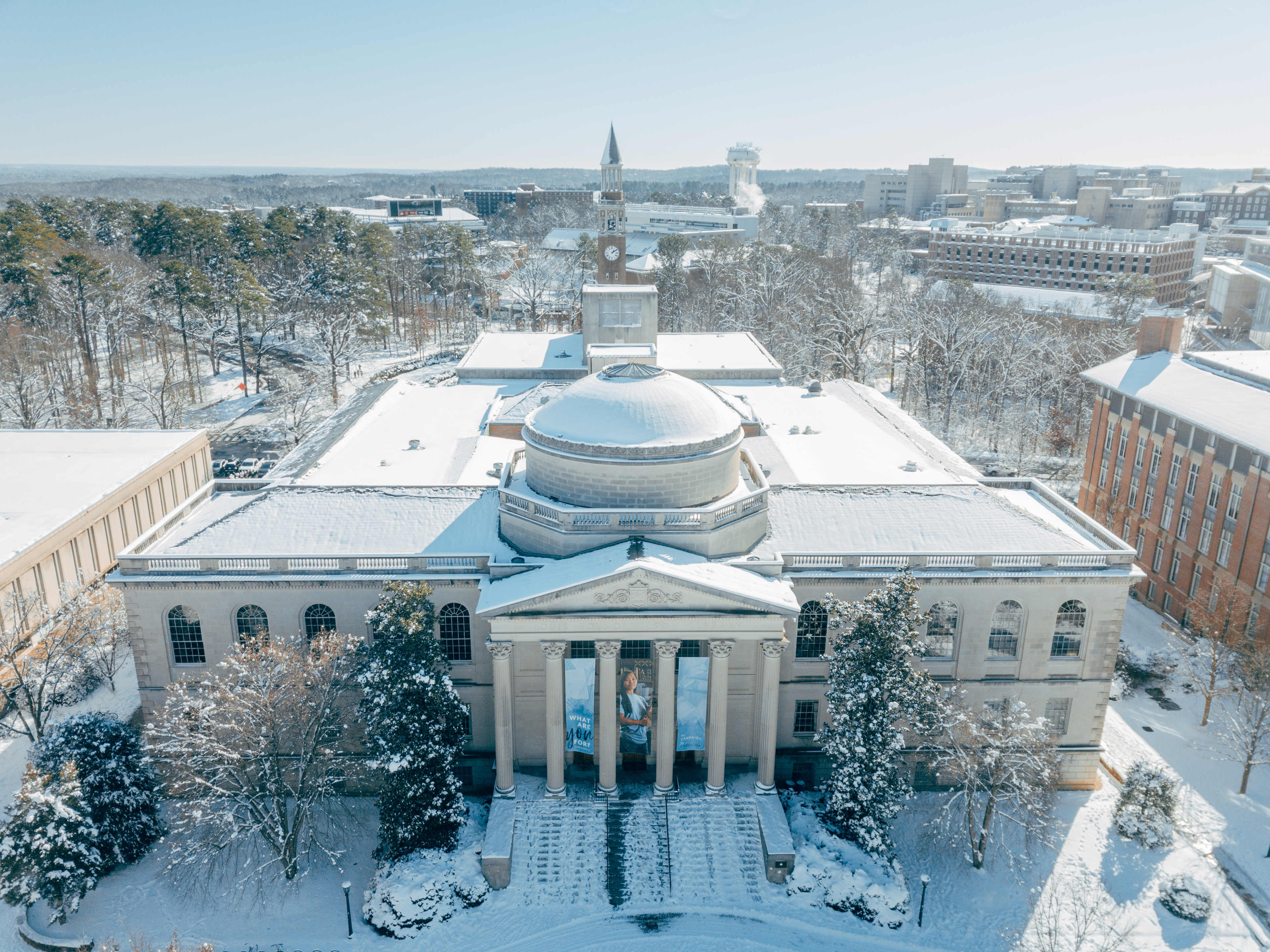
The Adams School of Dentistry at the University of North Carolina, Chapel Hill, is a prestigious public program with strong research opportunities spanning clinical, basic, and translational research and health policy. Its DDS program at UNC Chapel Hill uses an Advocate-Clinician-Technician framework, training students to advocate for patients, deliver general dentistry as a clinician, and think critically about a course of care. The University of North Carolina program directs most seats to in-state residents.
- Degree: DDS
- Applicants: 1,102
- Class Size: not verified
- Acceptance Rate: 9.17%
- Average DAT (AA): 22.7
- Average DAT (PAT): not verified
- Average DAT (Science): not verified
- Average GPA: 3.72
- Average Science GPA: not verified
- NC residents prioritized
- Source: ADEA (2024 entering class)
10. Virginia Commonwealth University School of Dentistry
The dental program at Virginia Commonwealth University combines the basic, clinical, and behavioral sciences with current dentistry technology. With more than 100,000 patient visits a year, Virginia Commonwealth University dental students have extensive opportunities to develop clinical skills across general dentistry and the dental specialties.
- Degree: DDS
- Applicants: 2,171
- Class Size: not verified
- Acceptance Rate: 9.12%
- Average DAT (AA): 21.8
- Average DAT (PAT): not verified
- Average DAT (Science): not verified
- Average GPA: 3.76
- Average Science GPA: not verified
- VA residents prioritized
- Source: ADEA (2024 entering class)
11. University of Maryland School of Dentistry
The University of Maryland School of Dentistry holds a notable place in dental history: it is recognized as the first dental college in the world and the birthplace of the DDS degree. The Maryland school offers distinctive curriculum elements, including coursework on substance use and clinical clerkships serving patients with HIV and survivors of domestic violence, alongside its core clinical education.
- Degree: DDS
- Applicants: 2,823
- Class Size: not verified
- Acceptance Rate: 10.45%
- Average DAT (AA): 21.7
- Average DAT (PAT): not verified
- Average DAT (Science): not verified
- Average GPA: 3.71
- Average Science GPA: not verified
- MD residents prioritized
- Source: ADEA (2024 entering class)
12. University of Washington School of Dentistry
The University of Washington School of Dentistry is the only dental school in the state and carries a strong commitment to care for the region. Its clinical education includes service-learning rotations in reduced-cost and free clinics in rural, tribal, and other underserved communities. The Washington school also partners with the UW School of Medicine and Eastern Washington University on the Regional Initiatives in Dental Education program, training students committed to practicing in rural and underserved Washington communities.
- Degree: DDS
- Applicants: 972
- Class Size: not verified
- Acceptance Rate: 10.91%
- Average DAT (AA): 21.6
- Average DAT (PAT): not verified
- Average DAT (Science): not verified
- Average GPA: 3.68
- Average Science GPA: not verified
- WA residents prioritized
- Source: ADEA (2024 entering class)
13. University of Iowa College of Dentistry and Dental Clinics
The University of Iowa College of Dentistry and Dental Clinics offers a rigorous education and more than 25 community programs, and it trains a large share of Iowa's dentists. Its DDS curriculum emphasizes critical thinking, professionalism, health promotion, cultural competency, interprofessional practice, and practice management, with clinic experiences beginning in the first year.
- Degree: DDS
- Applicants: 1,130
- Class Size: not verified
- Acceptance Rate: 12.04%
- Average DAT (AA): 21.2
- Average DAT (PAT): not verified
- Average DAT (Science): not verified
- Average GPA: 3.74
- Average Science GPA: not verified
- IA residents prioritized
- Source: ADEA (2024 entering class)
14. New York University College of Dentistry
The New York University College of Dentistry is the largest dental school in the United States, training roughly a tenth of the nation's dentists. NYU dental students start rotations in comprehensive care clinics in their first year, giving early exposure to patient interactions that continue through all four years. As the largest dental school, the New York University College of Dentistry offers unusual diversity in clinical experiences plus leadership development through programs like the Dental Student Leadership Institute and the Global Health Care Leaders program. Its size is why a moderate acceptance rate still means hundreds of offers.
- Degree: DDS
- Applicants: 3,125
- Class Size: ~360
- Acceptance Rate: 12.19%
- Average DAT (AA): 21.0
- Average DAT (PAT): not verified
- Average DAT (Science): not verified
- Average GPA: 3.62
- Average Science GPA: not verified
- Source: ADEA (2024 entering class)
15. Indiana University School of Dentistry
The Indiana University School of Dentistry is the only dental school in Indiana and a major provider of oral health care in the state. Its DDS program combines early clinical exposure with research opportunities across dental materials, oral biology, and the dental specialties, preparing students for general dentistry and specialty training alike.
- Degree: DDS
- Applicants: 1,328
- Class Size: not verified
- Acceptance Rate: 13.10%
- Average DAT (AA): 20.6
- Average DAT (PAT): not verified
- Average DAT (Science): not verified
- Average GPA: 3.70
- Average Science GPA: not verified
- IN residents prioritized
- Source: ADEA (2024 entering class)
16. University of Michigan School of Dentistry
Located in Ann Arbor, the University of Michigan School of Dentistry is one of the top dental schools among public institutions and frequently appears at or near the top of global subject rankings for dentistry. DDS students at the Michigan school begin direct patient care in the first year for maximum experience in general dentistry and various dental specialties. The DDS program partners with community clinics throughout Ann Arbor and the wider state, where students conduct outreach and serve underprivileged patients. The University of Michigan is also a research powerhouse, with labs spanning regenerative dentistry to AI-based clinical decision support.
- Degree: DDS
- Applicants: 1,716
- Class Size: 109
- Acceptance Rate: 13.23%
- Average DAT (AA): 22.4
- Average DAT (PAT): not verified
- Average DAT (Science): not verified
- Average GPA: 3.82
- Average Science GPA: not verified
- MI residents prioritized
- Source: ADEA (2024 entering class)
17. Texas A&M University School of Dentistry
The Texas A&M University School of Dentistry, based in Dallas and known historically as Baylor College of Dentistry, trains a large share of Texas dentists and serves as the largest dental health provider in North Texas, reaching more than 200,000 patients a year through services from oral screenings to educational programs. Its community-based outreach gives students a strong focus on real patient volume. Texas residents apply through the Texas Medical and Dental Schools Application Service (TMDSAS) rather than ADEA AADSAS, and the school prioritizes in-state applicants heavily.
- Degree: DDS
- Applicants: 1,710
- Class Size: not verified
- Acceptance Rate: 12.40%
- Average DAT (AA): 21.4
- Average DAT (PAT): not verified
- Average DAT (Science): not verified
- Average GPA: 3.76
- Average Science GPA: not verified
- TX residents prioritized
- Source: ADEA (2024 entering class)
18. The Ohio State University College of Dentistry
The Ohio State University College of Dentistry is one of the largest public dental schools in the country, with strong academic offerings for DDS students interested in research. Students work alongside faculty on projects in dental materials science, oral and maxillofacial pathology, hard-tissue biology, microbiology, neuroscience, and immunology. Most offers go to Ohio residents.
- Degree: DDS
- Applicants: 1,264
- Class Size: not verified
- Acceptance Rate: 17.64%
- Average DAT (AA): 20.9
- Average DAT (PAT): not verified
- Average DAT (Science): not verified
- Average GPA: 3.68
- Average Science GPA: not verified
- OH residents prioritized
- Source: ADEA (2024 entering class)
19. UT Health San Antonio School of Dentistry
UT Health San Antonio School of Dentistry, part of the University of Texas Health System, organizes its DDS curriculum into three tracks (Human Health and Disease, Foundations of Restorative Dentistry, and Introduction to Patient Care) with over 2,000 hours of patient care experiences in general dentistry and specialties such as pediatric dentistry, oral surgery, and oral medicine. Texas residents apply through TMDSAS, and the school's offers go overwhelmingly to in-state applicants, so the headline rate understates out-of-state difficulty.
- Degree: DDS
- Applicants: 1,131
- Class Size: not verified
- Acceptance Rate: 18.57%
- Average DAT (AA): 21.9
- Average DAT (PAT): not verified
- Average DAT (Science): not verified
- Average GPA: 3.81
- Average Science GPA: not verified
- TX residents prioritized
- Source: ADEA (2024 entering class)
20. Tufts University School of Dental Medicine
The Tufts University School of Dental Medicine in Boston receives one of the largest applicant pools of any U.S. program and operates a high-volume clinical model that gives dental students substantial chairside time. Its size and reach mean a moderate acceptance rate still translates into a large entering class, and the school draws a broad national applicant base rather than relying on in-state demand.
- Degree: DMD
- Applicants: 4,361
- Class Size: not verified
- Acceptance Rate: 10.71%
- Average DAT (AA): 19.4
- Average DAT (PAT): not verified
- Average DAT (Science): not verified
- Average GPA: 3.47
- Average Science GPA: not verified
- Source: ADEA (2024 entering class)
21. Case Western Reserve University School of Dental Medicine
The Case Western Reserve University School of Dental Medicine in Cleveland emphasizes preventive care, community health, and comprehensive clinical training. Its community-based curriculum prepares students for versatile careers, and the program is known for a relatively low yield, meaning it extends many offers to fill its class.
- Degree: DMD
- Applicants: 1,668
- Class Size: not verified
- Acceptance Rate: 17.51%
- Average DAT (AA): 21.4
- Average DAT (PAT): not verified
- Average DAT (Science): not verified
- Average GPA: 3.69
- Average Science GPA: not verified
- Source: ADEA (2024 entering class)
22. Herman Ostrow School of Dentistry of USC
The Herman Ostrow School of Dentistry of the University of Southern California is known for cutting-edge technology and extensive clinical exposure. The Southern California program offers a large entering class and deep specialty training, though prospective students should weigh its high cost of attendance against the clinical opportunities it provides.
- Degree: DDS
- Applicants: 2,618
- Class Size: not verified
- Acceptance Rate: 14.02%
- Average DAT (AA): 21.2
- Average DAT (PAT): not verified
- Average DAT (Science): not verified
- Average GPA: 3.76
- Average Science GPA: not verified
- Source: ADEA (2024 entering class)
23. University of Minnesota School of Dentistry
As the only dental school in Minnesota, the University of Minnesota School of Dentistry educates a large share of the state's dentists and treats about 1,000 new patients each month. Its DDS curriculum emphasizes collaborative practice among DDS, dental hygiene, and dental therapy students to deliver comprehensive care at teaching clinics and outreach sites serving underserved communities.
- Degree: DDS
- Applicants: 1,419
- Class Size: not verified
- Acceptance Rate: 15.36%
- Average DAT (AA): 21.5
- Average DAT (PAT): not verified
- Average DAT (Science): not verified
- Average GPA: 3.75
- Average Science GPA: not verified
- MN residents prioritized
- Source: ADEA (2024 entering class)
24. Boston University Henry M. Goldman School of Dental Medicine
The Boston University Henry M. Goldman School of Dental Medicine focuses on comprehensive dental education, blending clinical practice with research and community service. It draws one of the larger applicant pools in the country and admits a national cohort, with patient care woven through all four years.
- Degree: DMD
- Applicants: 3,240
- Class Size: not verified
- Acceptance Rate: 8.18%
- Average DAT (AA): 19.8
- Average DAT (PAT): not verified
- Average DAT (Science): not verified
- Average GPA: 3.51
- Average Science GPA: not verified
- Source: ADEA (2024 entering class)
25. Augusta University Dental College of Georgia
The Dental College of Georgia at Augusta University prepares students to become capable, confident practitioners through theoretical knowledge and clinical training. DMD students can pursue a distinction in research through the Student Training and Research program. As Georgia's public dental school, it directs most offers to state residents.
- Degree: DMD
- Applicants: 1,038
- Class Size: not verified
- Acceptance Rate: 9.24%
- Average DAT (AA): 20.9
- Average DAT (PAT): not verified
- Average DAT (Science): not verified
- Average GPA: 3.73
- Average Science GPA: not verified
- GA residents prioritized
- Source: ADEA (2024 entering class)
Top 25 Dental Schools: Side-by-Side Comparison (2024 Entering Class)
| Rank | Dental School | Degree | Applicants | Offers | Acceptance Rate | Avg DAT (AA) | Avg GPA |
|---|---|---|---|---|---|---|---|
| 1 | Harvard School of Dental Medicine | DMD | 1,263 | 44 | 3.48% | 24.9 | 3.91 |
| 2 | University of Connecticut | DMD | 1,525 | 59 | 3.87% | 22.5 | 3.76 |
| 3 | University of Pennsylvania | DMD | 2,852 | 167 | 5.86% | 23.7 | 3.84 |
| 4 | UC San Francisco | DDS | 1,496 | 98 | 6.55% | 23.3 | 3.72 |
| 5 | University of Pittsburgh | DMD | 1,747 | 105 | 6.01% | 21.8 | 3.77 |
| 6 | University of Florida | DMD | 1,878 | 134 | 7.14% | 22.7 | 3.86 |
| 7 | UC Los Angeles | DDS | 1,681 | 129 | 7.67% | 24 | 3.84 |
| 8 | Columbia University | DDS | 1,895 | 155 | 8.18% | 25.7 | 3.82 |
| 9 | UNC Adams | DDS | 1,102 | 101 | 9.17% | 22.7 | 3.72 |
| 10 | Virginia Commonwealth University | DDS | 2,171 | 198 | 9.12% | 21.8 | 3.76 |
| 11 | University of Maryland | DDS | 2,823 | 295 | 10.45% | 21.7 | 3.71 |
| 12 | University of Washington | DDS | 972 | 106 | 10.91% | 21.6 | 3.68 |
| 13 | University of Iowa | DDS | 1,130 | 136 | 12.04% | 21.2 | 3.74 |
| 14 | New York University | DDS | 3,125 | 381 | 12.19% | 21.0 | 3.62 |
| 15 | Indiana University | DDS | 1,328 | 174 | 13.10% | 20.6 | 3.70 |
| 16 | University of Michigan | DDS | 1,716 | 227 | 13.23% | 22.4 | 3.82 |
| 17 | Texas A&M | DDS | 1,710 | 212 | 12.40% | 21.4 | 3.76 |
| 18 | Ohio State University | DDS | 1,264 | 223 | 17.64% | 20.9 | 3.68 |
| 19 | UT Health San Antonio | DDS | 1,131 | 210 | 18.57% | 21.9 | 3.81 |
| 20 | Tufts University | DMD | 4,361 | 467 | 10.71% | 19.4 | 3.47 |
| 21 | Case Western Reserve | DMD | 1,668 | 292 | 17.51% | 21.4 | 3.69 |
| 22 | USC Herman Ostrow | DDS | 2,618 | 367 | 14.02% | 21.2 | 3.76 |
| 23 | University of Minnesota | DDS | 1,419 | 218 | 15.36% | 21.5 | 3.75 |
| 24 | Boston University | DMD | 3,240 | 265 | 8.18% | 19.8 | 3.51 |
| 25 | Augusta University (DCG) | DMD | 1,038 | 96 | 9.24% | 20.9 | 3.73 |
Source: ADEA Official Guide to Dental Schools, 2025-2026 edition (2024 entering class), except UCLA DAT/GPA, which reflects UCLA's published Class of 2027 profile. Acceptance rate is calculated as total offers ÷ total applications for the 2024 entering class; it is not a matriculation rate. These figures come from the ADEA dataset and should be reconfirmed against the ADEA Official Guide or each school's current class profile before publication, since the next ADEA release (2027) will supersede them. Individual school profiles published after the 2024 cycle may differ.
How to Get Into a Top Dental School
Getting into a competitive dental school takes more than strong numbers, though numbers open the door. The applicants who succeed treat the process as a year-long campaign rather than a single submission, sequencing the work below so each piece reinforces the next.
Hit the Academic Thresholds, Then Build the Rest
Across the most selective programs, admitted students cluster around a 3.7-plus GPA and an AA DAT above 22, and the very top schools run higher still. Think of these as a screening gate rather than a target: fall below a program's typical range, and your file is often filtered out before a human reads it, while clearing the range simply earns you a genuine holistic review. That distinction matters for how you spend your time. Once your GPA and DAT are competitive for your target tier, additional points buy you far less than a sharper personal statement or deeper clinical experience would. If one metric lags, a strong upward grade trend or a retake that moves your DAT into range does more to fix the impression than padding an already-solid number.
Build a Balanced School List
A smart list spreads your applications across reach, target, and likely programs, and it weighs your home-state public school heavily if cost is a real constraint, since residents usually face far better odds and dramatically lower tuition. Use the acceptance-rate and score data earlier in this guide to position yourself honestly: aim for schools where at least one of your metrics sits above the school's average, and the other is within close reach. Applying almost entirely to reach schools is the most common way strong applicants end up with no acceptances, so anchor the list with programs where your profile is genuinely competitive before adding the long shots.
Log Meaningful Experience
Dental shadowing hours, broader healthcare exposure, community service, leadership, and research all carry weight, but depth consistently beats volume. One sustained clinical placement where you grew into real responsibility tells a stronger story than a scattered list of one-off activities, because admissions committees are reading for commitment and judgment, not a tally. Shadowing across different practice settings, general dentistry, a specialty or two, and a community clinic, also signals that you understand the profession you're committing to, rather than an idealized version of it.
Apply Early
The ADEA AADSAS cycle, or TMDSAS for Texas public schools, rewards early, complete applications. Most programs admit on a rolling basis, which means seats and interview slots shrink as the cycle progresses, so a polished file submitted near the opening competes against an emptier class than the identical file sent months later. Practically, that means lining up your DAT, letters of evaluation, and transcripts so you can verify and submit within the first few weeks the application opens rather than racing against a deadline.
Get Expert Eyes on Your Application
The personal statement and the interview are where competitive applicants separate themselves, because they're the parts of the file that numbers can't carry. A reader who knows what dental admissions committees respond to can catch a personal statement that's playing it safe, or a practice interview that surfaces the habits you don't notice in yourself. Outside guidance, whether from a pre-health advisor, a mentor in the field, or a dedicated admissions coach, is most valuable here, late enough that your materials are real drafts but early enough to act on the feedback.
Not sure which dental schools align best with your goals, budget, or specialty interests? Work with a Leland dental admissions coach to build a smart, personalized school list and stand out in your applications.
Top Coaches
Strong Dental Programs Just Outside the Ranking
A competitiveness ranking leaves out excellent dental programs that simply admit a larger share of applicants or draw smaller pools. The University of the Pacific Arthur A. Dugoni School of Dentistry in San Francisco is a good example: its accelerated three-year DDS program uses small-group, case-based learning and integrates basic and clinical sciences from day one, and the Pacific Arthur A. Dugoni School is widely respected for preparing students to deliver high-quality dental care and step into a successful career as general dentists. Stony Brook, Temple's Kornberg School, and the University of Maryland's peer public programs are others worth a close look, depending on your residency and budget.
At the other end of the spectrum, newer and higher-acceptance programs such as Lincoln Memorial University College of Dental Medicine report some of the highest acceptance rates in the country. Higher acceptance rates are not a verdict on quality; all of these schools are CODA-accredited, but applicants should research each program's clinical model, outcomes, and cost directly rather than relying on acceptance rate alone.
DDS vs. DMD: Does the Degree Matter?
No, the degree does not matter for your career. The DDS (Doctor of Dental Surgery) and the DMD (Doctor of Dental Medicine) are the same degree, awarded for the same four-year curriculum and qualifying graduates as general dentists. Schools simply chose one name or the other for historical reasons. The majority of dental schools award the DDS, while others award the DMD, and licensing boards, residency programs, and patients treat them identically.
What actually varies between programs is the structure of the dental education behind the degree: how early students reach patient care, how much clinical volume they log, whether the first year runs alongside a medical school curriculum, and which research opportunities and dental specialties are emphasized. Those differences matter far more than the three or four letters after a graduate's name.
What Actually Makes One Dental School Different From Another
Because every accredited program produces a licensed general dentist, the meaningful differences come down to a handful of factors. Weighing these honestly is how you find the right dental school for you rather than the highest-ranked one.
- Cost and total debt - This is the single biggest differentiator for most applicants. In-state public tuition can be a fraction of private or out-of-state cost: for 2025-26, the ADA reports the average first-year cost (tuition plus mandatory fees) at about $46,845 for residents and $79,168 for non-residents at public programs, and roughly $90,090 at private programs. Dental school debt compounds quickly on top of that. If your goal is to become a general dentist and start practicing debt-light, the cheapest accredited program you get into is often the smartest financial choice.
- In-state status and residency preference - Public schools direct most offers to residents, so your home-state school may be both your most affordable option and your best statistical shot. An out-of-state applicant to a public program faces far longer odds than the published acceptance rate implies.
- Clinical training and volume - Programs vary widely in how much hands-on chairside time students get and how early it starts. High clinical requirements and external rotations, the kind some schools build around community-based and rural placements, can leave graduates more confident entering practice.
- Research opportunities and NIH funding - If you're drawn to academia, specialization, or public health, research-intensive schools with strong NIH funding offer more infrastructure, mentorship, and pathways than programs focused mainly on training general dentists.
- Specialty match and residency support - Students aiming for oral and maxillofacial surgery, orthodontics, or pediatric dentistry should look at how well a program supports specialty applications and where its graduates match.
- Class size and faculty access - Smaller programs often mean more individual attention and faculty time, which some students value highly during the most demanding stretches of clinical education.
- Location and fit - Cost of living, distance from family, climate, and overall environment shape your day-to-day experience for four years and bleed into how you feel about the school itself.
Real-World Insights: What Dental Students Actually Say
We reviewed an active r/predental discussion built around a question many applicants quietly ask: Is there really a "best" dental school, or should you just pick whichever one accepts you and is affordable? The thread is worth reading because it captures the practicing-student consensus that polished rankings tend to flatten. A few clear themes emerged.
The dominant view: go to the cheapest school you get into. The most upvoted, most repeated advice was blunt. Several commenters argued that dental school teaches the basic foundation of dentistry and little more, that no graduate from any program is fully prepared for real-world practice, and that you'll learn more in your first few months working than in years of school. Their conclusion: avoid the debt, pick the most affordable accredited option, and spend the money you save on strong continuing education after you graduate. One widely echoed line summed it up: the best school is the one that accepts you.
The dissent: cost isn't the only variable that matters. A verified dental student pushed back thoughtfully, pointing out that the calculus changes if you're interested in research, academia, specialization, or public health. The same commenter noted that Michigan ranks at the top of global subject rankings partly on the strength of its NIH funding, making it a strong fit for research-minded students, and that other programs build their reputations on clinical volume and high clinical requirements rather than cost. The underlying point: there's no single school that's number one across cost, clinical training, faculty ratio, and specialty placement at once, so "best" depends entirely on which of those you weight most.
Clinical preparedness is hard to measure but matters. Multiple commenters argued that real external rotations with practicing dentists, rather than only in-house clinic procedures, are what build confidence to work straight out of school. Others cautioned that clinical requirements are difficult to compare across schools because programs report them differently, so applicants should ask pointed questions rather than trust marketing.
Smaller can be better. A recurring sentiment favored smaller programs on the theory that professors have more time for each student.
The "best vs. best for you" argument. One commenter made the case for Harvard as the objective "best" if you define best as the number of doors a name opens, for specialization, working abroad, or research, while acknowledging it may be neither the cheapest nor the clinically strongest option, and that the best school for any given person is different. Notably, this view sat alongside a strong contingent insisting that the overwhelming majority of students should still choose their cheapest option.
The practical takeaway from real students mirrors the data: all CODA-accredited programs make you a dentist, board pass rates cluster high across the board, and the decision that actually moves the needle is matching a school's cost, location, clinical model, and research opportunities to your own goals. Be cautious with any source, online or otherwise, that labels specific schools as "scams" or guarantees outcomes; verify claims against official school data and accreditation status before drawing conclusions.
Key Takeaways
Our list of the top 25 dental schools includes the most competitive programs at both private and public schools, ranked on admissions data from the 2024 entering class reported by the American Dental Education Association. Because all accredited dental schools deliver strong classroom and clinical education, it's difficult to name a single set of "best dental schools," and the data backs that up: board pass rates and graduate outcomes are strong across the board.
When choosing the right dental school, weigh your own career goals and financial situation. If the cost of attendance is a priority, look first at public schools in your home state or at programs that partner with your state for reduced out-of-state tuition. If you're aiming for residency programs or post-doctoral fellowships, prioritize schools with strong specialty exposure and research opportunities. The lack of an official ranking is actually freeing: you'll receive a strong dental education almost anywhere you go, which gives you room to optimize for fit, finances, and the career you actually want.
Ready to take the next step? Explore Leland's dental school bootcamps for focused prep, browse upcoming dental school events to learn from admitted students and coaches, or find a dental school admissions coach to build a personalized application strategy.
See: The 10 Best Dental Coaches for Application & Interview Prep
Top Coaches
For more resources as you apply to dental school, read these next:
- The Complete Guide to the Dental School Application
- Preparing for Your Dental School Interview: Proven Tips for Success
- How to Become a Dentist in USA: A Guide for International Applicants
- Dental School Letter of Intent Guide (With Examples)
- How Many Volunteer Hours for Dental School (& How to Get Them)
FAQs
What is the hardest dental school to get into?
- Based on the 2024 entering class reported by ADEA, the hardest dental schools to get into are Harvard School of Dental Medicine (3.48% acceptance rate), the University of Connecticut School of Dental Medicine (3.87%), and the University of Pennsylvania School of Dental Medicine (5.86%). All three extend offers to well under 6% of applicants and report some of the highest average DAT and GPA figures in the country.
What is the easiest dental school to get into?
- Among accredited programs, schools with the highest acceptance rates tend to be the most accessible, often newer or smaller programs, and a handful of public schools with strong in-state mandates. National acceptance rates of 30% or more exist, but "easy" is relative: every accredited school still expects a competitive GPA and DAT, and a high acceptance rate sometimes reflects a small applicant pool or heavy residency preference rather than low standards. Apply broadly and weigh your home-state options.
Does it matter which dental school you go to?
- For your career as a general dentist, not much. Every CODA-accredited program qualifies you for the same licensure exams and produces a practicing dentist, and board pass rates are high across nearly all schools. Where school choice matters is cost and debt, clinical training volume, research opportunities, and specialty support, so the right dental school is the one that best fits your goals and finances, not necessarily the highest-ranked one.
Which degree do most dental schools award, DDS or DMD?
- Most dental schools award the DDS (Doctor of Dental Surgery), while others award the DMD (Doctor of Dental Medicine). They are the same degree, earned through the same curriculum, and treated identically by licensing boards, residency programs, and patients. The difference is purely historical naming.
What is the hardest field in dentistry?
- Oral and maxillofacial surgery is widely considered one of the most challenging fields in dentistry. It requires extensive specialized training beyond dental school, often a multi-year residency, and frequent collaboration with other medical professionals, making it one of the longest and most demanding paths among the dental specialties.
How hard is it to get into dental school?
- Getting into a US dental school is competitive but achievable. Most successful applicants hold a cumulative GPA of around 3.5 or higher and an AA DAT score of around 20 or above, with the most selective schools expecting considerably stronger profiles. Beyond academics, schools expect documented shadowing hours, healthcare experience, community service, and a compelling personal narrative. Applying broadly and early in the cycle meaningfully improves your odds.