Leland+ Content Library
Select a category











































Popular on Leland+
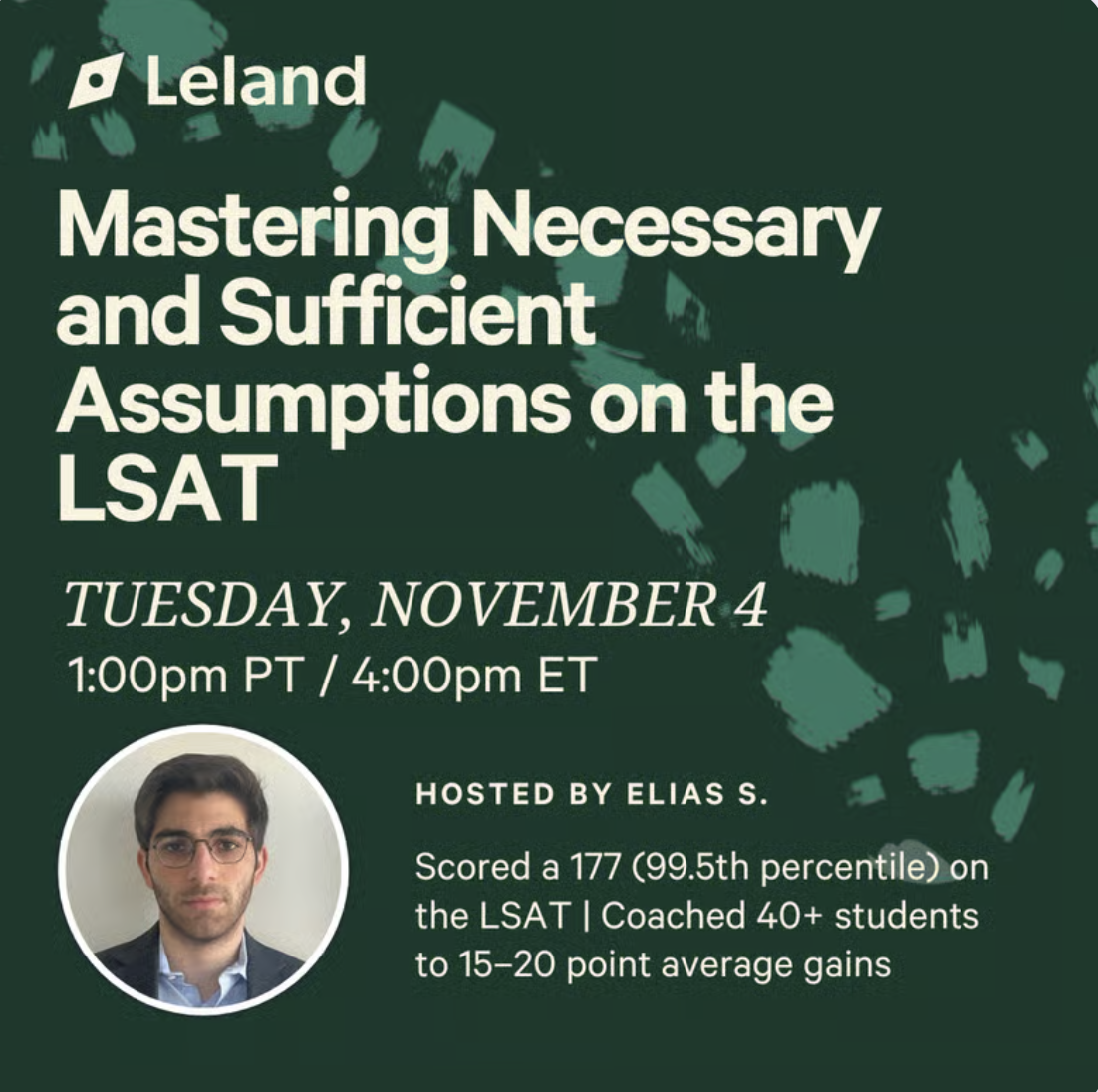
Mastering Necessary and Sufficient Assumptions on the LSAT
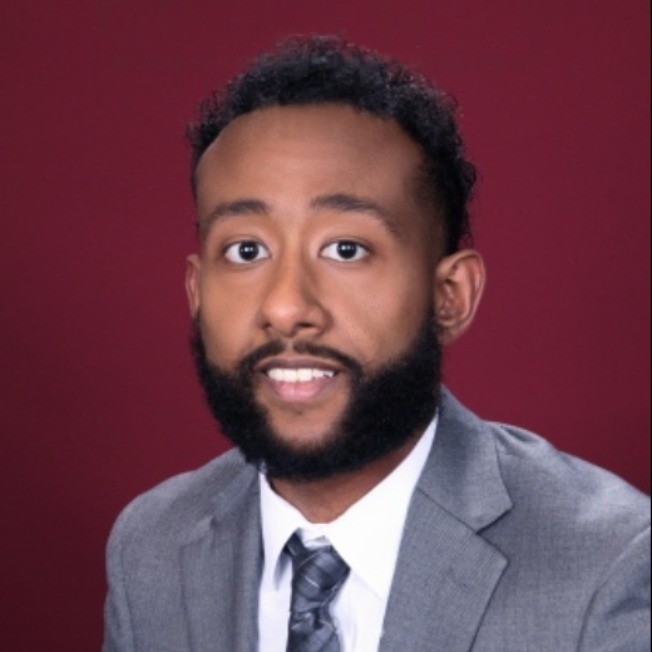
Understanding necessary and sufficient assumptions is one of the biggest keys to unlocking higher Logical Reasoning scores on the LSAT. In this workshop, Elias S.—a 177 scorer (99.5th percentile) who has helped students improve their scores by an average of 15–20 points—will break down how to identify these question types, avoid common traps, and apply the right reasoning strategies every time. With experience helping students achieve jumps of up to 40 points and even reach perfect scores, Elias will guide you through a clear, structured approach to mastering these challenging logic concepts. Whether you’re aiming for a top-tier law school or trying to break into the 170s, this session will give you the tools to approach LSAT arguments with precision and confidence.


MBA Recommendation Letter Example
MBA Recommendation Letter Example

From Good to Great: Editing 101
Editing is way more than rereading your draft. This guide will walk you through the process (pro-tips and all!).

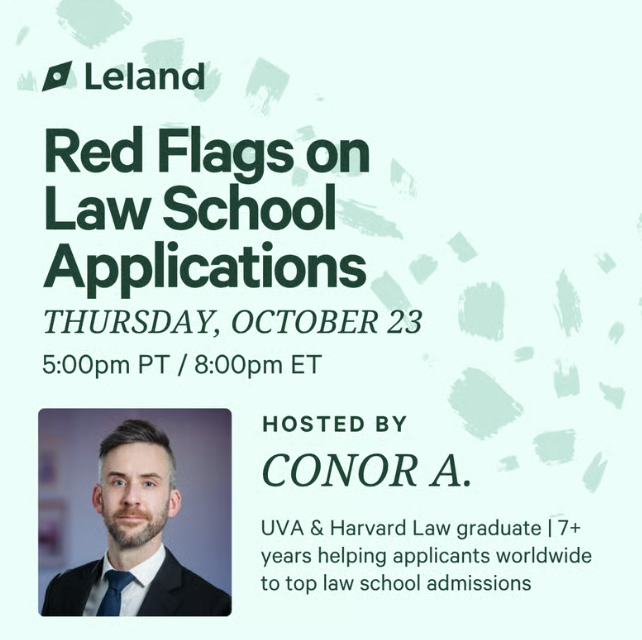
Red Flags on Law School Applications
Even strong law school applicants can unintentionally raise red flags that hurt their chances of admission. In this workshop, Conor A.—a Harvard Law graduate with seven years of admissions coaching experience—will break down the most common mistakes applicants make and how to address them effectively. Having helped students gain admission to every T14 law school, Conor will share strategies for handling GPA dips, LSAT retakes, character and fitness disclosures, and other sensitive application issues with professionalism and confidence. Whether you’re just starting your application or polishing your materials, this session will help you anticipate potential concerns and turn weaknesses into strengths.

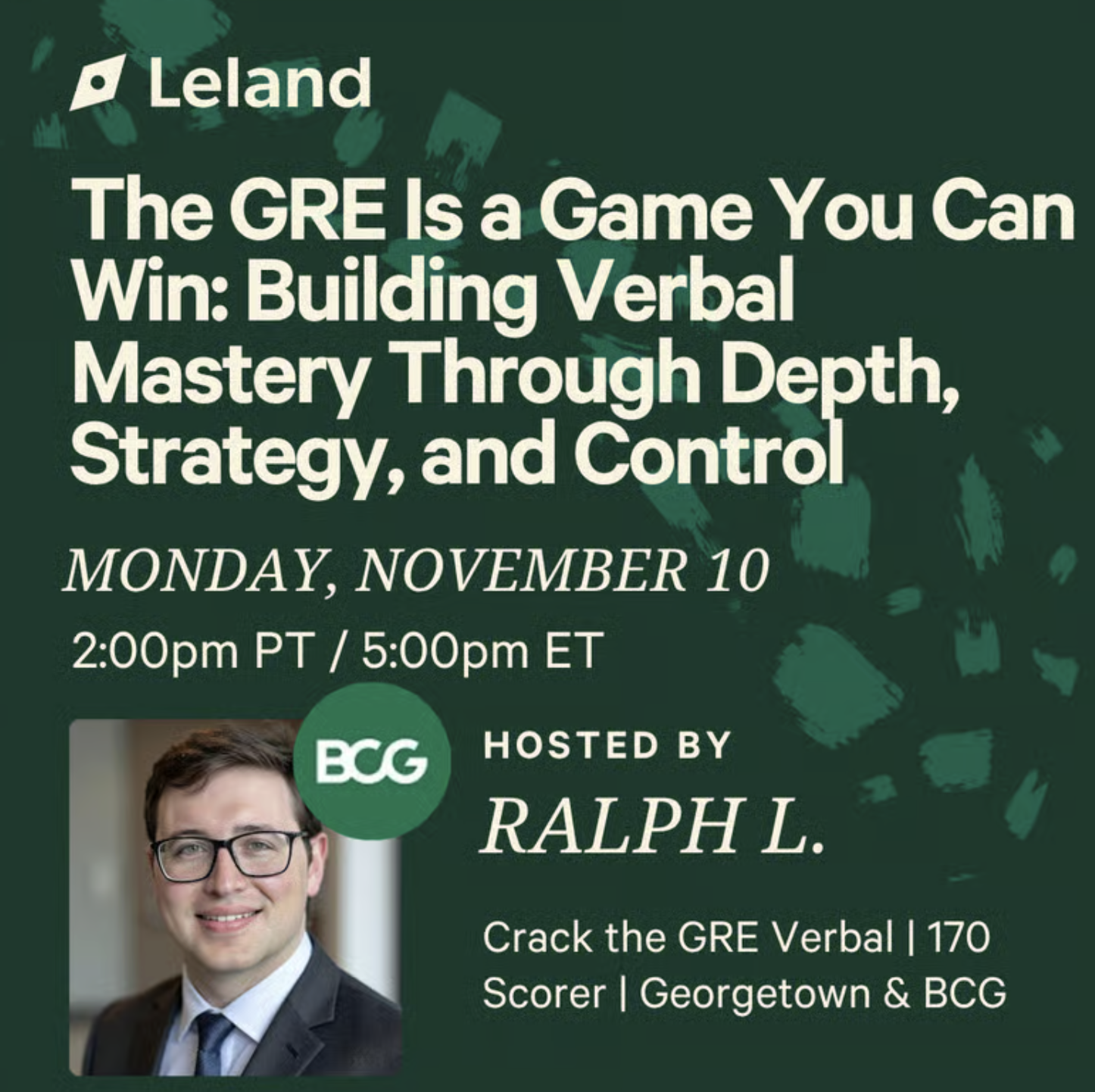
The GRE Is a Game You Can Win: Building Verbal Mastery Through Depth, Strategy, and Control
Cracking the GRE Verbal section isn’t just about memorizing vocabulary—it’s about mastering the game. In this session, expert Leland GRE coach Ralph L. will break down how top scorers approach verbal questions with strategy, precision, and confidence. You’ll learn how to build true verbal depth through smarter study methods, approach Reading Comprehension and Text Completion questions strategically, and maintain control under timed conditions. By the end, you’ll have a practical framework to study efficiently, avoid common traps, and play the GRE verbal game to win.
Building the Foundations
Understanding The Process Before You Launch Your Journey

Understanding the Kellogg Interview Format
Overview of Kellogg’s behavioral interview and how it reflects the school’s culture and values.

Personal Statement: Tips on Getting Started
Use the brainstorming prompts in this PDF to start putting pen to paper. There are no bad ideas! This is a time to reflect, think broadly, and be creative.
Sample Redlined Personal Statement
Not sure how much editing you need? Here is an example of one (of many) rounds of editing with a client.

Ratios Practice Set (Medium Difficulty)
0 views

Networking with Students & Alumni
Strategies for meaningful outreach to Kellogg students and alumni.
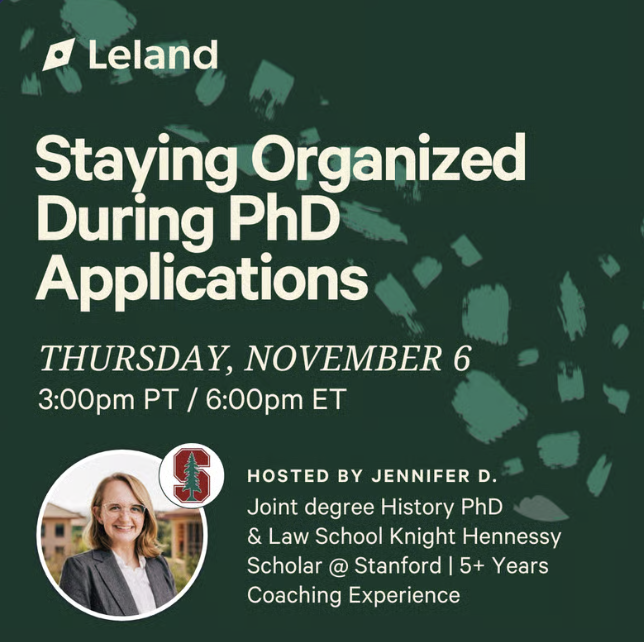
Staying Organized During PhD Applications
Staying organized can make all the difference during the demanding PhD application process. In this session, Jennifer D.—a first-generation college student who went on to earn a JD/PhD in History at Stanford University and was selected as a Knight-Hennessy Scholar—will share proven systems and strategies for managing deadlines, recommendation letters, research statements, and more. You’ll learn how to structure your application workflow, track submissions efficiently, and reduce stress while keeping your materials polished and cohesive. Whether you’re applying this cycle or planning ahead, this session will help you approach the process with clarity, confidence, and control.
Getting Started: When & How to Use Addenda
Optional addenda can be used for a variety of purposes. This guide will help you figure out if you need to include one or more optional essays.
CBS MBA Example Essays
CBS MBA successful example essays. Asian Male - Consulting.
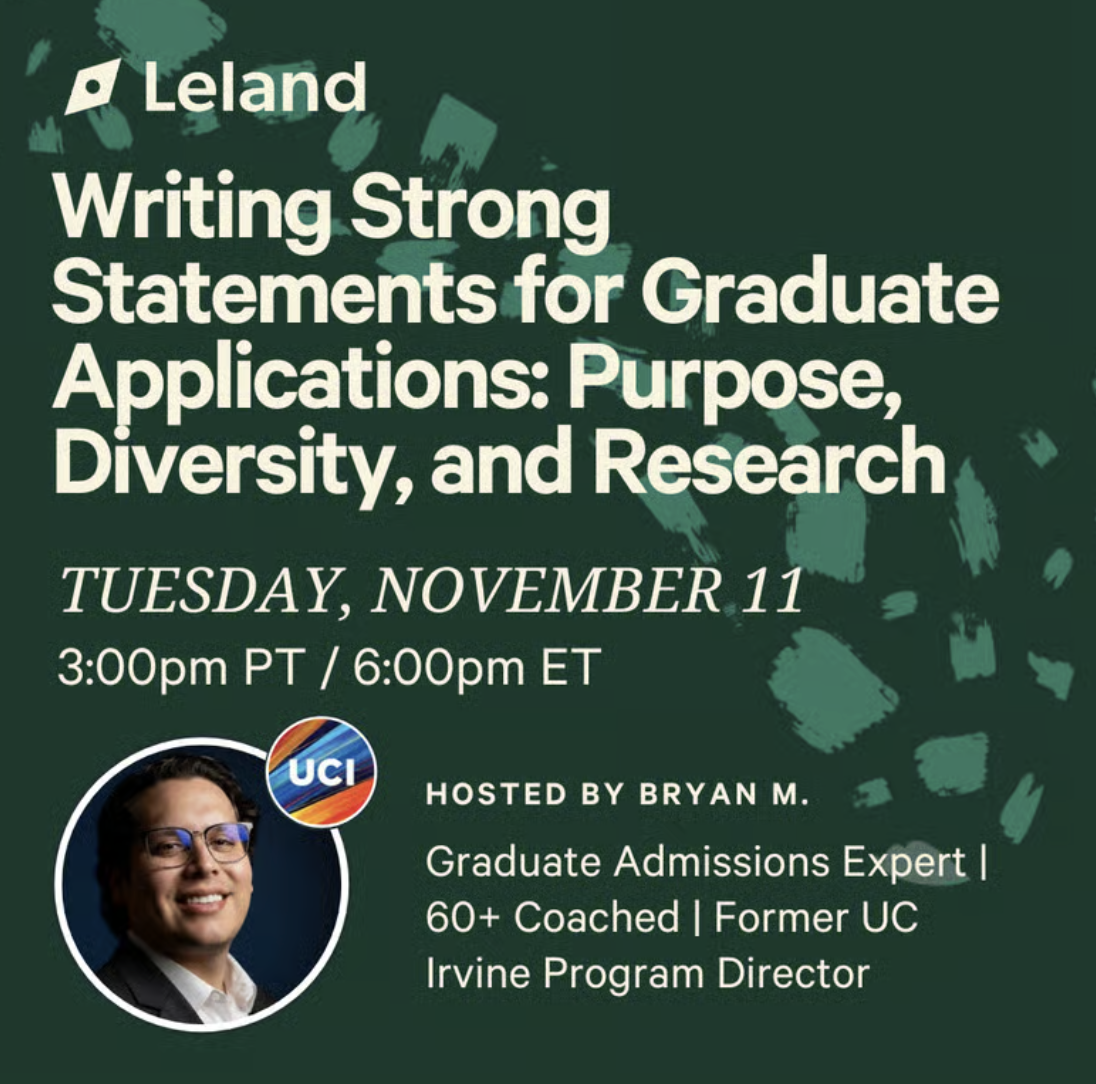
Writing Strong Statements for Graduate Applications: Purpose, Diversity, and Research
Your graduate application statements are a critical opportunity to show admissions committees who you are, what drives you, and how you’ll contribute to their program. In this session, expert Leland coach and former UC Irvine Program Director Bryan M. will guide you through crafting essays that effectively convey your purpose, highlight your unique perspective, and showcase relevant research or professional experiences. By the end, you’ll have actionable strategies to write statements that stand out and make a lasting impression on admissions committees.

Free

T14 Law School Admissions Calculator
0 views
2 Real HBS Interview Question Sets (Start-to-Finish Examples)
A detailed look at the questions asked during two real Harvard Business School interviews from beginning to end (anonymized for broad use). The first reflects a professional, experience-driven conversation with questions covering consulting, investing, leadership, and community work. The second is a deferred MBA interview focused on college, early initiatives, startup involvement, AI, goals, and personal interests. Hopefully they help you get a sense for the pacing, depth, tone, and question style you'll experience during an HBS interview.
Percentages and Statistics Problem Examples
This deck teaches percentage and statistics concepts for GMAT and GRE and includes example problems similar to those on the exam. Concepts and problems are explained in a video walkthrough by the author in "GMAT & GRE: Percentages and Statistics #1 [and #2]".
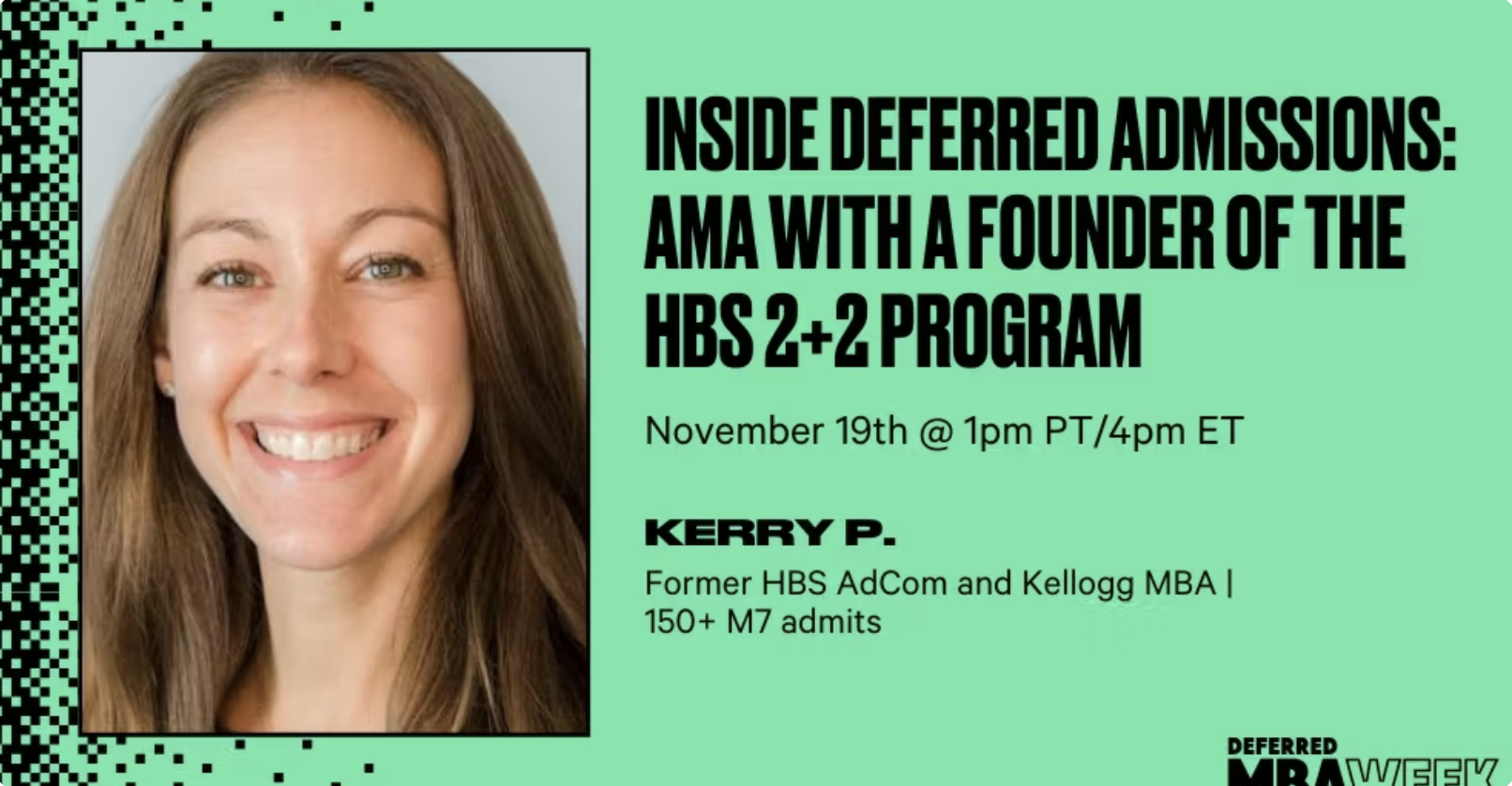
Inside Deferred Admissions: AMA with a Founder of the HBS 2+2 Program
Few people understand Deferred MBA admissions better than Kerry P., who helped launch the Harvard Business School 2+2 Program and has since guided countless candidates into top deferred programs. In this exclusive AMA, Kerry will pull back the curtain on how Deferred MBA programs really evaluate applicants — from what schools look for in undergraduates to how they assess potential and fit.


Translating Your Experience
Speak the US MBA Admissions Language