Leland+ Content Library
Select a category









































Popular on Leland+
Necessary and Sufficient Assumptions for the LSAT
Assumption questions are some of the most challenging and frequently tested question types on the LSAT, and understanding the difference between necessary and sufficient assumptions is critical to mastering them. In this session, you’ll learn how to identify argument gaps, apply the negation test correctly, and recognize when a question requires bridging logic versus strengthening it. You’ll leave with a clear, repeatable framework to approach assumption questions with greater precision and confidence.

Roadmap to College: A Values-Based Guide to Choosing the Right College
Instead of focusing on traditional ideas of “fit,” this values-based guide invites you to reflect on what truly matters to you. Through self-reflection and journal prompts, you will identify colleges that align with your values, interests, and goals. Designed for students in grades 9-12, it offers practical steps to help you approach the college search with greater clarity and confidence so you can make intentional choices and find a college community that's authentic to you.
Ask Me Anything About Your Med Schools Applications
Applying to medical school can feel overwhelming, from choosing schools and preparing for the MCAT to writing personal statements and navigating interviews. In this open AMA session, bring your specific questions about timelines, secondaries, letters of recommendation, extracurricular positioning, and more. Whether you’re early in the process or finalizing your application, you’ll gain practical, honest guidance to help you move forward with clarity and confidence.
AI News Digest Skill
"/ai-news" pulls and summarizes the latest AI news, tools, and research into a structured digest. To install, run this in your terminal after downloading the file: unzip ~/Downloads/ai-news-skill.zip -d ~/.claude/skills/
Free

Top-Ranked Free Master's in … France and Switzerland
Think Sorbonne University, Université Paris-Saclay, École Polytechnique Fédérale de Lausanne, and ETH Zurich. These top-ranked French and Swiss institutions represent just the tip of what these prestigious education systems offer: world-class master's degrees with tuition from €250 to €1,500 annually, far below North American alternatives. Behind these prestigious names are remarkable opportunities to pursue advanced degrees delivering exceptional return on investment while building careers in two of Europe's most dynamic economies. France and Switzerland host dozens of top-ranked institutions offering hundreds of English-taught master's programs spanning all major disciplines. France and Switzerland provide up to 24 months post-study work permit for job searching, with clear paths to permanent residence for skilled graduates. What if this high-quality, budget-friendly pathway to career success in Europe's innovation capitals is exactly your calling?
What Top Consulting Firms Look for on a Resume
In this session, learn what top consulting firms actually look for on a resume and how recruiters screen candidates in seconds. The discussion will focus on the skills, experiences, and signals that matter most, along with common mistakes that cause strong candidates to get overlooked. Attendees will leave with clear, practical guidance on how to position their resume to stand out in the consulting recruiting process.

How PM Candidates Get Noticed by Top Companies
Standing out in product management recruiting takes more than meeting the basics, it requires clear product thinking, strong storytelling, and visible signals of impact. This session breaks down how top companies identify and evaluate PM candidates, what actually differentiates standout applicants, and how to position your background to get noticed. You’ll learn how to sharpen your narrative, showcase product sense, and avoid common mistakes that keep strong candidates overlooked.

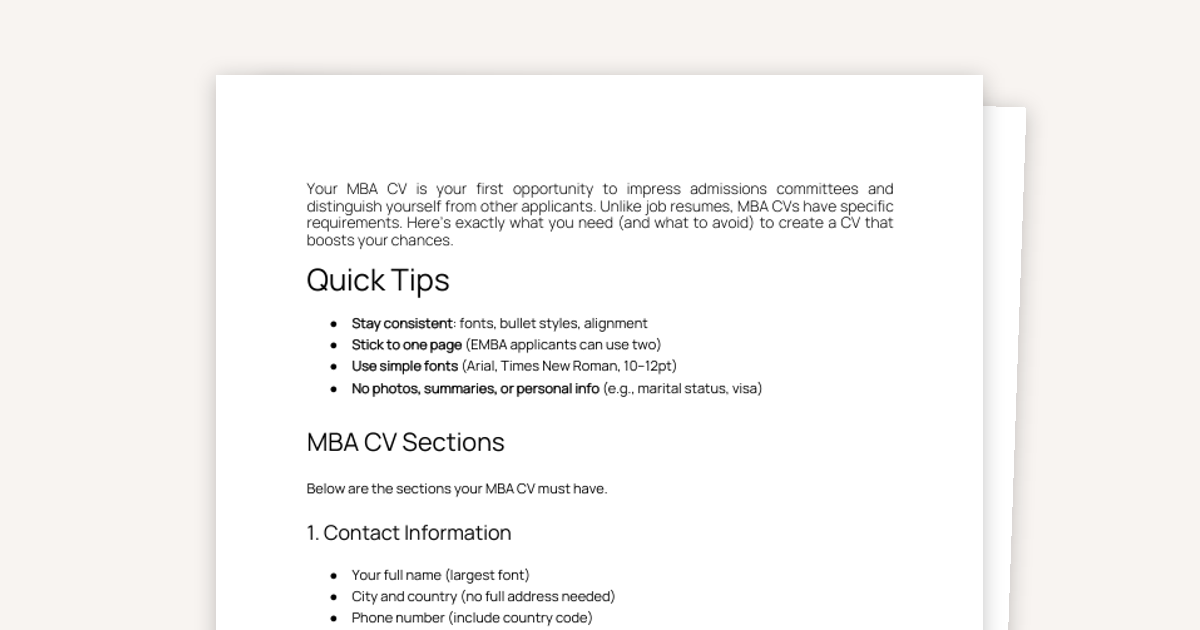
How to Write an MBA Resume
A quick, step-by-step guide to writing the perfect MBA résumé.

Personal Statements Deep-Dive
Your medical school personal statement is more than a summary of achievements—it’s how admissions committees assess your motivation, character, and readiness for medicine. In this session, you’ll learn how to structure a compelling narrative, highlight meaningful clinical and service experiences, and avoid common pitfalls that weaken strong applicants. Whether you’re drafting from scratch or refining a final version, you’ll leave with a clear framework to tell your story with focus and authenticity.

How to Stand Apart in Consulting Recruiting
Consulting recruiting is intensely competitive, and standing apart requires more than strong case skills. This session breaks down what top firms actually look for, how to differentiate your profile through storytelling, judgment, and communication, and how to signal readiness across resumes, networking, and interviews. You’ll learn common mistakes that hold candidates back and practical strategies to position yourself as a clear yes.


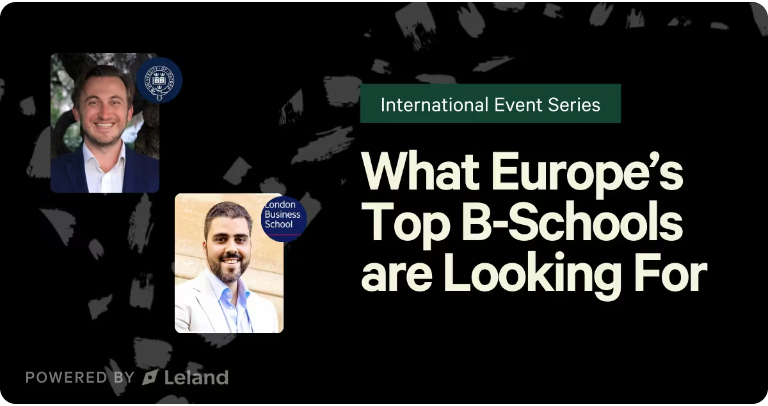
What Europe’s Top B-Schools are Looking For
Europe’s leading business schools evaluate candidates through a distinct lens, often prioritizing international mindset, clarity of goals, and cultural contribution alongside professional achievement. In this session, you’ll learn what top European MBA programs value most in applications, how their expectations differ from US schools, and how to position your background for maximum impact. You’ll leave with a clearer understanding of how to tailor your strategy and strengthen your candidacy for Europe’s most competitive business schools.


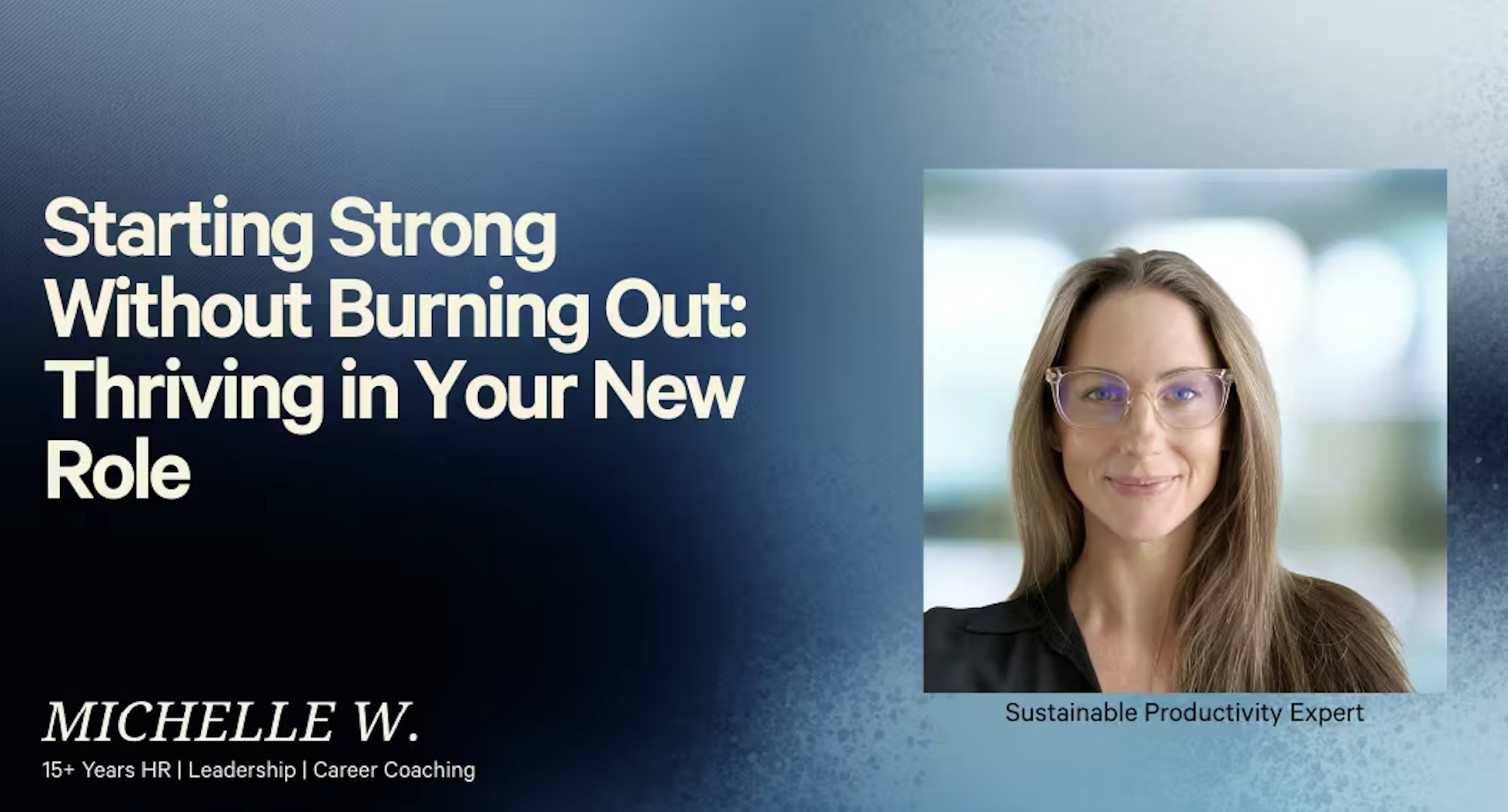
Starting Strong Without Burning Out: Thriving in Your New Role
Starting a new role can feel exciting and overwhelming at the same time. This session explores how to build momentum, navigate expectations, and establish a strong foundation for long-term success, without falling into patterns that lead to burnout. Audience Fit: • Professionals starting new roles, or plan to start a new role in the future • Early career talent, lateral hires, and leaders transitioning into new positions

![How to Prepare for the GRE With Just Two Weeks vs. Two Months [4/30/2026] (Recording)](https://customer-14xsjmjbqk93tdwp.cloudflarestream.com/a844a4b3593130f8471310d04b3e02b6/thumbnails/thumbnail.jpg)
How to Prepare for the GRE With Just Two Weeks vs. Two Months [4/30/2026] (Recording)
In this session, you'll learn how to build a realistic GRE study plan based on how much time you actually have. Whether you're working with two weeks or two months, you'll walk away knowing which question types to prioritize first, how to allocate your hours across Verbal and Quant, and when to cut your losses on a concept and move on. Attending live means you can describe your specific timeline and score goals and get a direct answer about what your plan should look like, not a generic framework. The coach works with GRE students regularly and will share the patterns she sees in how successful test-takers adjust their approach when time is short, which is the kind of thinking that does not show up in a study guide.

Free
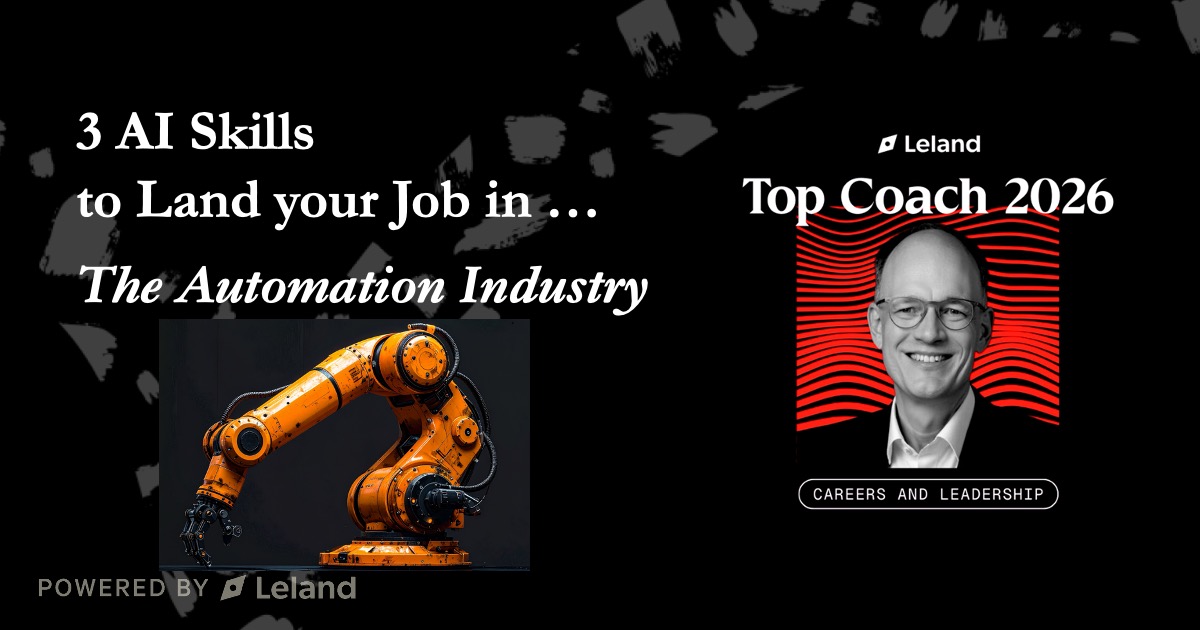
3 AI Skills to Land your Job in ... The Automation Industry
Some people assume automation is about software: algorithms, digital twins, remote monitoring dashboards. In practice, the industry is deeply physical. A robotic arm on a production line that welds the same joint ten thousand times a day with sub-millimeter repeatability. A programmable logic controller that keeps a bottling plant running in sequence, every second, without deviation. A motion control system precise enough to place a component on a circuit board at speeds a human hand could never match. These are tangible products; the factory floor does not forgive imprecision. I spent more than 10 years working with the automation industry as a supplier, with companies like Siemens, Schneider Electric, and Kuka among my key accounts. I understand what automation companies require from their partners and their people; I also know which skills are shifting fast right now because of AI. This Tuesday session covers the automation industry: one of the most technically rigorous, capital-intensive, and rapidly evolving sectors in industrial manufacturing. We will discuss three specific AI skills that are changing what hiring managers expect, and how you can demonstrate them before you walk into an interview. If you want a career where the tangible product you sell or develop keeps the modern world running, this session is for you.
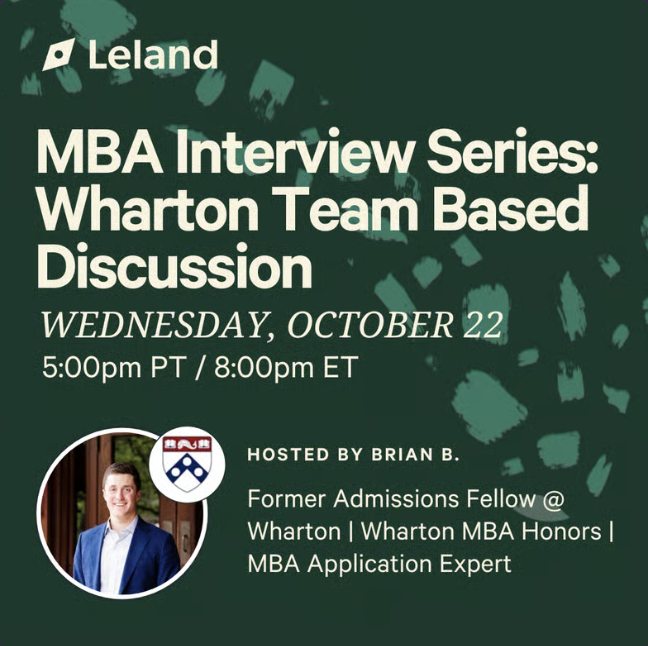
How to Ace the Wharton TBD (From an Ex-Admissions Fellow)
The Wharton Team-Based Discussion (TBD) is unlike any other MBA interview—a fast-paced, collaborative exercise designed to test how you think, communicate, and lead in a group setting. In this session, Brian B., a Wharton MBA graduate (with honors) and former Admissions Fellow who helped run Wharton’s TBDs, will share insider insight into what the admissions team is really looking for. Having coached dozens of MBA candidates, Brian will walk you through how to prepare effectively, contribute with confidence, and stand out as both a strong teammate and leader.


Awards & Activities
A tactical guide to highlighting your leadership, impact, and global experiences in Kellogg’s awards and activities sections.


Addenda Templates & Tips
If you know you need a certain type of addenda but feel unsure of how to approach it, try using one of these templates to get started

Example: MIT Sloan Cover Letter
This is an example cover letter for the MIT Sloan MBA application
Stanford Masters' Student Resume
Employer-approved resume of recent Stanford graduate
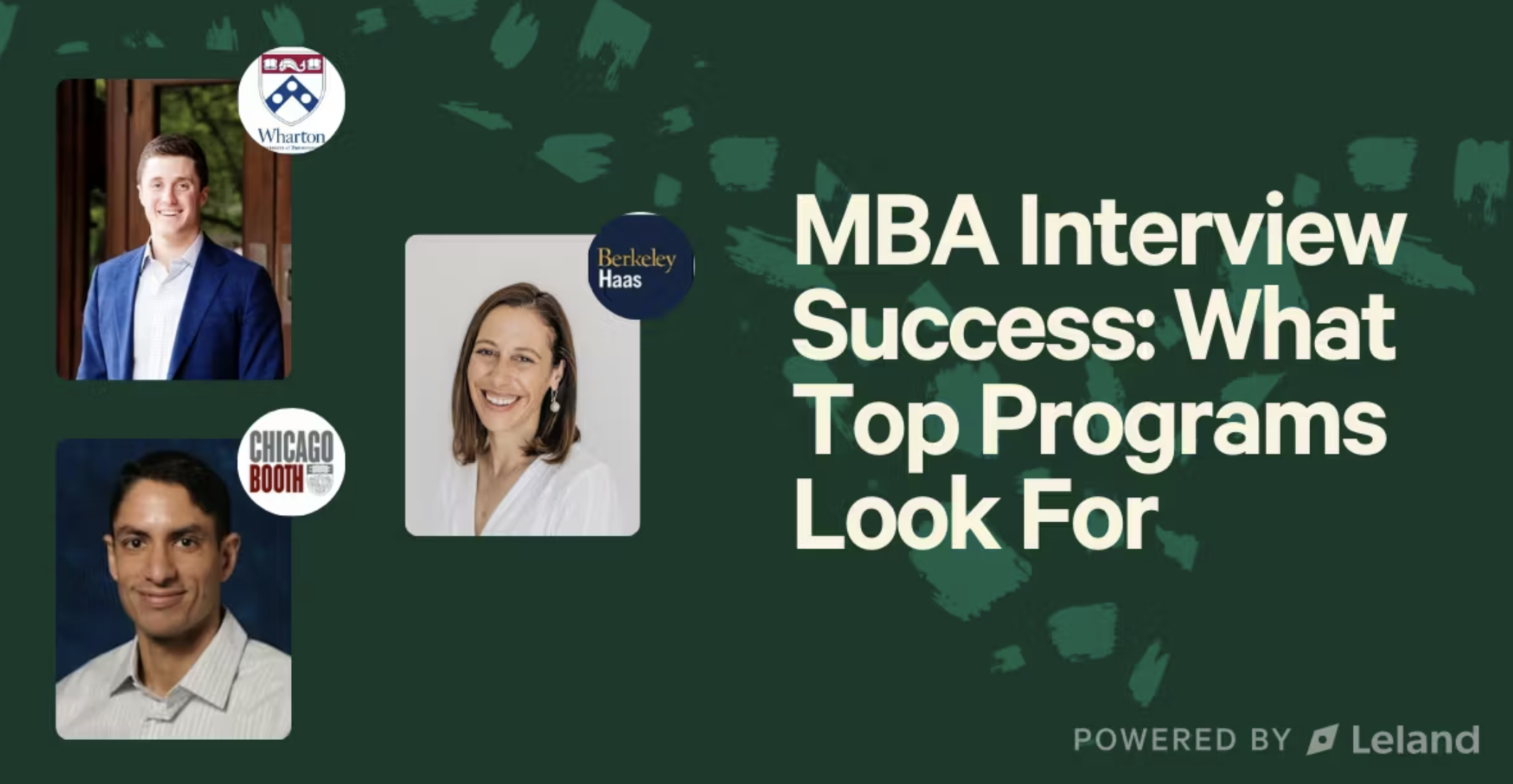
MBA Interview Success: What Top Programs Look For
MBA interviews aren’t just about answering questions—they’re about showing who you are, how you think, and why you belong in a top-tier program. In this session, you’ll learn exactly how elite schools evaluate candidates, from behavioral depth and self-awareness to leadership potential and communication style. We’ll break down common interview formats (including blind interviews, behavioral deep dives, and scenario-based questions), teach you how to structure compelling answers, and share strategies for showcasing authenticity while still being polished and strategic. You’ll walk away with a clear playbook for standing out in any MBA interview setting.